

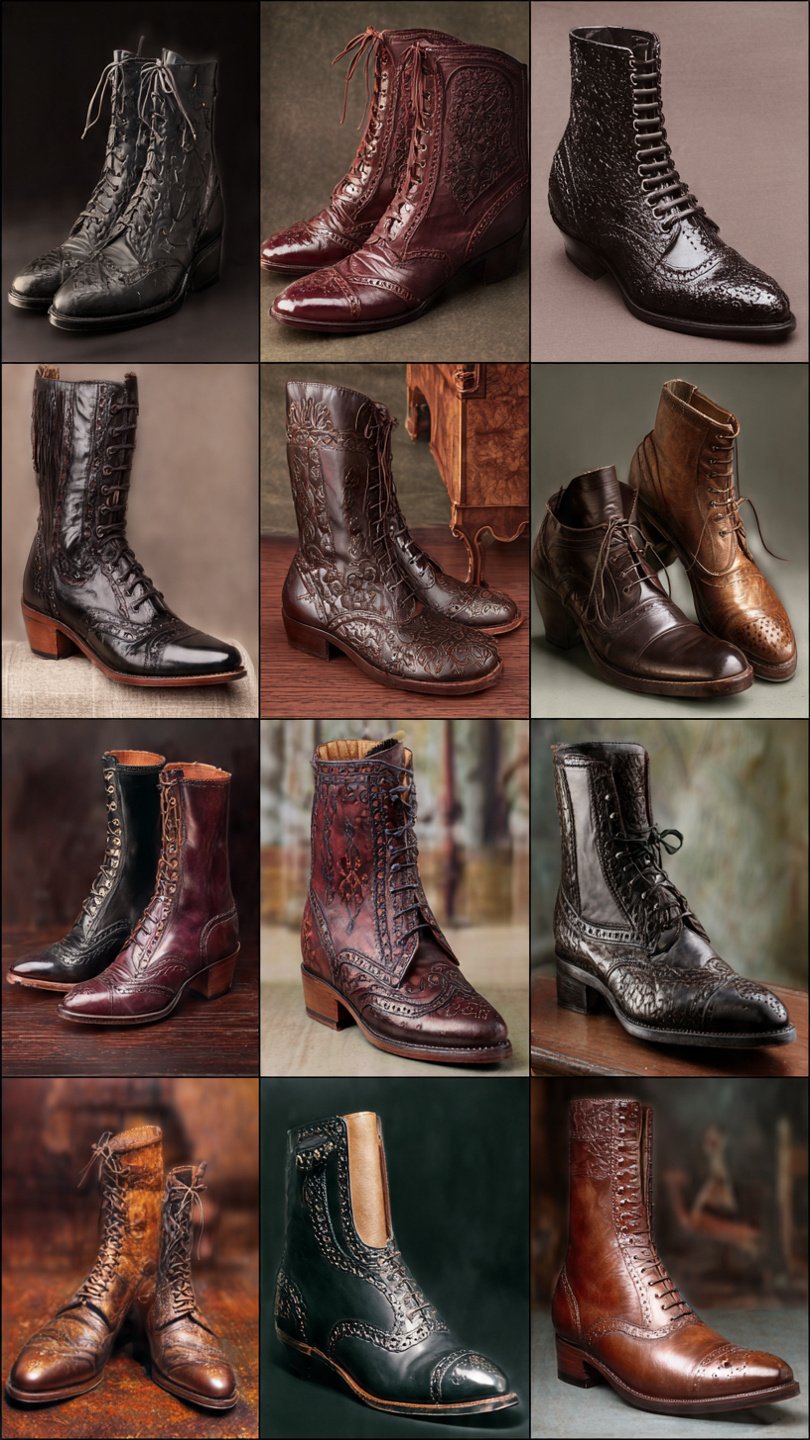
The Victorian era transformed footwear from simple protective coverings into symbols of sophistication and social standing. Between 1837 and 1901, the Industrial Revolution reshaped manufacturing capabilities, allowing shoemakers to produce more intricate designs than ever before. Structured boots and formal shoes became essential elements of a proper wardrobe, reflecting not just personal taste but also one’s position in society.
During this period, footwear evolved from rudimentary construction methods to refined craftsmanship that established many principles still used in modern shoemaking. The emphasis on silhouette, materials, and construction techniques created a foundation that continues to influence contemporary formal footwear design. Victorian boots and shoes weren’t merely functional—they communicated respectability, adherence to social etiquette, and an appreciation for quality craftsmanship.
This guide explores the structure, style, and cultural significance of Victorian era boots and formal shoes, examining how they shaped modern footwear and why their influence remains relevant today. For broader context on footwear development, see our guide on the Evolution of Shoes From Ancient to Modern Times.
Popular Victorian Boot Styles
Boots dominated Victorian fashion, serving both practical and aesthetic purposes. The era’s most iconic styles combined functionality with elegant design, creating footwear that protected against the elements while maintaining a refined appearance.
Lace-Up Ankle Boots
Lace-up ankle boots became ubiquitous during the Victorian period, offering adjustable fit and ankle support. These boots typically featured six to eight eyelets and utilized flat or round laces threaded through metal grommets. The lacing system allowed wearers to customize the tightness around their ankles and lower calves, accommodating different foot shapes and swelling throughout the day.
Most lace-up ankle boots extended four to six inches above the ankle bone, providing protection without the bulk of taller boots. The design proved particularly popular among working-class individuals who needed durable footwear that could withstand daily wear while still appearing presentable for social occasions.
Button Boots
Button boots represented the height of Victorian footwear fashion, especially among the middle and upper classes. These boots featured a row of small buttons running up the side, secured with a buttonhook—a specialized tool designed to pull buttons through their corresponding loops. Some styles incorporated ten or more buttons, extending well above the ankle.
The button boot’s appeal came from its sleek silhouette. Unlike lace-up boots, button closures created smooth lines without the visual interruption of crisscrossing laces. This made them ideal for formal occasions and complemented the era’s narrow skirts and tailored trousers. However, the time required to fasten and unfasten numerous buttons meant these boots were primarily worn by those with leisure time or assistance from servants.
Riding and Utility Boots
Victorian riding boots and utility boots prioritized durability and function while maintaining elegant proportions. Riding boots typically reached mid-calf or knee height, constructed from thick leather with reinforced heels and sturdy soles. Their design protected riders from stirrup chafing and provided stability in the saddle.
Utility boots for outdoor work featured similar construction but often incorporated additional weatherproofing treatments. These boots demonstrated that practicality and elegance weren’t mutually exclusive—even working boots maintained the structured silhouettes characteristic of Victorian footwear. Learn more about different boot heights in our article on Boot Shaft Heights Explained.
Formal Shoes of the Victorian Era
While boots dominated everyday wear, formal shoes gained prominence for indoor occasions and refined social gatherings. These shoes established design principles that remain fundamental to modern dress footwear.
Early Oxford-Style Silhouettes
The Oxford shoe emerged during the Victorian era, evolving from earlier slipper-like designs into a more structured form. Early Oxfords featured closed lacing systems where the quarters (side panels) stitched under the vamp (front section), creating a sleek appearance. This construction method produced cleaner lines than open lacing systems, making Oxfords particularly suitable for formal attire.
Victorian Oxfords typically incorporated three or four eyelets and utilized thin, round laces. The low-cut design exposed more of the foot’s instep compared to boots, requiring careful attention to fit and proportion. These shoes became staples of formal menswear and influenced women’s footwear designs as well.
Slim Toe Profiles
Victorian formal shoes featured notably narrow toe boxes compared to earlier periods. This slim profile aligned with the era’s aesthetic preferences for elongated, refined silhouettes. Shoemakers achieved these narrow shapes through careful pattern cutting and lasted construction, pulling leather tightly over wooden forms to create the desired shape.
The emphasis on slim toes sometimes prioritized appearance over comfort, particularly in women’s footwear. However, quality shoemakers balanced aesthetics with wearability, ensuring that narrow profiles didn’t compromise foot health. For more on how toe shapes affect appearance and function, see Toe Shapes in Shoes Explained.
Low-Heeled Dress Shoes
Most Victorian formal shoes incorporated low, stacked leather heels ranging from three-quarters of an inch to one and a half inches in height. These heels provided subtle elevation while maintaining stability and comfort for extended wear. The heel construction involved layering leather pieces, then shaping and finishing them to create uniform heights.
Low heels contributed to the formal shoe’s elegant proportions without the instability of higher elevations. This moderate approach to heel height influenced modern dress shoe design, establishing standards that persist in contemporary formal footwear. Discover more about construction differences in How Formal Shoes Are Built Differently.
Materials and Craftsmanship in Victorian Footwear
Victorian shoemakers elevated footwear construction to an art form, utilizing premium materials and meticulous techniques that set new standards for quality.
Leather Construction
Full-grain leather dominated Victorian footwear production, valued for its durability, breathability, and ability to develop attractive patinas over time. Shoemakers primarily used cowhide for everyday boots and shoes, while calfskin provided softer, more supple options for formal footwear. Patent leather—leather treated with linseed oil and lacquer to create a glossy finish—gained popularity for evening shoes and formal occasions.
The tanning processes of the Victorian era produced leather with substantial thickness and structure. This allowed shoemakers to create boots and shoes that held their shapes while molding gradually to the wearer’s feet. Quality leather also accepted polish well, enabling owners to maintain their footwear’s appearance through regular care.
Decorative Stitching Techniques
Victorian footwear featured various decorative stitching patterns that enhanced visual appeal while serving structural functions. Broguing—perforated patterns punched into leather—originated as drainage holes in outdoor boots but evolved into purely decorative elements on formal footwear. Medallion toe caps, wingtip patterns, and straight cap toes all emerged or gained prominence during this period.
Skilled shoemakers executed these decorative elements by hand, requiring precision and consistency. The stitching not only added visual interest but also reinforced seams and prevented leather from tearing. This combination of form and function exemplified Victorian craftsmanship principles. Learn more in our guide to Shoe Stitching Techniques Explained.
Handmade Shoemaking Traditions
Despite industrialization’s growing influence, many Victorian shoes continued to be handmade by skilled craftspeople. Traditional shoemaking involved measuring the customer’s feet, creating custom lasts (foot-shaped forms), and constructing shoes specifically for that individual. This bespoke process ensured optimal fit and allowed for personalization in materials, colors, and design details.
Even as factories began producing ready-made footwear, handmade shoes retained prestige and commanded premium prices. The attention to detail in hand-stitched construction, hand-welted soles, and carefully finished edges created products of exceptional quality and longevity. For a comparison of production methods, see Handmade Shoes vs Factory Shoes.
Victorian Shoe Silhouettes and Design Language
The Victorian era established a distinct visual vocabulary for footwear that emphasized refinement through proportion, line, and structure.
Structured Profiles
Victorian boots and shoes featured defined, architectural shapes that maintained their forms even when unworn. This structured quality came from careful lasting techniques, reinforced counters (heel supports), and toe boxes shaped over forms. The result was footwear that looked intentional and polished rather than soft or casual.
This emphasis on structure reflected broader Victorian values of order, propriety, and presentation. Just as buildings featured clear lines and defined shapes, footwear adopted similar principles. The structured approach also contributed to durability, helping shoes retain their appearance through extended use.
Narrow Toe Shapes
Beyond simply slim profiles, Victorian footwear adopted specific narrow toe shapes that became hallmarks of the era. Pointed toes, chisel toes, and narrow round toes all found favor during different phases of the Victorian period. These shapes created visual elongation, making feet appear smaller and more refined—qualities particularly valued in women’s fashion.
Shoemakers achieved these narrow shapes through precise pattern cutting and lasted construction. The toe shape became a critical element of a shoe’s overall aesthetic, with subtle variations in point length or roundness significantly affecting the design’s character.
Elegant Heel Proportions
Victorian formal footwear featured carefully proportioned heels that balanced height, width, and taper. Heels typically maintained consistent width from top to bottom or featured slight tapers, with top pieces (heel caps) slightly wider than the heel itself. This proportioning created stable, elegant foundations that complemented the shoes’ narrow silhouettes.
The relationship between heel height, toe shape, and overall shoe length received careful consideration. Shoemakers understood that these elements worked together to create harmonious silhouettes, and adjusting one element required rebalancing the others. For comprehensive information on silhouette design principles, visit What Is a Shoe Silhouette.
Cultural Meaning of Boots and Formal Shoes in Victorian Society
Victorian footwear carried significant social and cultural meanings beyond simple functionality, serving as indicators of class, gender expectations, and social awareness.
Gender played a central role in Victorian footwear design and use. Women’s boots and shoes typically featured more delicate construction, narrower shapes, and decorative elements like bows or buckles. Men’s footwear emphasized durability and understated elegance, with minimal ornamentation beyond stitching patterns and leather quality. These gendered distinctions reinforced Victorian social norms about masculine and feminine presentation. For modern perspectives on this topic, see Gendered vs Gender-Neutral Silhouettes.
Class distinctions appeared clearly in footwear quality, style, and maintenance. Upper-class individuals wore handmade shoes from prestigious makers, often owning multiple pairs for different occasions. Working-class people typically owned one or two pairs of factory-made boots that served all purposes. The condition of one’s footwear—whether polished, well-maintained, and stylish—communicated social status and personal values.
Social etiquette dictated specific footwear for different occasions. Patent leather shoes suited evening functions, while matte leather boots worked for daytime activities. Failing to wear appropriate footwear for an occasion could result in social censure or exclusion from certain circles. This emphasis on proper dress reinforced Victorian society’s hierarchical structure and concern with appearances. Explore why footwear holds such significance in Why Humans Care About Shoes.
Victorian Footwear vs Modern Formal Shoes
Comparing Victorian footwear with contemporary designs reveals both continuity and evolution in formal shoe construction and styling.
Modern formal shoes incorporate advanced cushioning technologies unknown in the Victorian era. Memory foam insoles, gel padding, and contoured footbeds provide comfort levels that Victorian shoes couldn’t match. However, this increased comfort sometimes comes at the expense of the structured silhouettes that defined Victorian footwear. Contemporary shoes often feature softer constructions that prioritize immediate comfort over long-term shape retention. Learn about modern comfort innovations in Cushioning Technologies Explained.
Manufacturing processes have transformed dramatically since the Victorian period. While some premium shoemakers still produce handcrafted footwear using traditional methods, most formal shoes now come from factories utilizing automated cutting, stitching, and assembly processes. These industrial methods enable consistent quality and affordability but can lack the nuanced craftsmanship of hand-made construction. For detailed manufacturing information, see Step-by-Step Shoe Manufacturing Process.
Fashion norms have also shifted considerably. Victorian formal footwear adhered to strict conventions regarding appropriate styles for different occasions and social contexts. Contemporary formal shoes offer more flexibility, with dress codes becoming less rigid and personal expression receiving greater acceptance. Nevertheless, many Victorian design principles—structured silhouettes, quality materials, and attention to proportion—continue influencing modern formal footwear.
The Legacy of Victorian Boots in Modern Fashion
Victorian footwear’s influence extends far beyond historical interest, actively shaping contemporary boot and shoe design.
Retro boot trends regularly revive Victorian-inspired styles. Lace-up ankle boots with vintage detailing, button boots adapted for modern sizing, and riding boots maintaining traditional silhouettes all demonstrate Victorian design’s enduring appeal. Fashion designers frequently reference Victorian footwear when creating heritage collections or vintage-inspired lines, recognizing the era’s aesthetic sophistication.
Many formal shoe silhouettes in use today trace their origins to Victorian innovations. The Oxford’s closed lacing system, the Derby’s open lacing alternative, and the Chelsea boot’s elastic-sided construction all emerged or gained prominence during this period. These styles have proven remarkably durable, requiring only minor modifications to remain relevant across changing fashion eras. Discover how historical styles return in Retro Silhouettes Making a Comeback.
Luxury footwear brands particularly embrace Victorian craftsmanship principles. Premium shoemakers emphasize hand-welted construction, full-grain leather, and meticulous finishing—all hallmarks of Victorian quality standards. By connecting their products to this heritage of excellence, contemporary makers position themselves as inheritors of respected traditions rather than merely producers of expensive shoes.
Victorian Footwear as the Blueprint for Modern Formal Design
The Victorian era established fundamental principles that continue guiding formal footwear design. The emphasis on structured silhouettes, quality materials, and careful proportion created a template that modern shoemakers still reference and refine. Victorian boots and formal shoes represented more than fashion—they embodied values of craftsmanship, attention to detail, and the belief that everyday objects deserved thoughtful design.
Understanding Victorian footwear provides valuable context for appreciating contemporary formal shoes. The narrow toe shapes, low heels, and clean lines popular today descend directly from Victorian innovations. Even modern comfort technologies and manufacturing methods build upon foundations laid during this transformative period.
For anyone interested in footwear history, formal shoe design, or the evolution of fashion, Victorian boots and shoes offer rich material for study. They mark a pivotal moment when footwear transitioned from purely functional items to carefully designed objects that balanced utility, aesthetics, and social meaning. To explore how this fits into broader footwear development, return to Evolution of Shoes From Ancient to Modern Times.
Leave a Reply