

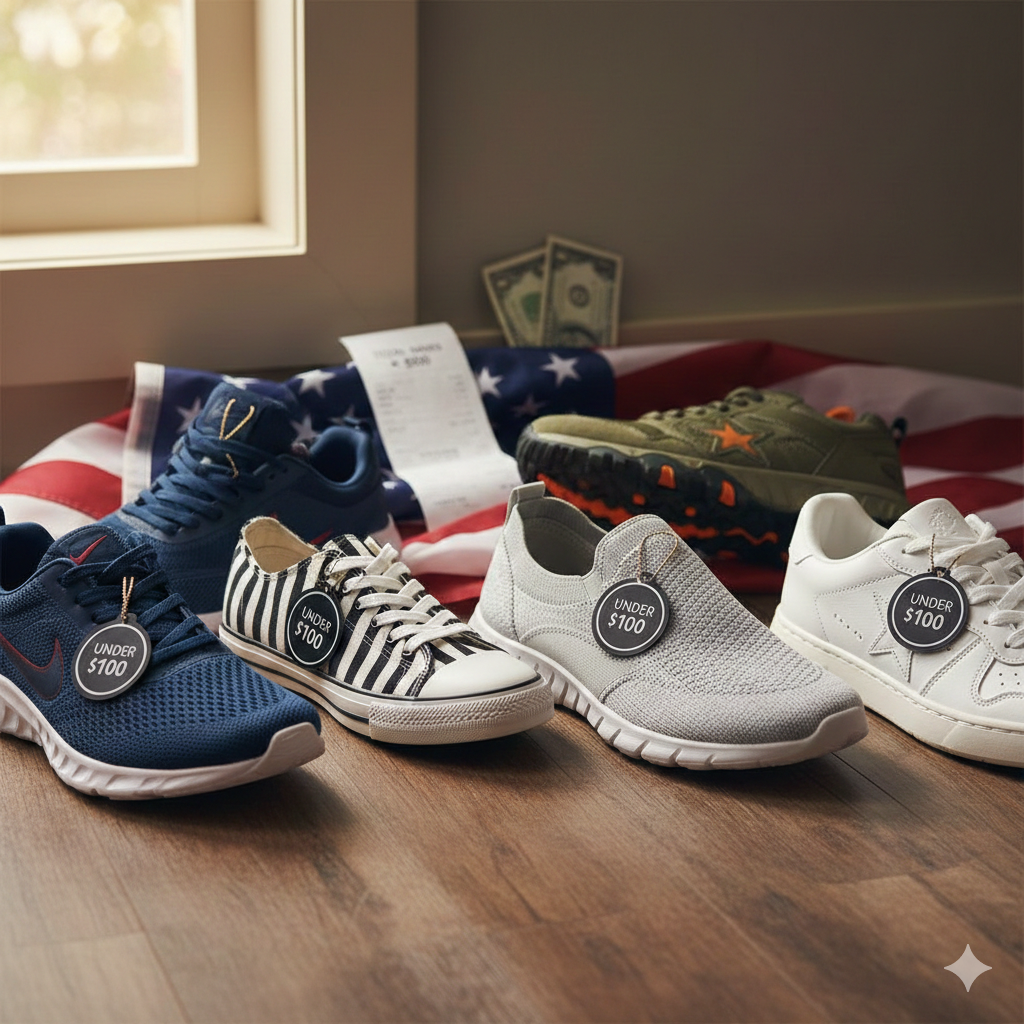
The most useful affordable sneaker is often the one that goes with the clothes you already own. A pair can look excellent in a product photograph and still spend most of its time in the box because its shape, colour, or dressiness does not fit your routine.
This guide focuses on casual wardrobe choices for men. It does not rank sports performance or claim to have wear-tested the models. If your immediate problem is finding a lower price for a known pair, use the men’s sneaker sale-comparison guide instead.
Start with the trousers you wear most
Take two or three everyday outfits as your reference. Straight jeans, cropped chinos, and wide trousers can sit differently over the same shoe. Compare how much of the upper is visible and whether the hem catches on the heel or tongue. You do not need a rule saying one silhouette works for every body or every wardrobe.
Choose a colour because it works with those outfits, not because a list calls it essential. White may suit your clothes but show dirt you do not want to manage; black can be practical without making every sneaker appropriate for a formal office. Check the actual dress code where that matters.
Three silhouettes worth comparing
A court-inspired low-top
A restrained court-inspired style can be a starting point for jeans and casual chinos. The Reebok Club C collection is one example to browse. Compare the exact version and materials: the name covers more than one construction, and a clean appearance does not establish how it feels on your foot.
A canvas-style casual shoe
A classic low-top such as a Converse Chuck Taylor All Star offers a different visual weight from a bulky runner. Decide whether you like that proportion with your trousers. Do not treat a familiar style as a universal recommendation for long days on your feet.
A retro runner
A retro shape such as the New Balance 574 may suit a more visibly sporty outfit. Try the actual pair beside your low-top candidate. What looks balanced with a loose trouser may feel too bulky with another hem, and that is a styling preference rather than a quality score.
Buy for the day, not just the outfit
If you walk to work, the commute is part of the shoe’s job. If you spend most of the day at a desk, an occasional trip across town is a different demand. Try the candidates with the socks you will use and notice any rubbing, pressure, or loose hold while walking indoors.
If fit is the main uncertainty, read the daily sneaker comfort guide. Avoid assuming that all men need the same shape, that a brand is always wide, or that a soft insole compensates for the wrong size. Product-specific width options are more useful than general claims about men’s feet.
Build a one-pair plan before a rotation
Ask what your next pair would do that your current shoes cannot. A different colour can be enjoyable, but it is not automatically a functional gap. If one pair already covers ordinary casual days, the next purchase may make more sense for a genuinely different use than for another nearly identical outfit.
A hypothetical $90 pair worn twice a week can be more useful to you than three $40 pairs that all fill the same role. That is a planning example, not a claim about lifespan or a reason to spend beyond your budget. Use the cost-per-wear method to make your own assumptions explicit.
Check the offer after choosing the style
Match the full model and size before comparing retailers. An older colour may be cheaper without being interchangeable with a newer version. Include delivery, final-sale conditions, and any return fee. A slightly higher price can be worth considering if you are uncertain about fit and have a much more practical return route.
A useful casual purchase is one you can explain simply: it fits, it works with your ordinary clothes, it serves the day you actually have, and you can afford the total. You do not need to add a collection, chase a release, or buy a specialist feature to make that choice legitimate.


Leave a Reply