

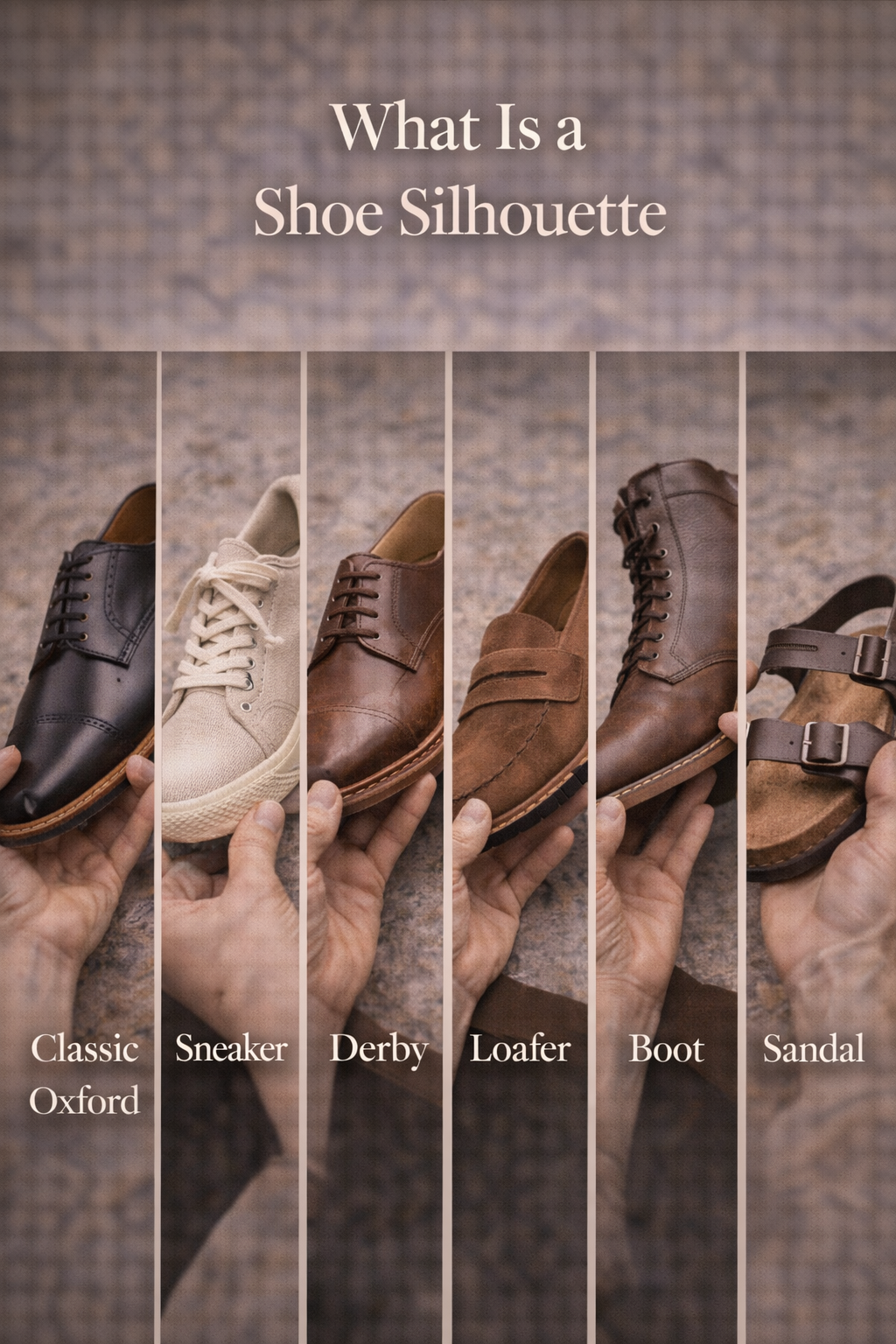
A shoe silhouette is its visible outline. From the side, you notice the length and shape of the toe, the height around the ankle and the way the sole sits beneath the upper. These features can make two similarly coloured shoes look very different.
Silhouette is a design description. It does not establish internal fit, comfort, protection or sporting performance. Use it to explain what you see, then investigate the practical features separately.
Look at more than the side view
A side photograph can show sole thickness and collar height, but it may hide toe width or the shape of the opening. Compare top, front and rear views as well. Camera angle can change how long or bulky a shoe appears.
If possible, handle the pair or try it on. An outline that looks compact in a photograph may occupy more space in an outfit than you expected. Compare actual dimensions and fit when those details matter.
Start with the toe
A pointed, rounded or square-looking toe changes the front of the outline. The external shape is not the same thing as usable internal room. Materials, lining and the construction around the foot can change the fit.
Try the shoe with your intended socks and check both feet. Do not choose solely because a shape is said to suit a body type or make an outfit universally more flattering. Appearance and personal comfort are different questions.
Notice collar and opening height
A low opening, a higher sneaker collar and a boot shaft each create a different line between footwear and the leg. That changes what remains visible under a trouser hem or beside a skirt.
Height alone is not proof of support or protection. The shoe-category comparison explains why sneakers, boots and loafers still need model-specific checks rather than assumptions based on coverage.
Compare the sole outline
A thin-looking sole can make the shoe appear lighter, while a wider or thicker outline adds visual weight. Toe and heel extensions, tread edges and contrasting colours can change the effect even when the upper is similar.
Do not treat visible thickness as a cushioning scale. Tread appearance also cannot guarantee grip in every condition. Read the product details and intended use when those functions are part of your decision.
See what changes in an outfit
Try the same trousers with two different shoe outlines. Then keep the shoe constant while changing hem length or leg shape. Walk and sit so you can see whether fabric catches or drags.
The straight-jeans and boots guide provides one specific example. For sneakers, the anatomy guide names the parts that contribute to the outline and the classic-shape styling guide offers comparisons.
Use the description carefully
Words such as sleek, chunky or streamlined describe an impression, not a technical standard. Ask what measurable or documented feature lies behind a claim if it affects your purchase.
A clear understanding of silhouette helps you describe a preference and recognise a design. It leaves room for the more important final checks: whether the actual pair fits, meets the requirements of your activity and works with the clothes you wear.

Leave a Reply