

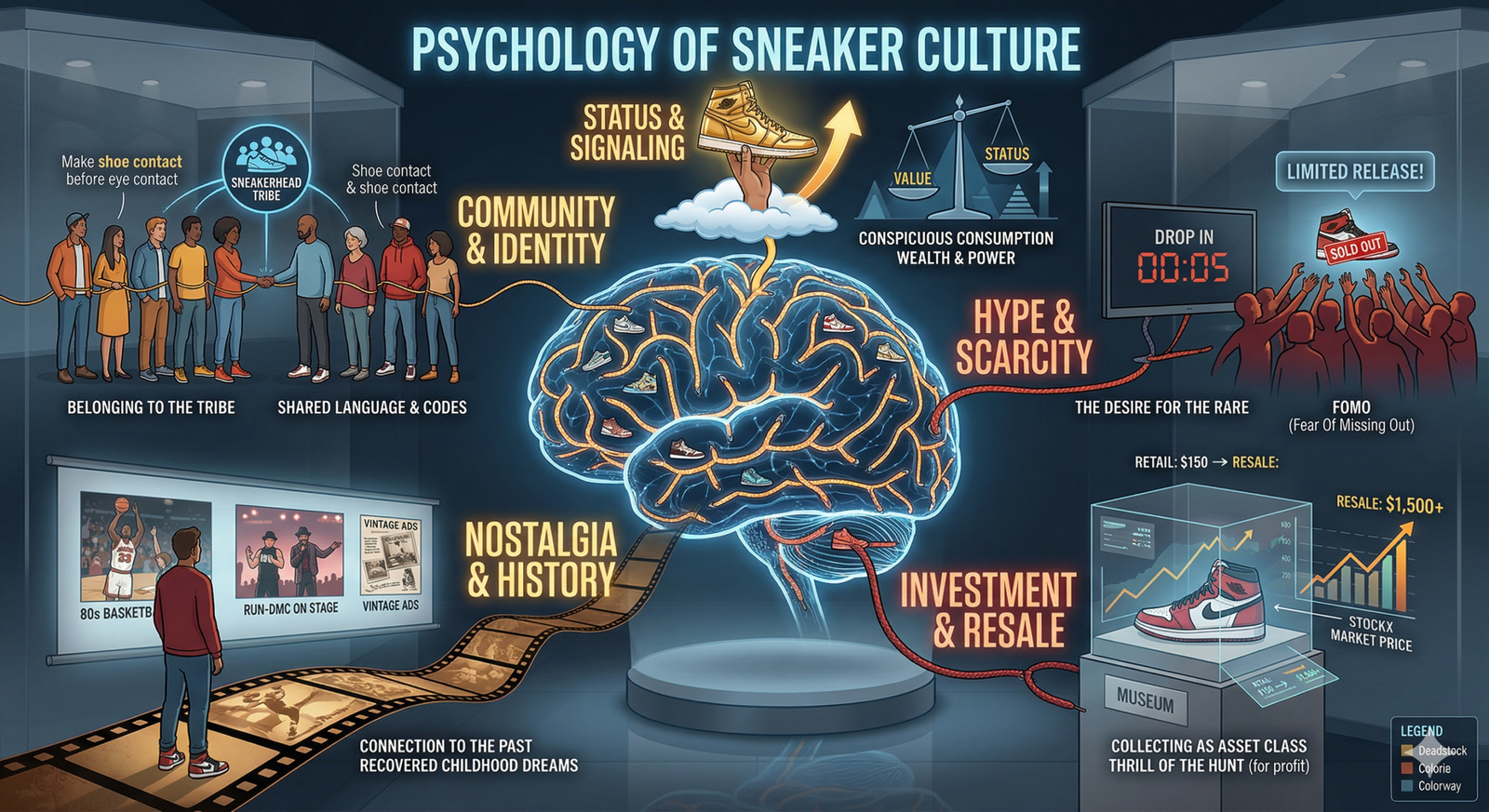
Two people can look at the same pair of trainers and see different things. One sees a shoe for the walk to work. The other notices a particular colourway, remembers who wore the original, and knows why the box matters. Sneaker culture grows in that gap between an everyday object and a personal interest.
Collecting can involve design, sport, music, friendships, and memories. It can also involve pressure to buy before a release disappears. Understanding those motives is more useful than assuming every collector is chasing status, or calling enthusiasm an addiction.
Why sneakers carry meaning beyond their use
Sneakers sit across several worlds: performance equipment, everyday clothing, and collectible design. The Design Museum’s Sneakers Unboxed exhibition traced these connections through athletic footwear, subcultures, collaborations, and fashion. It is a helpful reminder that the culture has more than one origin and more than one kind of participant.
A collector interested in basketball history may care about a signature model. A skater may value the shape of a shoe they learned in. Someone else may follow a designer’s experiments with materials. These interests can overlap, but a resale price does not explain all of them.
The personal reasons a particular pair matters
Memory and nostalgia
A reissued shoe can bring back a school uniform, a favourite player, or a pair someone wanted when they were younger. For that buyer, the appeal may have little to do with whether strangers recognise it. The shoe connects a present-day purchase with an earlier part of their life. That is one possible reason for choosing a retro release, rather than a rule about everyone who buys one.
Design and self-expression
Colour blocking, stitching, proportions, and materials give collectors details to compare. Wearing an unusual pair can be a way to enjoy those details in an otherwise simple outfit. It does not let an observer decode the wearer’s personality. Our article on what shoes can and cannot say about you separates those impressions from the evidence.
A conversation about sizing, a repaired pair, or a favourite release can be a simple way to meet people. Communities also give enthusiasts somewhere to learn and exchange opinions. They become less welcoming when owning expensive or rare pairs is treated as a condition of belonging. Knowing a product’s history and enjoying what you own need not depend on a large collection.
How a release can turn interest into urgency
A countdown, raffle, or limited purchase window changes the decision in front of a shopper. Instead of asking whether the shoe suits their wardrobe, they may start asking whether they will get another chance. Seeing other people post successful purchases can add to that pressure.
Scarcity can be part of a product’s appeal, but limited availability does not prove quality or future value. Nor should every shortage be described as a deliberate attempt to manipulate buyers. Production limits, distribution, size availability, and demand can all affect access. A missed release is disappointing; it is also a useful moment to ask whether the desire survives the deadline.
Status matters to some buyers, but it is not the whole story
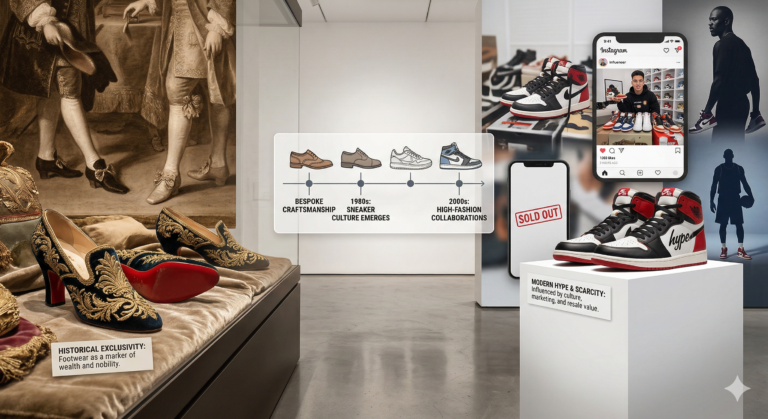
Within an interested group, a hard-to-find pair can attract recognition. Outside that group, the same details may go unnoticed. Recognition also does not prove the owner’s income, expertise, or motives. They may have bought the shoes at retail, received them as a gift, or simply liked the design. The wider relationship between exclusivity and fashion is explored in the history of shoes as status symbols.
Collecting and reselling are different activities
A person buying to wear a shoe is making a different decision from someone hoping to sell it. The first can judge success by fit and enjoyment. The second depends on a future buyer and on costs that may include platform fees, shipping, storage, and the condition of the pair.
A high listing price is not proof that a sale took place. Neither a famous collaboration nor a sold-out release guarantees a profit. Keeping those distinctions clear makes discussions about collecting more honest: personal enjoyment and expected resale income are not interchangeable reasons to buy.
Keep the hobby enjoyable
- Decide what you collect. A particular designer, era, or silhouette gives a collection direction without requiring every new release.
- Set a limit before browsing. Include delivery and any resale fees in the amount you are willing to spend.
- Separate wanting from urgency. Ask whether you would still choose the pair without a countdown or a sold-out label.
- Use what you own. Styling, cleaning, and repairing an existing pair can be as satisfying as adding another box.
- Make room for missing out. Skipping a release does not reduce your interest in the culture or your place in a community.
It is more useful to look at what buying is doing to your daily life than to compare the number of boxes you own with someone else’s. Missed bills, repeated regret, or arguments about spending are reasons to pause and reconsider a budget. Enthusiasm for a release does not require a dramatic explanation about the brain; it can simply be enthusiasm for a shoe.
Sneaker culture leaves room for the person with one well-worn favourite and the person who studies every release. The interest becomes more rewarding when the shoes, the knowledge, and the people matter more than keeping up with the next notification.


Leave a Reply