

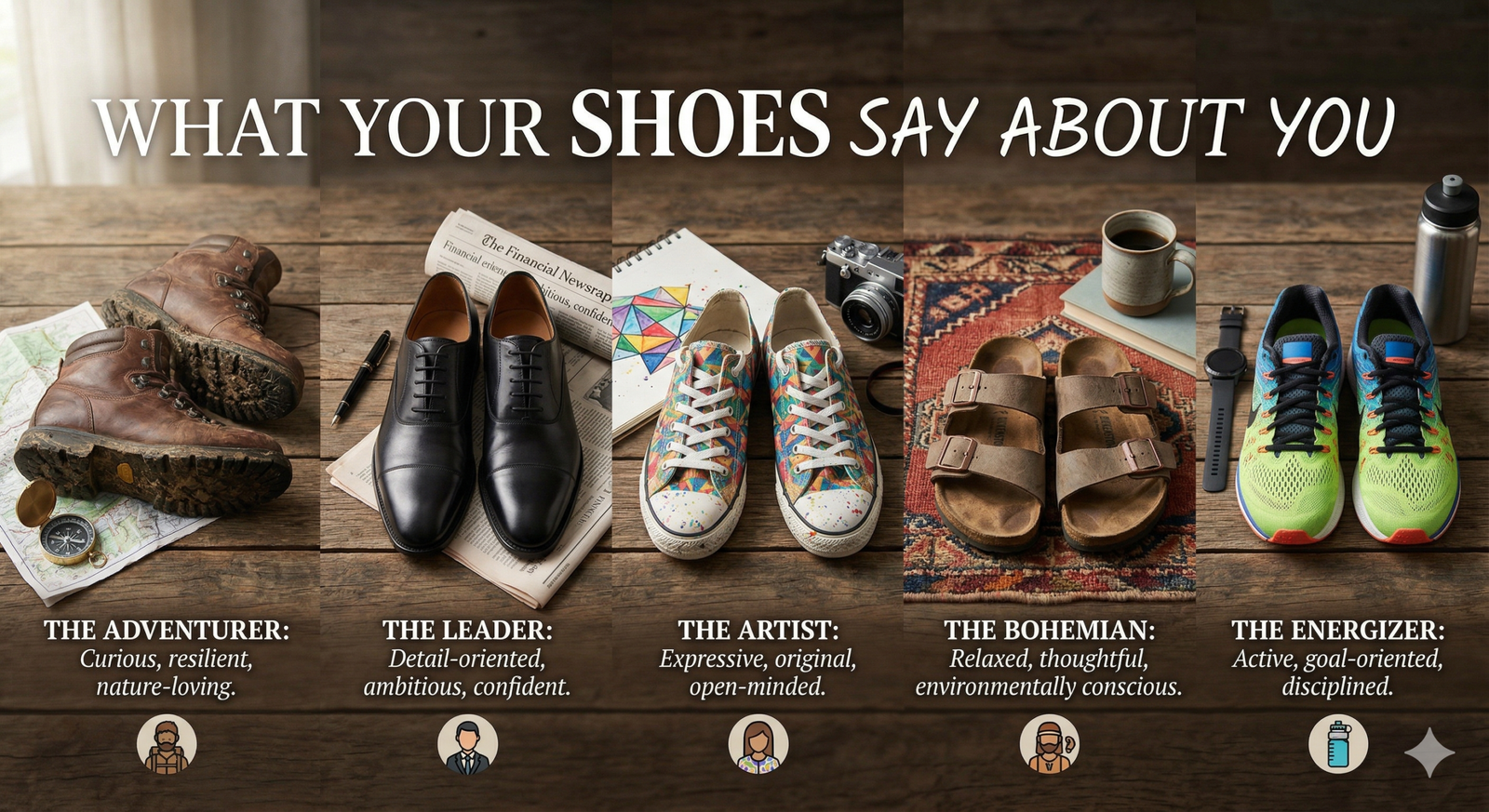
A pair of polished loafers may look right for a client meeting. Muddy boots may make perfect sense after a morning on a building site. Both can shape a first impression, but neither tells you whether the wearer is kind, reliable, confident, or good at their job. The personality labels in the illustration above are common stereotypes, not a way to assess a person.
So, what do your shoes say about you? They can offer clues about your taste, the situation you are dressed for, and what you need from your day. Reading a whole personality from them is a much bigger leap. The useful question is how footwear creates an impression, and where that impression can go wrong.
What research actually tells us
In the 2012 study Shoes as a source of first impressions, researchers compared judgments made from shoe photographs with information supplied by their owners. Observers showed some accuracy for age, gender, income, and attachment anxiety. That is a narrower finding than being able to read someone’s entire personality.
A pattern found in a research sample is not a dependable test for an individual. Nor does agreement between observers prove that their judgment is correct. Several people can share the same stereotype. A pair of shoes cannot establish someone’s political beliefs, work ethic, mental health, or character.
Shoes reveal context before character
Consider someone wearing running shoes with office clothes. They might enjoy the look. They might also have a long commute, change shoes at their desk, or need a particular fit. You cannot distinguish those explanations just by looking down.
Weather, workplace rules, budget, availability, and personal comfort all limit what people wear. The same person may choose steel-toe boots at work, trainers on the journey home, and dress shoes for a wedding. Those changes say more about the day’s demands than about three different personalities.
Common footwear impressions, with their limits
Sneakers: relaxed style, practical use, or a collecting interest
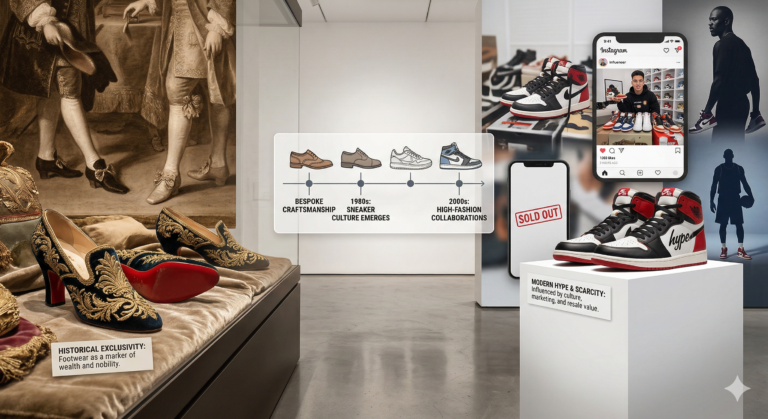
Simple trainers can make an outfit feel informal. A distinctive release may start a conversation between people who recognise it. But an expensive pair does not establish wealth, and everyday sneakers do not establish athletic ability. Some people collect for the design; others keep buying a familiar model because it fits. Our guide to the psychology behind sneaker culture explores the collecting side of that interest.
Formal shoes: a signal about the occasion
Oxfords, loafers, and dress heels can help an outfit meet an expected dress code. Wearing them may show that someone has prepared for an occasion. It does not prove discipline or competence. A polished shoe can be part of a uniform, a borrowed pair, or simply a style the wearer likes.
Boots: function and styling can look similar
A heavy boot might be chosen for protection, wet weather, or its shape with jeans. A fashion boot can suggest a deliberate styling choice without revealing how confident its owner feels. Before attaching a trait to a style, ask whether its practical use explains the choice.
Sandals and slides: often a matter of setting
Open footwear may suit a warm day, a short errand, or time at home. Calling the wearer carefree or minimalist adds an assumption that the shoes cannot support. Expectations also vary between places and occasions. A casual choice in one setting may be entirely conventional in another.
Designer footwear: recognition depends on the audience
A recognisable logo can carry a message for someone familiar with the brand. Another person may see only a shoe. Even when a purchase is intended to communicate status, it tells you little about the owner’s finances or values. The broader story belongs in our article on why shoes became status symbols.
Condition can affect impressions without explaining the person
Clean shoes can make an outfit appear more prepared for a formal occasion. Scuffs may draw attention. Yet worn soles might reflect a demanding job, limited replacement money, or a favourite pair that is still comfortable. A spotless pair might simply be new. Appearance is visible; the reason behind it usually is not.
How to choose the impression you want to make
- Start with the setting. Check the invitation or workplace guidance rather than guessing what a shoe is supposed to communicate.
- Account for the whole day. A pair that suits a photograph may be impractical for the walk, weather, or time on your feet.
- Use what you already own. Appropriate, maintained footwear often makes more sense than buying a conspicuous label for one event.
- Keep a detail that feels like you. A colour, texture, or familiar silhouette can make a formal outfit feel less like a costume.
You do not need to turn every footwear choice into a message. Sometimes the best explanation is that the shoes were by the door. Wear what serves your day, and give other people the same room for practical choices. Shoes can begin a conversation about someone; getting to know them requires the conversation itself.

Leave a Reply