

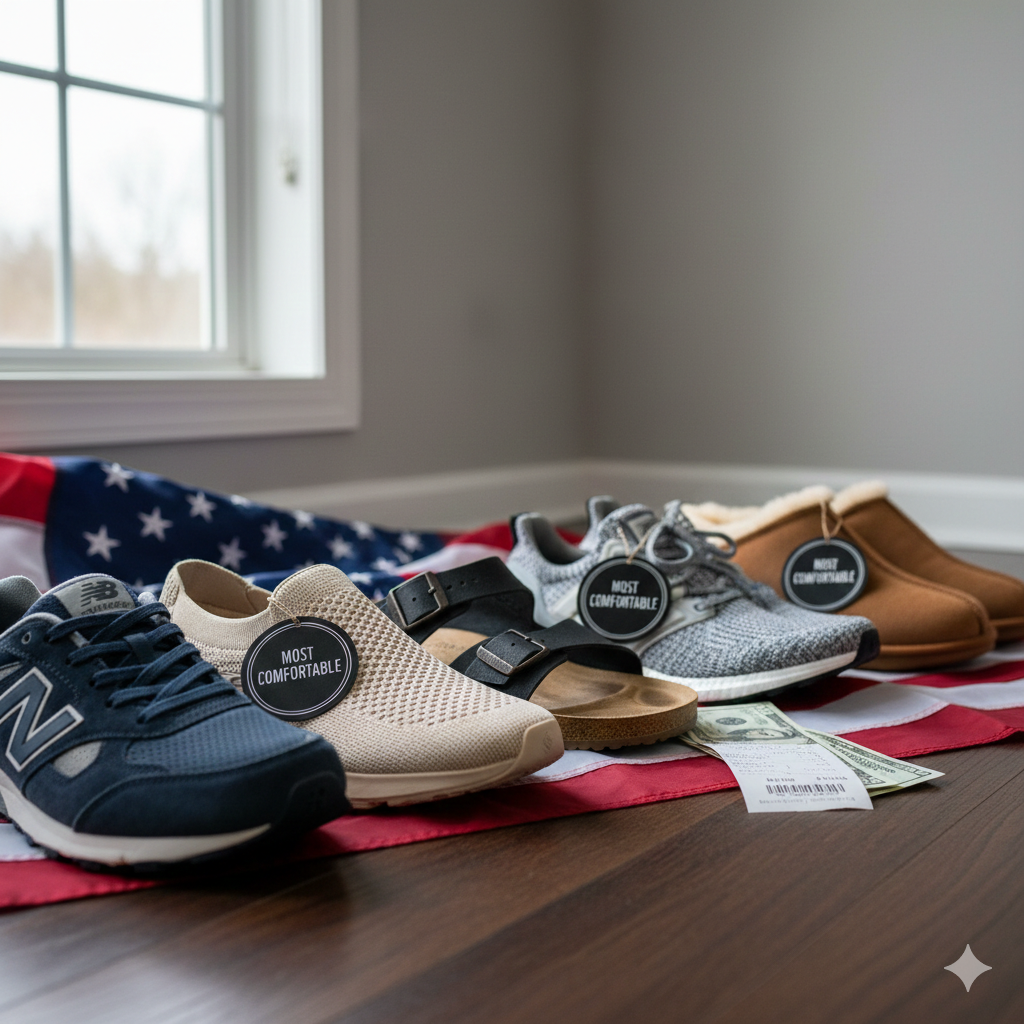
A pair that works for a short walk to the store may feel different during a long day exploring a city. When choosing men’s walking shoes, begin with the distance, surface and weather you expect, then compare the fit of individual pairs.
This is a selection guide rather than a ranking based on independent wear tests. Shoes can make walking more comfortable, but no shoe guarantees injury prevention or treatment for pain.
Start with your usual route
Pavement and everyday errands
For local walks and commuting, try a comfortable walking shoe or athletic sneaker that fits securely. Think about the time you spend walking rather than buying for the most demanding outing you might take once a year. The NHS walking guide says comfortable shoes that provide adequate support and do not cause blisters can be suitable.
Travel and longer days
Try shoes with your travel socks and any insoles you use. Walk around indoors and check how the heel, forefoot and laces feel. When possible, test a new pair on shorter outings before relying on it for a trip. For an overview of different activities and buying considerations, see our walking-sneaker guide.
Rougher ground and wet weather
For uneven trails, compare footwear designed for the route and conditions. Examine the outsole, coverage and manufacturer’s weather description. Water-resistant does not necessarily mean waterproof, and no sole prevents every slip. If the route is challenging, account for the weather and your experience as well as the shoe.
Check length, width and depth
Measure both feet if possible. Check the brand’s size chart, then try both shoes with the socks you will wear. Leave room for your toes, avoid pressure at the sides and top of the foot, and check that the heel stays secure while walking. A longer size is not always the answer to a tight width; try a wider fitting or another shape.
Men’s, women’s and unisex sizing can differ by brand. Choose the size system and width that fit your feet, rather than assuming a category will fit everyone the same way. The AAOS shoe-fitting guide provides further advice.
Walking shoe or running shoe?
Some running shoes are comfortable for walking, and some shoes marketed for walking may suit you better. Cushioning, flexibility, weight and shape vary between individual models. Try the actual shoes instead of treating either label as a guarantee. Our walking versus running shoe comparison explains how to make that choice.
Budget, returns and replacement
Compare the total cost, seller and return conditions. For online orders, check whether the retailer requires an indoor-only try-on and offers an exchange for another width. Our online shoe-store guide covers the main buying checks.
Inspect tread, stitching and the fastening regularly. Replace the pair when it is damaged or no longer suitable for your use. There is no fixed lifespan for every walker. For persistent or worsening foot pain, consult a qualified clinician.
Frequently asked questions
Are wide shoes always better?
Only if the width suits your feet. Too much room can also affect fit. Compare different widths and check for secure but comfortable contact.
Can I walk in running shoes?
Yes, if the pair fits comfortably and suits the route. The running label alone does not establish whether a particular model will work for you.
Should new walking shoes hurt at first?
A pair should not pinch or rub badly during the initial try-on. Try another size, width or model if you notice pressure.



Leave a Reply