

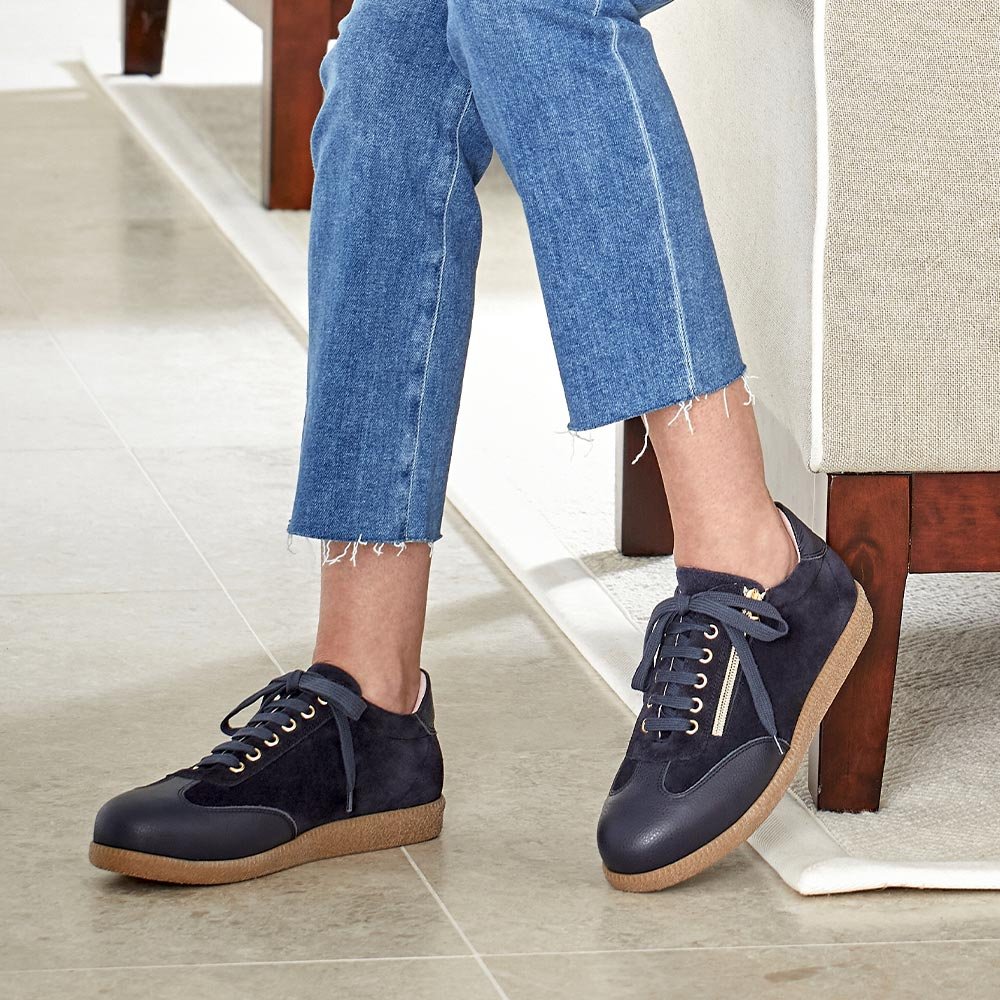
Your everyday shoe might need to handle a commute, errands and a few hours at work. The best choice depends on the parts of your day that matter most: how much you walk, the surfaces you use, the weather and any workplace dress or safety rules.
This guide helps you plan a practical rotation and assess fit. It does not claim to rank shoes through independent testing or guarantee relief from pain.
Map a normal day before shopping
Write down the longest stretch you spend walking or standing, the places you go and whether you can change shoes. If you mostly drive between short stops, a loafer may be practical. If your commute involves a long walk, an adjustable walking shoe may be a better starting point. You can keep a separate pair at work if the dress code calls for it.
If your job requires protective footwear or slip resistance, ask your employer for the exact requirements. A fashionable everyday shoe is not automatically suitable for a workplace hazard. Our guide to shoes for standing at work covers that decision in more detail.
Build a useful shoe rotation
One pair for everyday walking
For errands and commuting, consider a sneaker or walking shoe with a secure fastening and enough room at the toes. Compare the feel of the cushioning and the flexibility of the sole by walking in each pair. For a longer or more specific walk, our walking-shoe guide covers routes and fit.
A pair for the dress code
A loafer, flat or simple lace-up may be useful for an office or event. Check that it fits without pinching and stays secure as you walk. If you want ideas for combining footwear with outfits, see the casual shoe style guide.
A weather-ready option
Consider whether you regularly face rain, cold or uneven ground. Read the manufacturer’s description for the exact model and check the outsole and care requirements. A water-resistant upper can help with light moisture but is not necessarily waterproof.
Check fit and buying conditions
Measure both feet if possible and compare length and width using the brand’s chart. Try both shoes with the socks and any insoles you expect to wear. Walk, turn and stand for a few minutes; notice toe pressure, heel slipping and seams that rub. The AAOS fitting guide offers a useful starting point.
When buying online, check delivery costs, the return deadline and whether the retailer accepts returns after outdoor use. Try shoes indoors first if the policy requires it. Our guide to buying shoes online explains how to compare stores.
Make your budget go further
Think about cost per use without assuming a particular lifespan. A pair that fits your routine and can be returned if it does not fit may offer better value than a cheaper final-sale pair. Check the sole, seams and fastening as the shoes age. Replace them when they are damaged, uncomfortable or no longer meet your needs.
Fit needs can change. For persistent or worsening foot pain, seek advice from a qualified clinician instead of relying on a shoe model or a fixed replacement schedule.
Frequently asked questions
Do I need separate shoes for work and walking?
Not always. A single pair may work if it fits, suits the distance and meets workplace rules. A second pair can help when those needs differ.
Can affordable shoes work for everyday use?
Yes. Compare fit, suitable features and return terms across your budget rather than treating price as proof of comfort.
How often should everyday shoes be replaced?
There is no universal timeline. Check for worn tread, damaged construction and changes in fit, then replace the pair when it no longer serves you.



Leave a Reply