

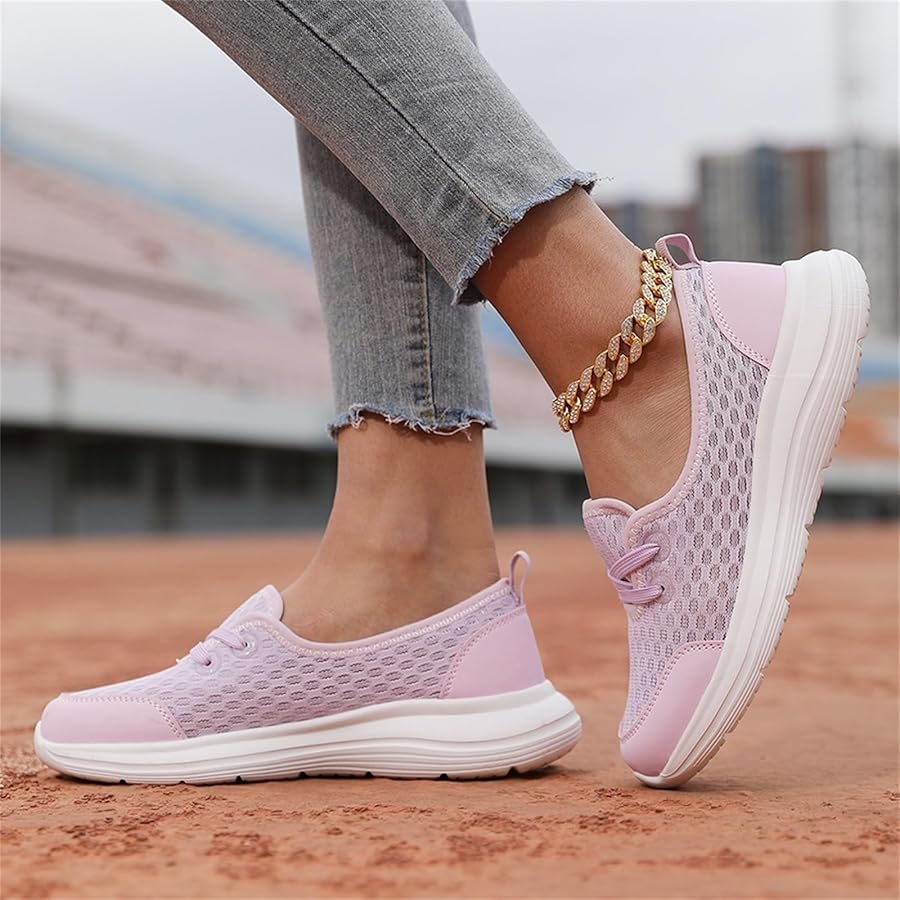
Casual shoes need to work with the way you spend your day. A pair for a quick coffee and a short drive may not be the pair you want for an afternoon exploring a city. Start with your plans, then choose a style you like and a fit that feels right.
This guide compares styles, not products tested by X Circle 360. Comfort varies from person to person, and no single design suits every foot.
Choose a style for the occasion
Sneakers
Sneakers can be easy to pair with jeans, trousers or dresses. A lace-up design lets you adjust the fit, while the sole and upper vary across models. A sleek leather-look pair may be easier to dress up; a mesh walking-style shoe may suit a day with more time on your feet. Compare the actual pair rather than assuming every sneaker has the same fit.
Loafers and flats
Loafers and flats can suit a casual office or a lunch out. Check that the heel stays on without gripping your toes and that the front does not pinch. If a flat has a strap, see whether it is adjustable and comfortable against the top of your foot. Try it on with the socks or hosiery you intend to wear.
Slip-ons and sandals
Slip-ons are convenient for quick trips, but a loose heel can rub when you walk. Sandals with adjustable straps allow more fit changes than fixed straps. Consider how much walking you plan to do and whether the weather and surface suit an open shoe. For longer walking days, use our women’s walking-shoe guide.
Casual boots
An ankle boot can be useful in cooler weather or when you want more coverage. Check the weight, ankle opening, sole and ease of fastening. Water-resistant and waterproof are not interchangeable claims: read the description of the exact pair.
Fit matters as much as appearance
Try on both shoes and walk around. Your toes should have room to move, the sides should not press and the heel should stay secure without rubbing. Check the size chart for the brand and compare available widths. If you use an insole, try it with the shoe so it does not make the fit too tight.
The American Academy of Orthopaedic Surgeons has a helpful shoe-fitting guide. If discomfort persists, speak with a qualified clinician rather than treating a shoe label as medical advice.
Make a small wardrobe work harder
Look at the clothes you already wear and choose a color and shape that work with several outfits. One pair need not cover every activity. A cleaner-looking loafer for short outings and a secure walking shoe for a longer commute may be more useful than forcing one style to do both.
For a full-day plan that includes commuting, errands and workplace rules, see our everyday shoe guide. If shopping online, check the return window and whether outdoor wear makes a pair ineligible; our shoe-store buying guide explains what else to compare.
Frequently asked questions
Can casual shoes be worn for walking?
Some can, if they fit well and suit the distance and surface. Try the pair with your usual socks and start with a shorter walk before relying on it all day.
Are expensive casual shoes always more comfortable?
No. Fit, construction and personal preference matter more than price alone. Compare the return policy as well as the price.
What if a shoe is tight at the toes?
Try another size, width or shape. Do not count on a painful shoe stretching into a comfortable fit.

Leave a Reply