

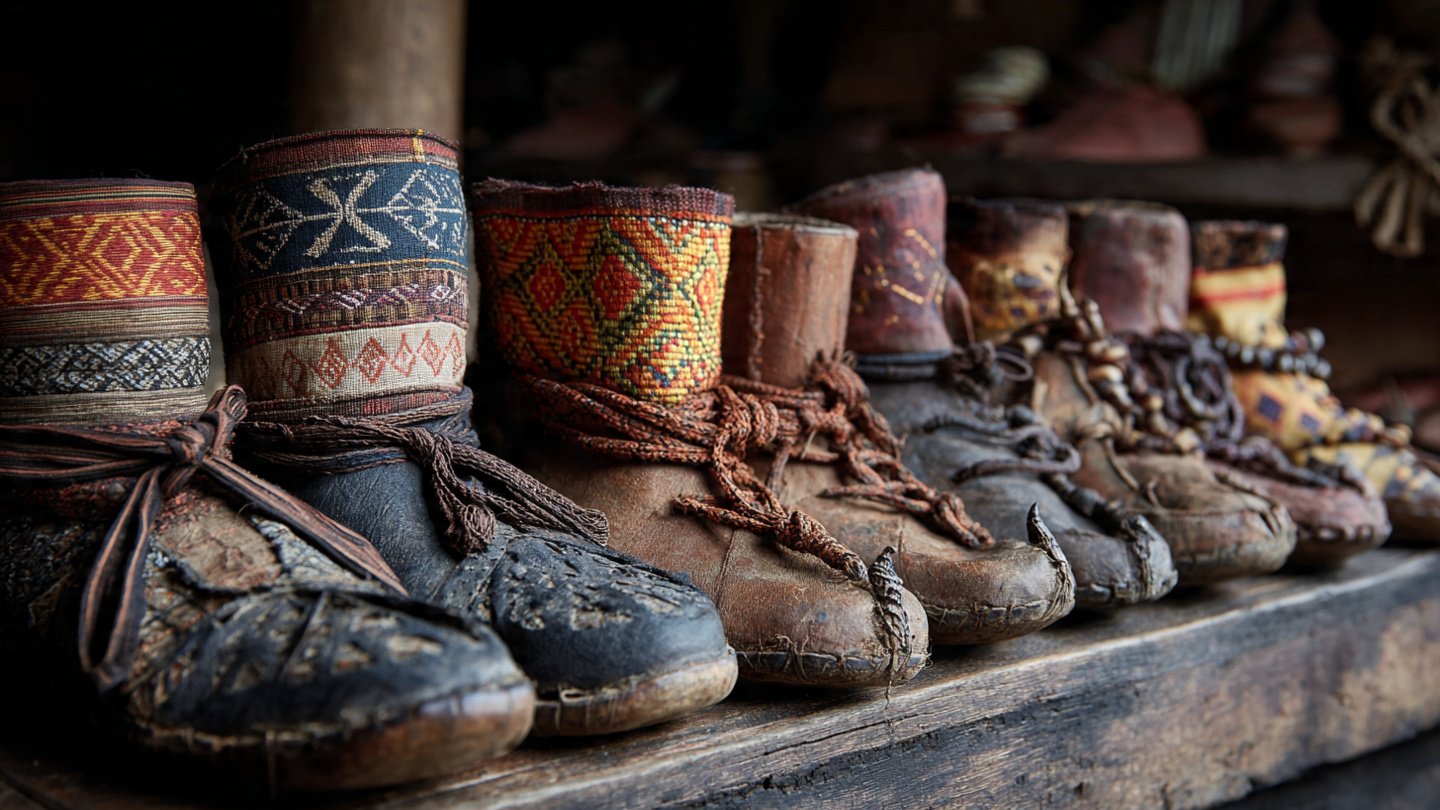
Footwear tells stories that words sometimes cannot. Long before global fashion trends and mass manufacturing, people around the world were crafting shoes that reflected their environment, beliefs, and social standing. A sandal woven from palm leaves in West Africa, a hand-stitched moccasin worn by Indigenous peoples of North America, a lacquered wooden clog echoing through a Dutch cobblestone street—each carries centuries of cultural memory within its sole.
The relationship between humans and their footwear runs deeper than function. Shoes signal identity. They communicate where a person comes from, what they value, and who they are within their community. This is as true today as it was thousands of years ago, a point explored at length in Why Humans Care About Shoes.
What makes cultural footwear so fascinating is how it simultaneously responds to the practical and the symbolic. Climate, terrain, available materials, and spiritual customs have all shaped the shoes different cultures produce. At the same time, these designs have traveled across borders, inspiring contemporary fashion in ways that continue to evolve. To understand where shoe design is going, it helps to understand where it has been—and that story is told in Evolution of Shoes From Ancient to Modern Times.
This blog explores traditional footwear across Asia, Europe, Africa, the Middle East, and the Americas, examining what these designs reveal about the cultures that created them and how they continue to shape the shoes we wear today.
Traditional Footwear in Asia
Sandals and Lightweight Designs
Across much of Asia, warm and humid climates naturally gave rise to open, lightweight footwear. Japan’s zori and geta sandals, made from rice straw or wood, allowed the feet to breathe while keeping wearers elevated above wet ground. In India, the Kolhapuri chappal—a flat, open sandal with intricately punched leather—has been worn for centuries and remains a popular choice today for its breathability and comfort.
These designs were never arbitrary. The choice of minimalist construction reflected both climate and cultural values around simplicity and connection to the earth.
Cultural Ceremonial Shoes
Ceremonial footwear in Asia carries deep spiritual meaning. In China, embroidered silk shoes were historically worn during weddings and festivals, with specific patterns symbolizing good fortune, fertility, and protection. In Japan, traditional tabi socks paired with zori are still worn during tea ceremonies and formal occasions, maintaining a direct link between footwear and ritual.
For a detailed comparison of craftsmanship across production methods, Handmade Shoes vs Factory Shoes offers a useful breakdown.
Handcrafted Materials
Asian shoemakers have long sourced materials from their immediate surroundings. Bamboo, rice straw, silk, cotton, and various locally tanned leathers feature prominently across the continent. These materials weren’t just practical—they connected artisans to the land and gave each pair of shoes a regional fingerprint.
Cultural Footwear in Europe
Wooden Clogs and Rural Shoes
Few images are as culturally iconic as the Dutch wooden clog, or klomp. Carved from a single block of wood, these shoes were designed for the wet, muddy conditions of Northern European farmland. Similar wooden footwear appeared across Scandinavia, France, and parts of Belgium, each variation shaped by local agricultural life.
What’s striking about these shoes is how utility and artistry coexisted. Artisans would often carve decorative patterns into the wood, turning a purely functional object into a form of self-expression.
Leather Boots and Formal Shoes
Further south and east, European leather craftsmanship gave rise to more structured footwear. Spanish cordwainers, Italian cobblers, and English bootmakers each developed distinct styles rooted in regional leatherworking traditions. The riding boot, the Oxford shoe, and the Chelsea boot all emerged from specific social and practical contexts—military use, equestrian culture, and urban fashion.
The evolution of this formal footwear is explored in detail in Victorian Era Boots and Formal Shoes, which traces how class and fashion intersected through the 19th century.
Historical Fashion Influence
Europe’s courts were responsible for some of the most extravagant footwear in history. The platform shoes worn by Venetian nobles in the 16th century, the red-heeled shoes of French aristocracy under Louis XIV, and the pointed-toe shoes of medieval Europe all reflected shifting ideals of status and gender. These choices filtered outward from the elite and shaped the broader visual language of European shoe design for centuries.
Footwear Traditions in Africa and the Middle East
Sandals for Hot Climates
Across Sub-Saharan Africa and the Middle East, the sandal has been a foundational footwear design for millennia. Ancient Egyptian sandals made from papyrus and palm leaves prioritized ventilation and ease of construction. In Morocco and throughout the Arab world, the babouche—a backless leather slipper—became a household staple, practical for both indoor and outdoor wear in hot climates.
Leather Craftsmanship
Leather craftsmanship in North Africa and the Middle East holds a legacy stretching back thousands of years. The medinas of Fez, Marrakech, and Cairo remain active centers of traditional tannery work, where leather is dyed and processed using methods passed down through generations. Leather vs Synthetic Shoe Materials offers a contemporary perspective on why natural leather continues to be valued despite modern alternatives.
Symbolic and Tribal Designs
In many African cultures, footwear carries tribal and ceremonial significance. Beadwork, specific color combinations, and material choices can communicate a wearer’s ethnic group, social rank, or life stage. In some traditions, the act of removing shoes carries as much meaning as wearing them—a gesture of humility or reverence performed during religious or communal rites.
Indigenous Footwear in the Americas
Moccasins and Soft Leather Shoes
The moccasin is perhaps one of the most recognizable examples of Indigenous American footwear. Crafted from a single piece of soft leather—typically deer, moose, or bison hide—moccasins were designed to conform to the foot’s natural shape, providing both protection and sensitivity. Different nations developed distinct styles. Plains nations often used hard soles suited to open terrain, while woodland nations favored softer constructions that allowed for quiet movement through forests.
Natural Materials and Craft Techniques
Indigenous footwear across the Americas drew on the materials immediately available. Porcupine quills, shells, plant dyes, and sinew were used alongside leather to create shoes that were functional and deeply ornamental. Each decorative element often carried meaning—representing clan identity, spiritual beliefs, or significant life events. For a broader historical perspective, The Origin of Shoes traces how early humans across multiple continents began protecting their feet.
Functional Design for Terrain
What’s remarkable about Indigenous American footwear is how closely each design matched its environment. Arctic peoples developed boots from sealskin to repel water and retain warmth. Desert-dwelling peoples in the American Southwest created sandals from woven yucca fiber, lightweight and breathable in high heat. The relationship between environment and design was never incidental—it was the design’s entire foundation.
Cultural Meaning of Traditional Shoes
Footwear has always communicated more than social convention lets on. Across cultures, shoes have served as powerful markers of status and identity. In feudal Japan, only samurai were permitted to wear certain sandal styles. In Ancient Rome, the color and construction of a senator’s sandal indicated his rank. Shoes, in this sense, were a form of regulated dress—a system of visible hierarchy.
Religious and ceremonial significance runs equally deep. Pilgrimages, marriage ceremonies, and rites of passage across dozens of cultures involve specific footwear or the deliberate removal of it. Entering a mosque without shoes, placing protective amulets in a child’s first pair, or burning a deceased person’s footwear—these acts point to the spiritual weight shoes quietly carry.
Gender has also shaped footwear design throughout history. The high heel, now largely associated with women’s fashion, was originally worn by male Persian cavalry riders. Over centuries, it migrated between genders and across cultures, accumulating new meanings with each transition. This broader social dimension of footwear is examined in Why Humans Care About Shoes.
How Traditional Footwear Influences Modern Shoe Design
Retro and Heritage Designs
The fashion industry’s ongoing appetite for heritage aesthetics owes a significant debt to traditional footwear. Espadrilles, loafers, mules, and clogs have all cycled back into mainstream fashion, each drawing from cultural origins that predate modern manufacturing. The commercial appeal of Retro Silhouettes Making a Comeback reflects a genuine consumer hunger for design that feels rooted in something real.
Modern Reinterpretation by Fashion Brands
Global fashion houses regularly look to traditional footwear for inspiration. Collections from designers in Milan, Paris, and New York frequently incorporate elements borrowed from Indigenous, African, and Asian traditions—sometimes collaboratively, sometimes controversially. The difference between cultural appreciation and appropriation is a conversation the fashion industry continues to navigate, with increasing pressure to credit and compensate source communities.
Sustainability and Traditional Materials
As the industry grapples with its environmental impact, traditional materials and techniques are gaining renewed relevance. Natural tanning, plant-based dyes, hand-stitching, and locally sourced materials offer an alternative to the resource-intensive processes of mass production. The Sustainable Shoe Materials Guide outlines how many of these traditional approaches are being integrated into contemporary sustainable footwear brands.
Globalization and the Future of Cultural Footwear
Globalization has both enriched and complicated the story of cultural footwear. On one hand, traditional designs have gained international audiences, bringing economic opportunity and renewed pride to communities of artisans. On the other, the pressure of fast fashion and mass production has threatened craft traditions that took generations to develop.
The future is not necessarily bleak. A growing number of designers are working directly with traditional craftspeople to blend heritage techniques with modern functionality—creating shoes that carry cultural weight and meet contemporary demands. Sustainability-driven consumers are increasingly drawn to footwear with traceable origins and craft integrity.
Technology will inevitably play a role. 3D printing, bio-based materials, and digital customization tools are already intersecting with footwear design, as explored in Futuristic Shoe Shapes and The Future of Shoes: Technology & Innovation. The most interesting work will likely happen at the intersection of the ancient and the emergent—where a centuries-old leather-braiding technique meets a modern sole designed for urban streets.
Cultural Footwear as a Reflection of Human Identity
Every pair of traditional shoes carries a compressed history of the people who made it. The materials chosen, the techniques used, and the symbols embedded in the design all speak to how a community understood itself—its relationship to the land, to the sacred, to social hierarchy, and to beauty.
These aren’t artifacts. They are living design traditions that continue to shape how shoes look, feel, and mean something to the people who wear them. The moccasin’s soft sole, the clog’s carved wood, the babouche’s slip-on ease—each reflects a set of values that remains worth understanding.
As fashion continues to draw from the world’s cultural heritage, the challenge is to do so with knowledge and respect. That starts with learning where these designs come from and what they carry. The broader story of how human footwear has evolved is explored in Evolution of Shoes From Ancient to Modern Times—an essential read for anyone who wants to understand how we got from bare feet to the shoes we wear today.
Leave a Reply