

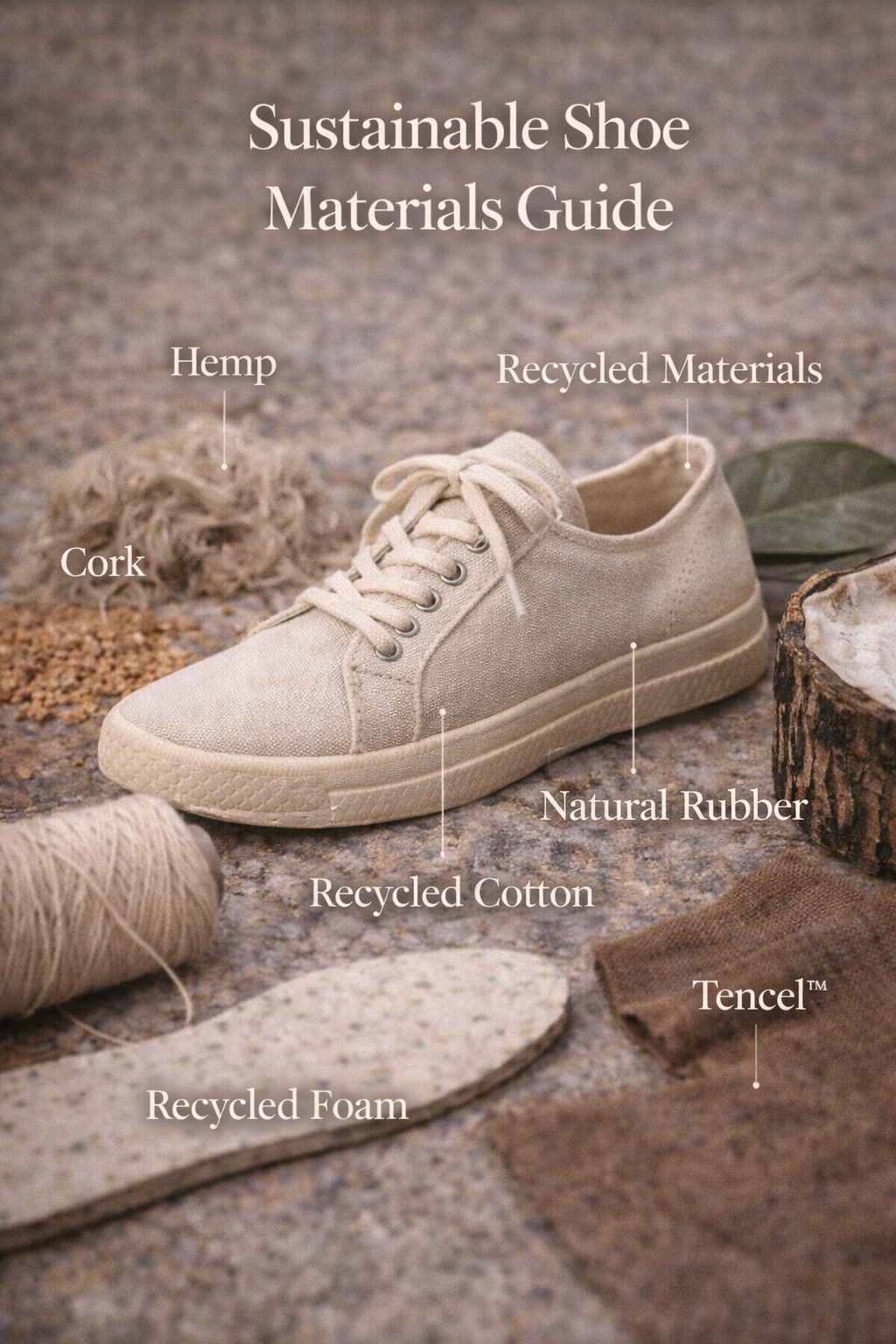
A shoe may be advertised as recycled, plant-based or recyclable. Those words can describe different things, and a claim about one component does not automatically apply to the whole pair. Look for the details behind the label before comparing products.
Recycled content
A recycled-content claim may refer to an upper, lining, sole, packaging or a portion of the entire product. Look for the percentage, the component it covers and the source of the material. Recycled content is not the same as a shoe being recyclable after use.
The US Federal Trade Commission’s consumer guidance recommends checking whether a claim concerns the product, its packaging or both, and how much recycled content is included.
Bio-based and plant-derived materials
Some foams, fibers and leather alternatives include ingredients from plants or other renewable sources. The amount can vary, and a plant-derived ingredient does not establish that a finished shoe is plastic-free, biodegradable or lower impact in every respect. Ask for the composition and the basis of any comparison.
Our leather and synthetic materials guide compares everyday fit and care questions without assuming one material always performs better.
Recyclable, compostable and biodegradable
These terms are not interchangeable. A shoe described as recyclable may require a particular collection program; check whether it accepts the complete pair where you live. A biodegradability or compostability claim should explain which parts are covered and the conditions needed. Do not put a shoe in household compost or recycling solely because of a broad label.
Look beyond a single ingredient
A useful comparison considers manufacturing, transport, durability, care and what happens at the end of use. Evidence can be difficult to compare when brands use different methods. Look for a clear scope and an explanation of trade-offs rather than an unqualified claim of being environmentally friendly.
Fit and maintenance matter in practical terms: a pair that works for your routine is more likely to be worn. Ask whether worn heels or soles can be repaired, and follow the maker’s care instructions. The construction guide discusses repairability.
Questions to ask a seller
Which component contains recycled or bio-based material, and what percentage? Is the claim about the pair or its packaging? Is there an accessible take-back or repair service? What evidence supports a comparison with another product?
For a broader look at design tools and product concepts, see the future of footwear. The shoe design guide explains where material choices enter the process.



Leave a Reply