

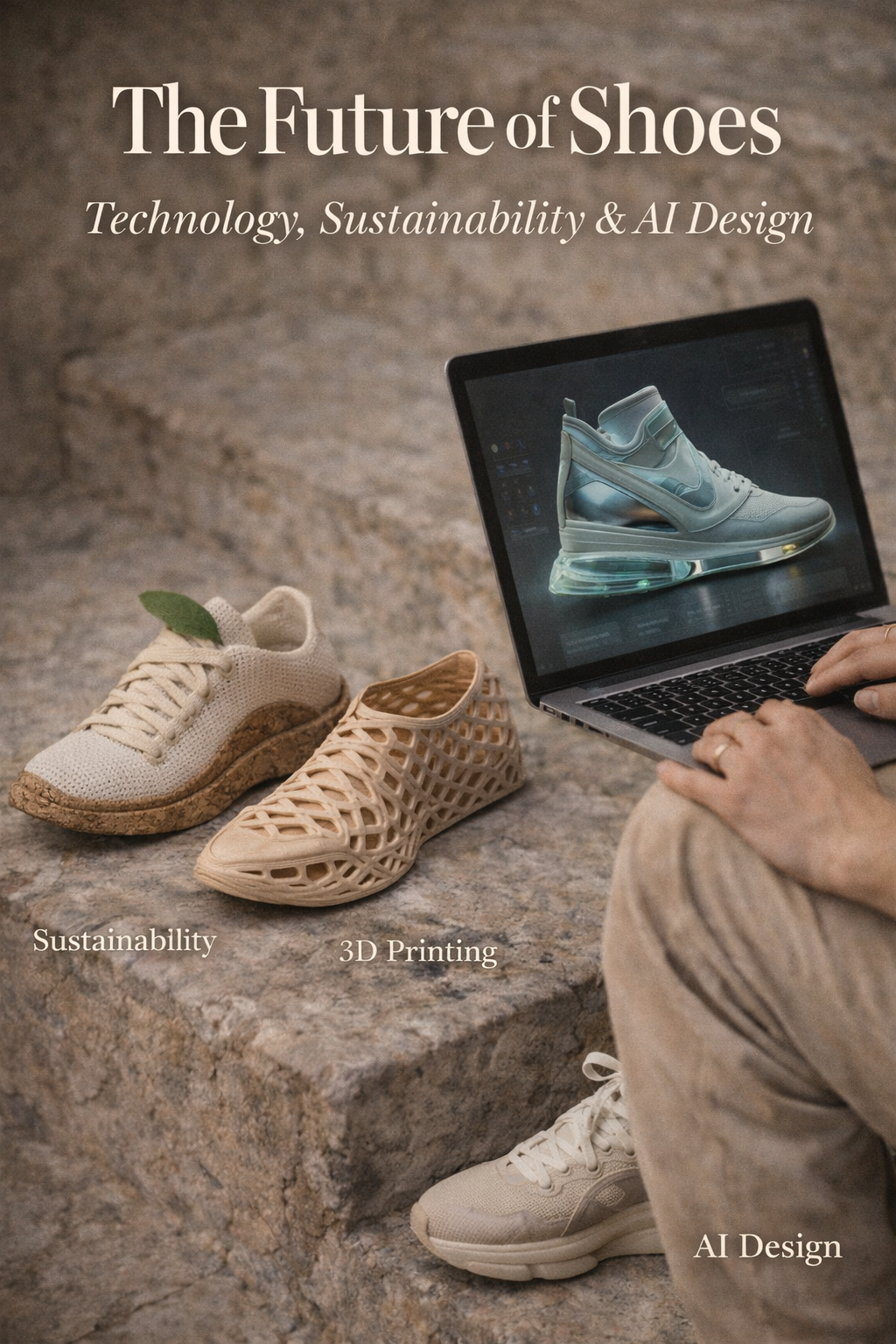
The history of footwear is a history of human problem-solving. From the earliest woven sagebrush sandals found in Oregon caves to the Victorian button-up boots of the industrial revolution, shoes have always reflected the technology and values of their time. Today, we stand on the precipice of the most significant shift in footwear design since the invention of the vulcanized rubber sole.
We are no longer just designing coverings for feet; we are engineering intelligent platforms for human movement. The future of shoes is not merely a question of aesthetic trends or seasonal colors. It is a convergence of three massive forces: advanced material science, artificial intelligence, and a critical demand for sustainability.
As we look toward the next horizon of human apparel, the line between biological necessity and technological enhancement is blurring. Shoes are evolving from passive objects into active participants in our daily lives—adaptive, responsive, and, increasingly, circular. This guide explores the technological renaissance of footwear, examining how AI, eco-consciousness, and smart manufacturing are redefining what it means to walk in the modern world.
Read Here: The Evolution of Shoes: From Ancient Sandals to Modern Sneakers
Why the Future of Shoes Is Changing Fast
For centuries, the fundamental architecture of a shoe remained relatively static: a sole for protection, an upper for containment, and a fastening system for security. While styles oscillated wildly, the function was constant. However, the last decade has accelerated footwear evolution at an unprecedented pace.
This acceleration is driven by necessity as much as capability. The traditional fashion industry model—produce, consume, discard—is facing an existential reckoning due to environmental impact. Simultaneously, consumer expectations have shifted. We now expect our devices to be smart and our experiences to be personalized; inevitably, we expect the same from our clothing.
The integration of technology into footwear is reshaping the entire lifecycle of the product. Design is no longer just a sketching process but a computational one. Manufacturing is moving from labor-intensive assembly lines to automated 3D printing farms. And the materials themselves are changing from dead leather and inert plastics to living, breathing, or endlessly recyclable substances. This is not science fiction; it is the current trajectory of the industry, visible in everything from high-performance athletic wear to avant-garde luxury fashion.
Smart Technology and Wearable Innovation
The “smart shoe” was once a gimmick—a light-up heel or a rudimentary step counter. Today, wearable technology in footwear represents a sophisticated biomechanical interface. By embedding sensors, actuators, and adaptive materials directly into the chassis of the shoe, designers are creating footwear that reacts to the wearer in real-time.
Self-Lacing and Adaptive Fit Systems
The concept of a self-lacing shoe entered the cultural consciousness through cinema, specifically Back to the Future Part II. What was once a visual effect is now functional reality. The primary goal of adaptive fit technology, however, is not just convenience; it is vascular health and performance optimization.
Human feet are not static blocks of bone; they swell and contract throughout the day, especially during athletic exertion. A shoe that fits perfectly at mile one of a marathon may be dangerously tight by mile twenty. Adaptive fit systems use tension-sensing motors to adjust the tightness of the upper based on real-time feedback. This ensures consistent blood flow and lockdown, reducing the risk of injury and blistering.
Current iterations use micro-motors and cabling systems, but the next generation of adaptive fit relies on material science. We are seeing the development of “memory polymers” that expand or contract in response to body heat or electrical signals, eliminating the need for heavy batteries and motors entirely.
Motion Tracking and Performance Sensors
Data is the currency of modern athletic performance. Traditionally, gait analysis required a treadmill and a laboratory setting. The future of shoes brings the laboratory to the pavement. By embedding pressure sensors, accelerometers, and gyroscopes into the midsole, footwear can now capture high-fidelity data on how a person moves.
This goes beyond counting steps. These sensors analyze pronation, strike zones, ground contact time, and stride length. This data is transmitted to a smartphone or smartwatch, providing the wearer with real-time coaching cues to correct form and prevent injury. For elite athletes, this feedback loop is invaluable. For the everyday walker, it offers a window into their biomechanical health that was previously inaccessible.
Smart Materials and Responsive Cushioning
Perhaps the most exciting frontier is the development of reactive materials. Traditional EVA foam cushioning offers a single, static experience—it is soft or firm, regardless of what you are doing. Future cushioning systems are non-Newtonian or electrically responsive.
Imagine a midsole lattice structure that remains soft while you are walking but instantly stiffens into a responsive springboard the moment you break into a sprint. This adaptability allows a single pair of shoes to serve multiple functions, blurring the lines between comfort and high-performance gear. Researchers are currently exploring fluid-based shock absorption systems controlled by micro-valves, allowing the shoe to actively dampen impact based on the terrain.
AI Design and the Future of Shoe Silhouettes
Artificial Intelligence is not just powering the sensors inside the shoe; it is dreaming up the shoe itself. Generative design—a process where designers input constraints (weight, durability, material) and AI algorithms generate thousands of potential solutions—is creating silhouettes that no human could conceive.
Algorithm-Driven Shape Design
Human designers are often constrained by their own biases and understanding of traditional geometry. AI has no such limitations. When tasked with creating the lightest possible support structure for a sneaker, an AI might generate an organic, bone-like lattice that looks more alien than man-made.
These algorithm-driven shapes are often more efficient than traditional designs. They place material only exactly where it is needed to support load, leaving negative space everywhere else. This results in footwear that looks radically different—skeletal, porous, and highly complex. This aesthetic shift is defining the “future” look of footwear, moving away from panels and stitching toward continuous, flowing forms.
Personalized Fit Through Data
The “standard size” is a manufacturing compromise. No two size 10 feet are exactly alike. AI allows for mass customization at a scale previously impossible. By analyzing thousands of 3D foot scans, machine learning models can identify successful fit patterns for unique foot shapes.
In the near future, buying shoes may not involve choosing a size at all. Instead, customers will scan their feet with a smartphone app. An AI will then modify a base design to perfectly match the user’s arch height, toe width, and heel volume, sending the file directly to a 3D printer. This shift from “ready-to-wear” to “made-to-measure” democratizes the bespoke experience, once reserved for royalty and elite athletes.
Experimental Silhouette Trends
AI is also fueling a surge in experimental silhouettes. By analyzing social media trends, historical fashion cycles, and street style imagery, AI tools can predict upcoming aesthetic shifts and propose hybrid designs. We are seeing a rise in “gorpcore” influenced chunkiness mixed with streamlined digital aesthetics.
These tools allow designers to prototype rapidly, blending disparate elements—a hiking boot sole with a ballet flat upper, for example—to see what resonates. This rapid experimentation is accelerating the trend cycle, but also allowing for more niche, adventurous designs to reach the market.
Read Here: How Shoes Are Made: Complete Beginner-to-Advanced Guide
Sustainability and Eco-Friendly Footwear Innovation
The footwear industry is historically one of the most polluting sectors of fashion. Complex construction methods involving glues, mixed materials, and non-recyclable plastics have made shoes notoriously difficult to dispose of responsibly. The future of shoes depends on solving this environmental crisis through innovation.
Recycled Materials and Upcycling
The first step toward sustainability is the utilization of waste. Brands are increasingly turning to ocean plastics, recycled polyester (rPET), and industrial scraps to create high-performance textiles. However, the future goes beyond just using old plastic bottles.
We are seeing the rise of carbon-capture materials—foams and plastics made from sequestered CO2 emissions. Additionally, there is a push toward “monomaterial” construction. A shoe made entirely of a single type of plastic (TPU, for example) can be easily ground down and remelted into new pellets without the complex process of separating glue from leather from rubber. This design-for-recyclability is crucial for closing the loop.
Biodegradable Shoes
If a shoe cannot be recycled, it should disappear. The development of biodegradable footwear focuses on materials that can return to the earth without leaving microplastics behind. This involves utilizing organic alternatives like mushroom leather (mycelium), algae-based foams, and natural rubber.
Mycelium is particularly promising. It can be grown in weeks rather than the years required to raise cattle, using a fraction of the water and land. It provides the durability and aesthetic of leather but is fully compostable. The challenge lies in ensuring these materials are durable enough for daily wear but susceptible to decomposition under the right conditions—a chemical balancing act that scientists are currently perfecting.
Circular Fashion Concepts
The ultimate goal is circularity: a system where shoes are never owned, only leased. In a circular model, a consumer subscribes to a brand. When their shoes wear out, they return them. The brand then disassembles the shoe, recycles the materials, and produces a new pair.
This requires a fundamental shift in how shoes are constructed. Stitched or mechanical connections must replace permanent adhesives. Companies are piloting programs where customers return old shoes for store credit, effectively mining their own past products for raw materials. This shift transforms waste management from a cost center into a resource strategy.
The Future of Modern Shoe Categories
As technology and sustainability reshape construction, the rigid categories of the past—dress shoe, sneaker, boot—are dissolving. The future is hybrid.
Hybrid Sneakers
The dress code of the modern workplace has relaxed, and footwear is reflecting this. The “dress sneaker” was the first wave, but the future holds a more seamless integration. We are seeing silhouettes that combine the ergonomic support of a marathon runner with the premium materials and sleek lines of a formal oxford.
These hybrids utilize knit technologies to create uppers that map the foot like a sock, while sitting atop 3D-printed midsoles that offer targeted cushioning. The result is a shoe that is appropriate for a boardroom yet capable of a 5-mile commute walk.
Minimalist Performance Shoes
Conversely, there is a movement toward stripping away the unnecessary. As materials become stronger and lighter, shoes are becoming less substantial. Minimalist performance footwear focuses on the “barefoot” experience but with the protection of modern materials.
Using graphene-enhanced rubber (200 times stronger than steel) allows for ultra-thin soles that protect against puncture without losing ground feel. These shoes promote natural foot strength and proprioception, countering decades of over-engineered support that some podiatrists argue has weakened our feet.
Multi-Purpose Lifestyle Footwear
The future consumer values versatility. A shoe that can only be worn for one specific activity is seen as wasteful. Multi-purpose lifestyle footwear is designed to transition seamlessly between environments—trail to tarmac, gym to grocery store.
This versatility is achieved through adaptive traction systems and hydrophobic (water-repelling) nanotechnology coatings that keep shoes clean and dry in variable weather. The goal is to own fewer pairs that do more, aligning with the principles of the capsule wardrobe and sustainable consumption.
Cultural and Psychological Impact of Future Shoes
Shoes have always been improved markers of identity. In the future, this identity extends into the digital realm.
Digital Fashion Identity and Virtual Sneakers
We are entering the era of the “metaverse” and digital ownership. Consumers are already spending real money on virtual sneakers for their digital avatars in gaming environments and social spaces. These “cryptokicks” allow for designs that defy the laws of physics—shoes made of fire, floating components, or impossible geometries.
This digital fashion layer allows brands to test hype and demand without manufacturing a single physical sample. It also allows consumers to express themselves in online communities with the same fervor they do on the street.
Emotional Connection to Technology
As shoes become smarter, our relationship with them changes. A shoe that “knows” you—that adjusts to your swelling feet, corrects your stride, and tracks your progress—becomes more than an accessory; it becomes a partner.
There is a psychological comfort in wearing technology that protects and optimizes the body. However, this also raises questions about dependency. Will we lose the ability to listen to our own bodies if we rely entirely on haptic feedback from our footwear? The future of design must balance assistance with autonomy.
Challenges and Ethical Questions in Future Footwear
Innovation is not without its shadows. The rush toward a high-tech footwear future presents significant ethical and logistical hurdles.
Sustainability vs. Mass Production
Can high-tech shoes truly be sustainable? Electronics, batteries, and sensors are notoriously difficult to recycle (e-waste). Embedding these into shoes creates a conflict between the desire for smart features and the need for eco-friendly disposal. The industry must solve the “disassembly problem”—making it easy to separate the tech from the textile at the end of the shoe’s life.
Technology Accessibility
As shoes become advanced medical devices and performance enhancers, price points will inevitably rise. This creates a risk of a “performance divide,” where only the wealthy can afford footwear that protects their long-term health or optimizes their athletic output. Democratizing this technology—bringing the cost of adaptive fit and gait analysis down to mass-market levels—is a crucial challenge for the coming decade.
Data and Privacy Concerns
When your shoes track your location, your health data, and your movement patterns, they become surveillance devices. Who owns that data? The user, or the brand? As footwear integrates with the Internet of Things (IoT), robust privacy standards must be established to ensure that biomechanical data is not exploited for targeted advertising or insurance adjustments.
Read Here: The Psychology of Sneaker Culture and Modern Identity
Conclusion: The Next Evolution of Human Footwear
The shoe is no longer just a buffer between the foot and the ground. It is becoming a platform for innovation, a node in the digital network, and a statement of environmental responsibility.
The future of shoes will be defined by a harmony between the biological and the artificial. We are moving toward a world where footwear is grown rather than glued, where fit is dynamic rather than static, and where the shoe adapts to the human, rather than the human breaking in the shoe.
As we step into this future, the fundamental purpose of the shoe remains unchanged: to help us move forward. But how we move, and the footprint we leave behind, is being reimagined for a smarter, cleaner, and more efficient world.
Leave a Reply