

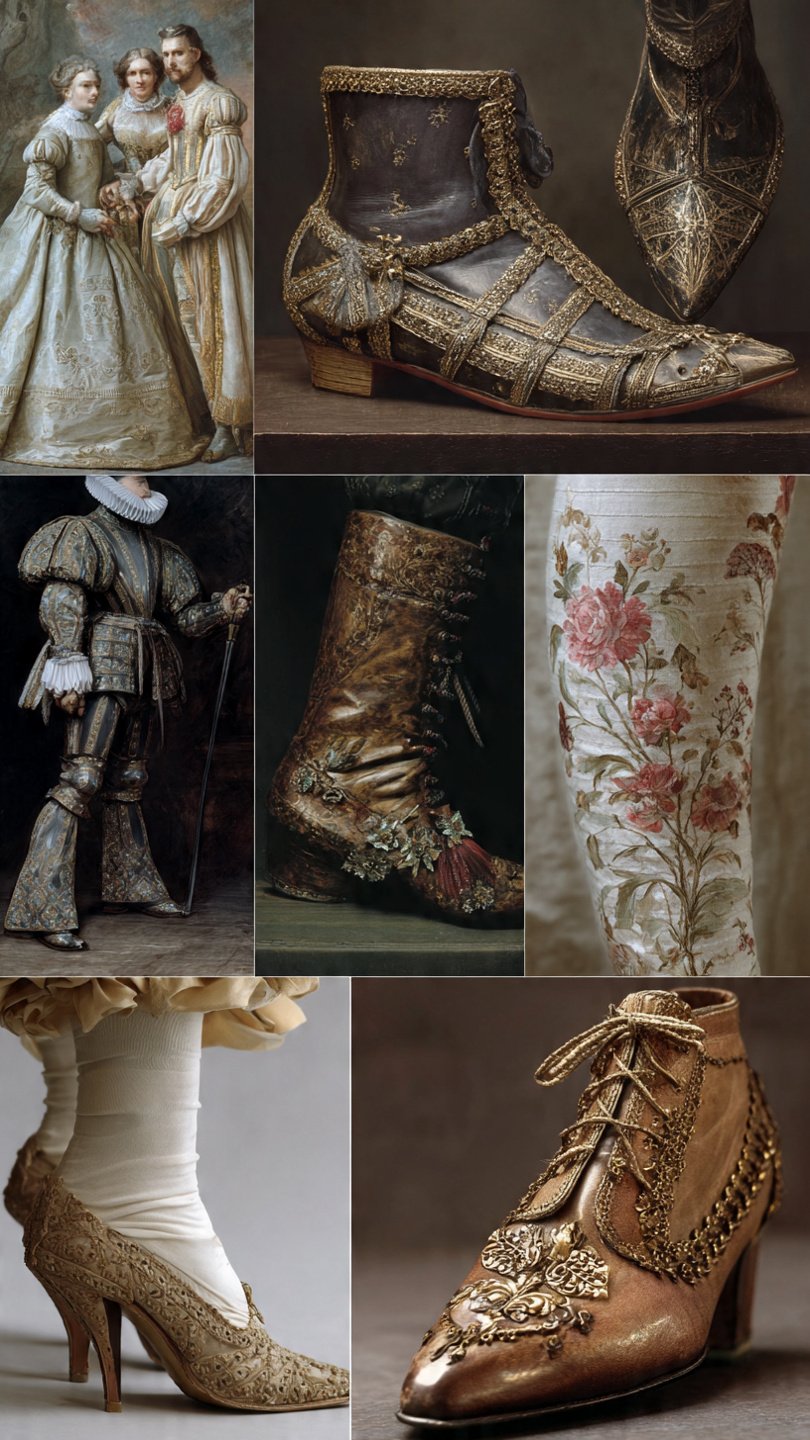
The Renaissance wasn’t just about art, architecture, and scientific discovery. It also marked a turning point in how people thought about clothing and, more specifically, shoes. What began as practical foot coverings evolved into carefully designed symbols of wealth, identity, and social standing. Footwear shifted from medieval simplicity to ornate, expressive forms that captured the spirit of the age.
This period introduced bold new silhouettes, luxurious materials, and intricate craftsmanship that redefined what shoes could represent. The shoes you wore said something about who you were—your class, your profession, even your ambitions. Understanding Renaissance shoe fashion gives us insight not only into the people of that era but also into the origins of modern footwear design.
This post explores the key styles, materials, and cultural meanings behind Renaissance shoes. We’ll examine how they differed from medieval footwear, what influenced their designs, and how their legacy continues to shape the shoes we wear today.
The Renaissance as a Turning Point in Footwear
The Renaissance, spanning roughly from the 14th to the 17th century, was a period of cultural rebirth across Europe. Art flourished, scientific inquiry expanded, and fashion became a vehicle for self-expression. Clothing and accessories moved beyond mere function to become statements of taste, status, and sophistication.
Shoes followed this trajectory. During the Middle Ages, footwear was primarily utilitarian—designed to protect feet from rough terrain and harsh weather. Styles like simple leather boots and soft indoor slippers dominated. But as Renaissance society grew wealthier and more urbanized, shoes began to reflect artistic experimentation and social ambition.
Footwear became a canvas for decoration. Shoemakers introduced elaborate embellishments, unusual shapes, and vibrant colors. Shoes were no longer just about walking; they were about being seen. The transition from medieval footwear styles to Renaissance designs marked a shift from practicality to fashion-driven innovation—a change that would influence the evolution of shoes from ancient to modern times.
Key Renaissance Shoe Styles
Renaissance footwear was defined by distinctive silhouettes that broke away from medieval norms. These styles were bold, experimental, and often impractical—but that was precisely the point.
Square-Toe Shoes
One of the most recognizable features of Renaissance footwear was the square toe. Unlike the pointed styles that dominated late medieval fashion, square-toed shoes offered a broad, boxy front that created a striking visual profile. This design became especially popular in the 15th and early 16th centuries.
The square toe wasn’t chosen for comfort. It was a deliberate aesthetic choice that conveyed modernity and refinement. Wealthy individuals wore exaggeratedly wide square toes to distinguish themselves from the lower classes, who often wore more practical footwear. The shape also allowed for elaborate decorations across the toe box, including embroidery, jewels, and metalwork.
Slashed Leather Designs
Slashing—cutting decorative slits into fabric or leather to reveal contrasting material underneath—was a hallmark of Renaissance fashion. This technique appeared across garments and footwear, creating texture and visual interest.
Slashed shoes featured parallel or crisscrossing cuts along the upper, often revealing brightly colored linings or silk inserts. The style originated from military uniforms, where soldiers would slash their clothing to allow for movement and ventilation. It quickly became fashionable among civilians, symbolizing boldness and flair.
These designs required skilled craftsmanship. Each slash had to be carefully placed to maintain the shoe’s structural integrity while achieving the desired aesthetic effect. The result was footwear that looked complex and ornate—perfect for those seeking to make a statement.
Elevated Platform Styles
Platform shoes weren’t invented in the 1970s. Renaissance Europe, particularly Italy and Spain, saw the rise of chopines—elevated platform shoes that could reach extreme heights. Some chopines stood over 20 inches tall, requiring wearers to use walking sticks or servants for balance.
Chopines were primarily worn by wealthy women as a status symbol. The higher the platform, the more prestigious the wearer. They also served a practical purpose in muddy or dirty streets, keeping expensive fabrics and hems clean. However, their primary appeal was visual impact.
These early experiments with bold silhouettes laid the groundwork for modern platform designs. To understand how different toe shapes in shoes evolved and why platform shoes continue to resurface in fashion, it helps to look back at these Renaissance innovations.
Materials and Craftsmanship in Renaissance Footwear
Renaissance shoes weren’t mass-produced. Each pair was meticulously crafted by skilled artisans using high-quality materials. The time, effort, and expertise required made shoes expensive—and therefore exclusive.
Rich Leather and Velvet
Leather was the most common material for Renaissance footwear, prized for its durability and versatility. High-quality leather allowed for intricate tooling, embossing, and dyeing. Wealthier individuals opted for soft, supple leathers in deep jewel tones—burgundy, forest green, royal blue.
Velvet was another popular choice, especially for formal or ceremonial shoes. Its plush texture and light-catching sheen conveyed luxury. Velvet shoes were often reserved for indoor wear or special occasions, as the material wasn’t suited to rough outdoor conditions.
Silk, brocade, and even gold or silver thread were incorporated into the most extravagant designs. These materials transformed shoes into wearable art, blurring the line between fashion and craftsmanship.
Decorative Stitching Techniques
Stitching wasn’t just functional—it was decorative. Renaissance shoemakers employed a variety of techniques to embellish their creations, including embroidery, appliqué, and goldwork. Floral motifs, geometric patterns, and heraldic symbols adorned uppers and toe boxes.
Some shoes featured pearls, gemstones, or metal studs, each carefully hand-sewn into place. The precision required for these details demonstrated the shoemaker’s skill and elevated the shoe’s value.
Handmade Construction Methods
Every Renaissance shoe was handmade, often custom-fitted to the wearer’s foot. Shoemakers used traditional construction methods passed down through generations, including hand-stitching, lasting, and welting.
The process was labor-intensive. A single pair of shoes could take days or even weeks to complete, depending on the complexity of the design. This made shoes a significant investment—one that only the affluent could afford.
Understanding the difference between handmade shoes and factory shoes highlights how much has changed since the Renaissance. Modern manufacturing prioritizes speed and consistency, but Renaissance shoemakers focused on artistry and individuality. Their shoe stitching techniques remain influential in high-end and bespoke footwear today.
Social Meaning Behind Renaissance Shoe Fashion
Shoes weren’t just accessories. They were social signals, communicating information about the wearer’s class, occupation, and aspirations.
Status and Class Symbols
In Renaissance society, appearance mattered. Sumptuary laws in some regions even dictated what types of clothing and accessories different classes could wear. While enforcement varied, the principle was clear: fashion reinforced social hierarchy.
Expensive shoes made from rare materials signaled wealth and privilege. Elaborate designs demonstrated access to skilled artisans. Conversely, simple, unadorned footwear marked the wearer as lower class or working poor.
Shoes became a way to display—or aspire to—higher social standing. Those who could afford it invested heavily in their footwear, knowing it would be noticed and judged.
Gendered Fashion Trends
Men’s and women’s shoes followed different design trajectories during the Renaissance. Men’s footwear tended toward bold, angular silhouettes—square toes, slashed leather, and sturdy construction. These styles projected power, confidence, and masculinity.
Women’s shoes were often more delicate, featuring softer materials, embroidery, and embellishments. Platform chopines, however, broke this mold, allowing women to literally elevate themselves above the crowd.
Gender norms influenced not only design but also access. Wealthy men had more freedom to experiment with extravagant styles, while women’s fashion was often dictated by practicality and modesty—though exceptions certainly existed.
Influence of Royal Courts
Royalty and nobility set fashion trends, and their shoe choices rippled through society. Kings, queens, and courtiers wore the most opulent footwear available, showcasing the latest styles and setting standards for the elite.
Royal courts employed skilled shoemakers who created custom designs for their patrons. These designs were often imitated by those seeking to align themselves with the ruling class, creating a trickle-down effect that spread Renaissance shoe trends across Europe.
Fashion at court wasn’t just about aesthetics—it was political. Wearing the right shoes could signal loyalty, ambition, or alignment with particular factions. For a deeper dive into the cultural significance of footwear, explore why humans care about shoes.
Renaissance Silhouettes and Their Influence on Modern Design
Renaissance footwear introduced silhouettes that continue to influence modern shoe design. While materials and construction methods have evolved, the core shapes remain recognizable.
Structured Toe Profiles
The square toe, once a Renaissance staple, reappears in contemporary fashion. Modern square-toed boots, loafers, and dress shoes echo the bold geometric lines of their Renaissance predecessors. Designers revisit this shape when they want to evoke a sense of structure, formality, or retro appeal.
Understanding what a shoe silhouette is helps clarify how these historical profiles translate into modern contexts. A silhouette isn’t just a shape—it’s a visual identity that communicates style, purpose, and personality.
Decorative Uppers
Renaissance shoes celebrated ornamentation. Slashing, embroidery, and embellishments transformed the upper into a focal point. Modern designers continue this tradition, using textures, patterns, and materials to create visual interest.
Sneakers, for example, often feature layered uppers with contrasting textures—a direct descendant of Renaissance experimentation. High-fashion brands revive slashing techniques and metallic details in limited-edition collections.
Early Platform Concepts
Chopines were among the first platform shoes, and their influence persists. Modern platforms—whether in sneakers, sandals, or heels—owe a debt to Renaissance innovation. The desire to add height and drama through elevated soles hasn’t changed; only the execution has evolved.
For a historical perspective, check out classic sneaker silhouettes in history to see how athletic footwear adapted platform concepts for performance and style.
Renaissance vs Medieval Footwear: Key Differences
The shift from medieval to Renaissance footwear marked a significant evolution in design philosophy. Several key differences stand out:
Function vs Fashion: Medieval shoes prioritized practicality. They were designed to protect feet in harsh conditions and support active lifestyles. Renaissance shoes prioritized appearance, even at the expense of comfort or durability.
Ornamentation: Medieval footwear was relatively plain, with minimal decoration. Renaissance shoes embraced elaborate embellishments, turning footwear into art objects.
Silhouette Experimentation: Medieval shoes featured simple shapes—rounded or slightly pointed toes, low profiles. Renaissance designers experimented with exaggerated forms like square toes and towering platforms.
Social Symbolism: While medieval shoes could indicate status, Renaissance footwear took this further, becoming explicit markers of class, wealth, and identity.
This transition reflects broader cultural changes. As society became more urbanized and wealth concentrated among elites, fashion became a tool for social differentiation. To explore earlier styles in more detail, visit medieval footwear styles explained.
Cultural Legacy of Renaissance Shoe Trends Today
Renaissance footwear may seem distant, but its influence persists in modern fashion. Designers regularly draw inspiration from historical silhouettes, materials, and techniques.
Retro Fashion Inspiration: Square toes, platform soles, and decorative uppers appear in contemporary collections. Vintage-inspired designs tap into nostalgia for past eras, including the Renaissance.
High-Fashion Reinterpretations: Luxury brands like Gucci, Prada, and Dolce & Gabbana have all referenced Renaissance aesthetics in their footwear lines. Embroidered uppers, jeweled embellishments, and bold silhouettes echo the opulence of Renaissance design.
Influence on Formal Footwear: Dress shoes, loafers, and formal boots still carry traces of Renaissance craftsmanship—structured toe boxes, fine stitching, and quality materials. The emphasis on shoes as status symbols endures in professional and formal contexts.
For more on how historical styles resurface, explore retro silhouettes making a comeback and how formal shoes are built differently.
The Evolution Toward Modern Footwear After the Renaissance
The Renaissance laid the groundwork for modern shoe design, but significant changes followed. The Industrial Revolution introduced mechanized production, making shoes more affordable and accessible. Standardized sizing replaced custom fitting, and factories replaced individual artisans.
Construction methods evolved. Hand-stitching gave way to machine stitching. New materials—rubber, synthetic fabrics, advanced foams—expanded design possibilities. Shoes became more comfortable, durable, and versatile.
Despite these changes, core Renaissance innovations remain. The idea that shoes communicate identity, the balance between form and function, and the appreciation for craftsmanship all trace back to this pivotal era.
To understand how shoemaking transformed, read about the step-by-step shoe manufacturing process. And for a glimpse into where design is headed, check out futuristic shoe shapes.
Renaissance Shoes as the Birth of Fashion-Driven Footwear
The Renaissance didn’t just change how shoes looked—it changed what they meant. Footwear became a form of expression, a tool for social navigation, and a canvas for artistic innovation. The era bridged the gap between medieval practicality and modern fashion, establishing principles that still guide shoe design today.
Square toes, platform soles, and decorative uppers may have originated centuries ago, but their influence is undeniable. Whether you’re wearing formal dress shoes, vintage-inspired boots, or high-fashion sneakers, you’re experiencing the legacy of Renaissance shoemakers.
Understanding this history enriches our appreciation for the shoes we wear. It reminds us that footwear has always been more than protection for our feet—it’s a reflection of who we are and the world we live in. For a comprehensive look at how shoes have evolved across the ages, explore the evolution of shoes from ancient to modern times.
Leave a Reply