

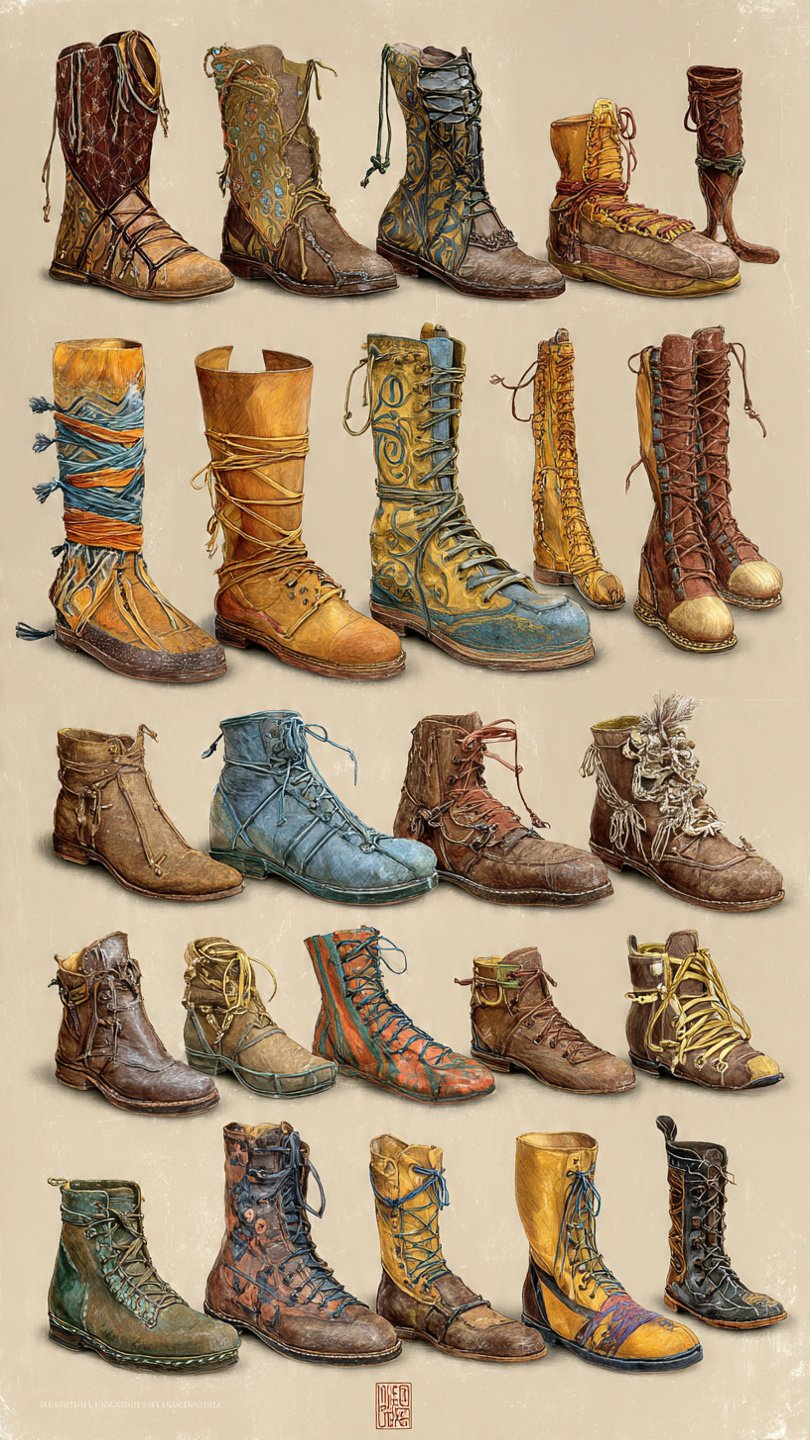
A medieval shoe could be plain or highly decorative, short or dramatically pointed. Styles changed over centuries and across regions, so a single picture cannot represent everyone who lived in medieval Europe. Surviving shoes and images give us a useful, though incomplete, view.
What can surviving shoes tell us?
The Metropolitan Museum of Art’s footwear essay notes that its earliest shoes date from the 14th century and identifies leather, felt and woven cloth among materials used. Because few early shoes survive in good condition, researchers also look at paintings, sculpture and tapestries. An object can show construction details, while an image can show how a shoe was worn, although neither gives a complete account by itself.
Poulaines and pointed toes
Some late medieval shoes had long pointed toes. The Met’s British crakow example, dated to 1300–1450, is one surviving leather shoe. The museum explains that exaggerated points were sometimes stuffed for support and that lengths changed over time. Its collection essay associates the most extreme versions with upper-class fashion, but the appearance of one shoe cannot tell us everything about its wearer.
Other shoes were less dramatic. Materials and shape depended on place, period, resources and use. It is better to ask what a particular object shows than to assume all medieval footwear looked alike.
How were shoes made?
Shoemakers cut and joined materials by hand. Some surviving medieval shoes are described as turnshoes, made by sewing the upper and sole inside out and turning the shoe right side out. Construction varied, and the state of a surviving artifact can make details hard to interpret. Our shoe stitching guide explains the broader role of seams.
Reading fashion and status carefully
A decorated shoe could communicate wealth or taste, but we should avoid treating a single feature as a universal social label. Fashionable pointed footwear and ordinary working shoes existed in different contexts. The survival of an unusual object in a museum also does not prove it was the most common design of its day.
What came later?
The late Middle Ages and Renaissance overlap in time, and changes in fashion did not happen everywhere at once. Continue with Renaissance footwear examples or compare these historical shapes with the guide to modern shoe silhouettes.
Frequently asked questions
Did everyone wear pointed shoes? No. Poulaines are a recognizable example, but footwear differed by date and place.
Why are museum examples important? Surviving objects show materials and construction, while other historical sources help fill gaps.
Were medieval shoes made by machine? The examples discussed here predate modern industrial footwear production. Methods and materials nevertheless varied among makers.


Leave a Reply