

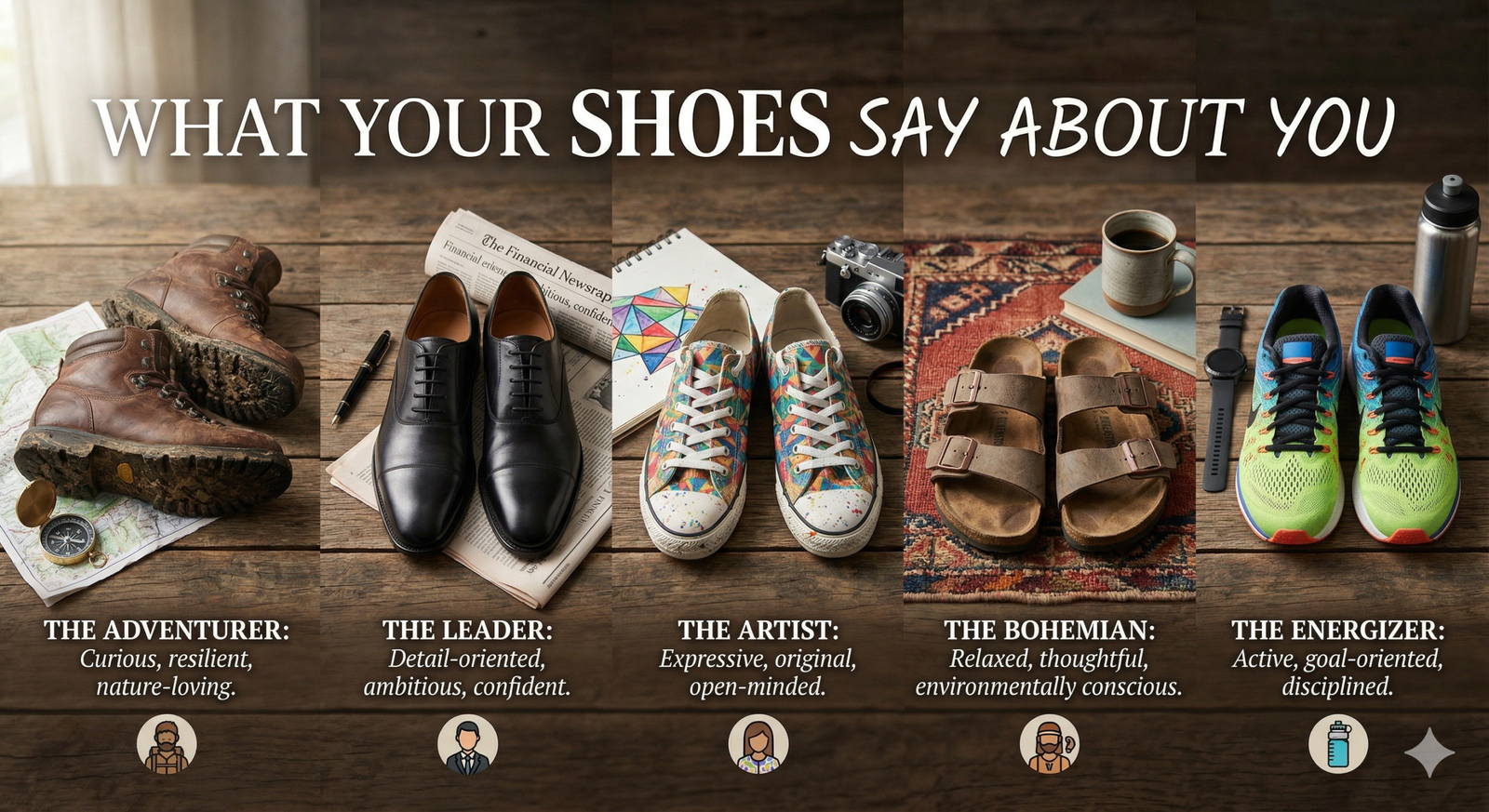
You might spend hours picking out the perfect shirt or styling your hair, but the most telling part of your outfit sits right on your feet. Footwear is a fascinating window into human psychology. People constantly make snap judgments based on what others wear, and shoes are often the very first thing they notice.
Understanding the connection between footwear and personality offers a unique perspective on social dynamics. Your choice of footwear communicates volumes about your lifestyle, income, and even your political or social views.
By observing the sneakers, boots, or loafers someone chooses to wear, you can uncover hidden traits and preferences. This guide explores the psychological breakdown of footwear, revealing exactly what your shoes broadcast to the world.
Why Shoes Are Powerful Social Signals
First impressions and visual cues
Shoes serve as one of the most prominent visual cues when meeting someone new. Because they anchor an outfit, the eyes naturally gravitate downward during a visual scan. People use these quick observations to form instant opinions about your professionalism, cleanliness, and attention to detail. A scuffed heel or a pristine white sneaker tells a story before you even speak.
Evolution of footwear as status symbols
Historically, shoes were a clear indicator of class distinction. Centuries ago, only the wealthy could afford delicate, ornamental shoes, while the working class relied on durable, practical footwear. As society progressed, this divide shifted into modern identity markers. Today, limited-edition releases and high-end designer labels continue the tradition of using footwear to signal social and economic standing.
The Psychology Behind Footwear Choices
Self-expression and identity
Getting dressed is a daily act of non-verbal communication. Some people prioritize personal style, choosing bold colors and unique shapes to stand out. Others lean toward social conformity, selecting popular brands to blend in with their peers. Your shoes act as a billboard for your identity, showcasing your creativity, conservatism, or desire to belong.
Lifestyle reflection
Footwear choices heavily reflect your daily routine and environment. Active personalities might naturally gravitate toward running shoes and athletic gear, prioritizing movement and readiness. Alternatively, those working in formal corporate settings often adopt structured, polished footwear. Your daily environment dictates your practical needs, which ultimately shape your footwear habits.
What Different Types of Shoes Say About You
Sneakers – Casual, Trend-Driven, or Collectors
Sneakers dominate youth culture and street fashion. However, there is a distinct line between a casual wearer and a dedicated sneakerhead. Casual wearers prioritize comfort and utility. Sneaker collectors use limited editions and rare colorways to signal status and deep cultural knowledge.
Formal Shoes – Discipline and Structure
Oxfords, brogues, and classic pumps carry a strong association with professionalism. People who regularly wear formal shoes often exhibit conservative personality traits, valuing discipline, structure, and tradition. Maintaining polished leather requires attention to detail, a trait that usually bleeds into their work ethic.
Boots – Confidence and Practicality
Boots project strength and independence. A rugged work boot suggests a practical, hands-on approach to life. On the other hand, a sleek fashion boot indicates a confident, forward-thinking style. Throughout history, boots have symbolized resilience and readiness for any terrain.
Sandals and Slides – Comfort and Simplicity
Choosing sandals or slides reflects a minimalist mindset. These wearers prioritize ease and comfort above complex fashion statements. Climate and cultural background also play a massive role here, as warm-weather regions naturally embrace open-toed simplicity.
Luxury Footwear – Status and Aspiration
Designer branding heavily influences luxury footwear purchases. Wearing shoes with recognizable logos or iconic red soles is a clear method of wealth signaling. It fulfills a psychological need for recognition and aligns the wearer with an aspirational lifestyle.
The Role of Culture and Environment
Regional and cultural differences
Geography directly influences how we dress our feet. City dwellers might prioritize comfortable walking shoes capable of handling concrete pavements. Meanwhile, coastal residents might live entirely in sandals. Climate and local terrain dictate practicality, which eventually shapes regional fashion norms.
Social groups and belonging
Subcultures use footwear to forge a collective identity. Skaters, punk rockers, and hip-hop enthusiasts all have distinct shoe styles that signal group membership. Wearing the right shoe grants immediate unspoken acceptance within these communities.
How Brands Shape Perception
Brand identity and personality alignment
Consumers naturally align themselves with brands that mirror their own values. Athletic brands often promote a competitive, high-energy lifestyle. Luxury fashion houses project exclusivity and sophistication. When you buy a specific brand, you are adopting a piece of its emotional branding.
Influence of marketing and storytelling
Narrative-driven purchases are incredibly common in the footwear industry. Celebrity endorsements and athlete sponsorships convince buyers that wearing a specific shoe will bring them closer to their idols. Marketing teams craft compelling stories that transform basic materials into highly coveted cultural artifacts.
Shoes and Social Judgement
How people perceive others based on footwear
Studies on first impressions repeatedly show that people accurately guess a stranger’s age, income, and political affiliation just by looking at their shoes. Cleanliness and condition matter just as much as the style itself. Well-maintained shoes suggest a conscientious personality.
Accuracy vs stereotypes
While many judgments are surprisingly accurate, biases still exist. Assuming someone is wealthy just because they wear designer shoes ignores the reality of credit card debt and aspirational spending. Misconceptions frequently occur when people rely entirely on stereotypes rather than observing the whole person.
Can You Change Perception Through Shoes?
Dressing intentionally
You have the power to control your narrative by dressing intentionally. By understanding the psychological weight of different shoe styles, you can strategically alter how others perceive you in high-stakes situations.
Matching shoes with goals and context
Adapting your footwear to specific settings helps you achieve your goals. Wearing sharp, formal shoes to an interview projects authority and respect for the process. Switching to high-performance athletic shoes at the gym signals focus and dedication to fitness.
The Future of Footwear Identity
Digital fashion and virtual identity
The concept of footwear is expanding into the virtual realm. Online avatars now wear digital sneakers, allowing users to express their identity in gaming and virtual reality spaces. This digital frontier offers endless possibilities for self-expression without the constraints of physical manufacturing.
Sustainability and ethical perception
Eco-conscious consumers are changing the market by demanding sustainable materials and ethical labor practices. Wearing brands that prioritize the environment signals a progressive, globally aware personality. This shift highlights a growing desire to align fashion choices with moral values.
Final Thoughts: Shoes as Identity Markers
Shoes operate as direct extensions of your personality. They bridge the gap between practical necessity and psychological expression. Whether you carefully curate a closet of rare sneakers or slip on the same reliable boots every morning, your footwear choices will always matter. They tell your story with every step you take.
Leave a Reply