

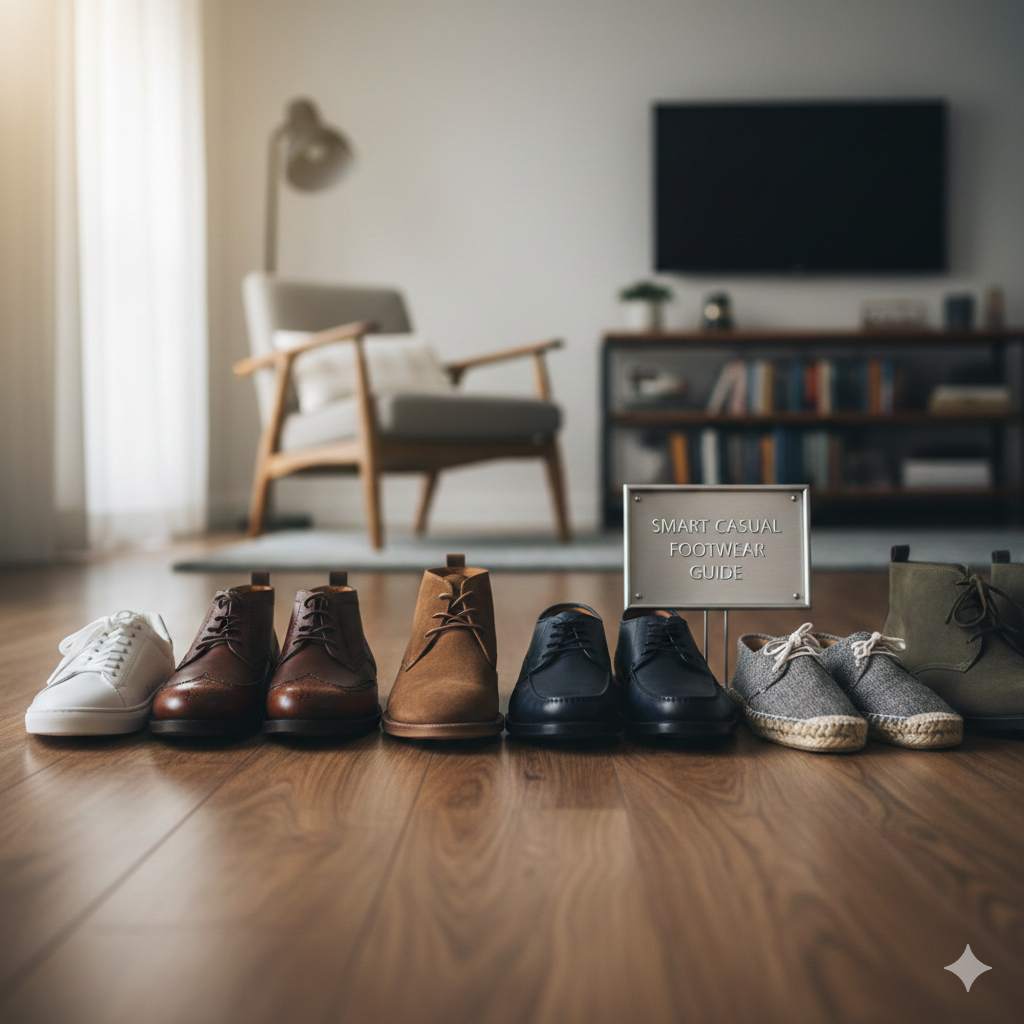
The history of human footwear is a timeline of utility evolving into status, and status relaxing into comfort. For centuries, the line between “work shoes” and “leisure shoes” was as rigid as a stiff leather sole. A gentleman wore Oxfords to the office and slippers at home; there was no middle ground.
That binary world is gone. We are now in the era of hybridization.
As part of The Complete Human Shoes Evolution Project, we view footwear not just as accessories, but as artifacts of cultural shifts. The rise of “smart casual” represents one of the most significant changes in sartorial history. It signifies a breaking down of class barriers and a prioritization of functional movement over rigid formality.
However, this freedom brings confusion. Without strict rules, how do you define the dress code? The answer lies at ground level. Your shoes are the anchor of a smart casual outfit; they determine whether you look effortlessly polished or accidentally underdressed. This guide explores the design, history, and modern application of smart casual footwear.
Read Here: Office Shoes Explained
What Is Smart Casual Footwear?
To understand the footwear, we must first understand the environment it was designed for. Smart casual footwear sits precisely on the fulcrum between the rigid structure of traditional formal wear and the total relaxation of athletic gear. It is the footwear of the modern metropolitan nomad—someone who might commute, attend a board meeting, and meet friends for a drink, all without changing their shoes.
Smart Casual Dress Code Explained
Smart casual is notoriously difficult to define because it is a spectrum rather than a single point. It is best described as “relaxed professionalism.” It retains the cleanliness and purpose of formal wear but discards the stuffiness.
In terms of footwear, this code demands shoes that feature the silhouette of a dress shoe but utilize the materials or construction of casual wear. Alternatively, it can be a shoe with a casual heritage (like a sneaker) elevated through premium materials (like full-grain calfskin). The goal is to look put-together without looking like you are wearing a uniform.
Why Smart Casual Shoes Are Trending
The dominance of smart casual footwear is not a fleeting trend; it is a permanent shift in the human wardrobe. Several anthropological and economic factors drive this:
- The Tech Sector Influence: As Silicon Valley rose to economic power, the hoodie-and-sneaker uniform challenged the Wall Street suit. Success no longer looked like a pair of black cap-toe Oxfords.
- The Post-Pandemic Workplace: The return to the office was hybrid, and so became the wardrobe. Employees refused to return to uncomfortable, rigid footwear after years of working in comfort.
- Versatility and Sustainability: Modern consumers own fewer items. They require a single pair of shoes that functions across multiple social settings, driving the demand for versatile designs.
Key Features of Smart Casual Footwear
From a design perspective, smart casual shoes share specific anatomical traits that distinguish them from true formal or true athletic shoes:
- The Sole: This is often where the “smart” meets the “casual.” You will frequently see leather uppers paired with rubber, crepe, or EVA (ethylene-vinyl acetate) soles rather than hard leather. This provides sneaker-like comfort with a dressier profile.
- The Last (Shape): Smart casual shoes generally have a rounder, softer toe shape compared to the sharp, elongated chisel toes of formal business shoes.
- Texture: While formal shoes rely on high-shine polish, smart casual footwear embraces texture. Suede, nubuck, and pebbled leather are hallmarks of this category because the matte finish softens the formality.
Best Types of Smart Casual Shoes
When building a rotation, four distinct silhouettes define the smart casual genre. Each has a unique history and a specific role in the modern wardrobe.
Loafers for Polished Everyday Style
The loafer is the quintessential smart casual shoe. Its origins are surprisingly utilitarian; it evolved from the moccasins worn by Norwegian dairy farmers, which were discovered by traveling American students in the 1930s.
Because they lack laces, loafers are inherently less formal than lace-up shoes. This “slip-on” nature communicates ease and leisure. However, the construction is often identical to a dress shoe.
- The Penny Loafer: The most versatile option. A leather strap across the vamp with a diamond cutout defines this style. In dark brown leather or suede, it pairs perfectly with chinos or denim.
- The Tassel Loafer: Slightly more decorative and European in flair. These work exceptionally well with unstructured tailoring.
- The Bit Loafer: Featuring a metal horsebit across the top, this style (popularized by Gucci in the 1950s) adds a flash of hardware that elevates a simple outfit.
Minimal Sneakers for Modern Looks
For most of the 20th century, sneakers were strictly athletic equipment. That changed in the early 2000s with the rise of the “luxury sneaker.”
A smart casual sneaker is defined by what it lacks. It has no neon colors, no visible branding, and no bulky technical soles. It is a study in minimalism.
- The Design: The silhouette mimics the low profile of a Derby shoe but is rendered in rubber and leather.
- The Material: To qualify as smart casual, the sneaker must be made of premium leather or suede. Canvas is generally too casual for this category. A pristine white leather sneaker is the modern equivalent of the buck shoe—crisp, clean, and appropriate for everything from creative offices to summer weddings.
Derby and Brogue Shoes
Understanding the difference between an Oxford and a Derby is crucial for footwear literacy. An Oxford features “closed lacing” (the eyelet tabs are sewn under the vamp), which looks sleek and formal. A Derby features “open lacing” (the eyelet tabs are sewn on top of the vamp).
That small construction detail allows the Derby to open wider, fitting a broader range of feet and creating a slightly bulkier, rugged profile. This makes the Derby the workhorse of smart casual leather shoes.
- The Brogue: “Brogue” refers to the decorative perforations (holes) on the shoe. Historically, these holes were functional, designed to let water drain out of shoes when Scottish gamekeepers walked through wet bogs. Today, broguing adds visual interest and texture, instantly lowering the formality of the shoe and making it perfect for smart casual wear.
Chelsea Boots for Versatility
The Chelsea boot is a rare example of Victorian engineering that feels futuristic. Invented by J. Sparkes-Hall (Queen Victoria’s shoemaker), the design relies on a vulcanized rubber elastic side panel, allowing the boot to be pulled on and off without laces or buckles.
In the 1960s, the “Mod” scene in London adopted the Chelsea boot, cementing it as a symbol of cool, artistic sophistication.
- The Silhouette: The clean, unbroken piece of leather on the vamp makes the Chelsea boot incredibly sleek.
- The Application: A black leather Chelsea boot is sharp enough for a suit but edgy enough for black jeans. A suede Chelsea boot in tan or snuff is the ultimate weekend warrior, pairing effortlessly with blue denim and knitwear.
Read Here: Sneakers vs Loafers vs Boots
How to Style Smart Casual Shoes
The shoe dictates the trouser, and the trouser dictates the shirt. Here is how to integrate these footwear staples into cohesive looks.
Office and Business Casual Outfits
In a professional setting, you want to lean toward the “smart” side of the spectrum.
- The Combination: Pair dark brown leather Derby shoes or penny loafers with navy wool trousers or heavy cotton chinos.
- The Top: Add an Oxford cloth button-down shirt tucked in. If you are wearing a blazer, the shoes must be leather (not suede) to match the weight and structure of the jacket.
- The Rule: If you wear a tie, you generally should not wear sneakers.
Weekend and Social Looks
This is where you can experiment with texture and lighter colors.
- The Combination: Suede Chelsea boots or minimalist white sneakers work beautifully here. Pair them with dark, slim-fit denim.
- The Top: A merino wool crew neck sweater, a polo shirt, or a high-quality T-shirt layered under a bomber jacket.
- The Rule: Ensure your jeans are hemmed correctly. Sneakers look sloppy if wide-leg jeans are dragging over the heel. A slight cuff or a tailored hem makes the sneaker look intentional.
Travel-Friendly Smart Casual Styling
Travel requires shoes that are easy to remove at security and comfortable for walking, yet sharp enough for a hotel lobby.
- The Combination: Loafers and Chelsea boots are the kings of travel due to their laceless design.
- The Outfit: Stretch chinos or traveler’s wool trousers offer comfort without looking like pajamas.
- The Rule: Avoid heavy, thick-soled boots. They are heavy to pack and uncomfortable on long flights.
How to Choose the Right Smart Casual Footwear
Selecting the right pair is an exercise in balancing aesthetics with engineering.
Materials and Color Choices
The material determines the formality.
- Full-Grain Leather: The most formal and durable. It develops a patina over time. Best for office environments.
- Suede: The soft, napped finish absorbs light rather than reflecting it. This texture makes it inherently more casual and approachable.
- Color: Black is severe and often too formal for smart casual. Brown is the standard—ranging from tan (casual) to chocolate (dressy). Oxblood or burgundy is an excellent “wildcard” color that pairs with both blue and grey.
Comfort vs Elegance Balance
Historically, elegance required suffering. Today, footwear technology has bridged the gap. Look for shoes that utilize Goodyear Welt construction (for durability and reparability) but feature modern insole technology like memory foam or cork footbeds. Many heritage brands are now putting “commando” rubber soles on dress uppers, providing grip and shock absorption without ruining the classic aesthetic.
Seasonal Shoe Selection
- Spring/Summer: This is loafer season. Unlined suede loafers offer breathability. White sneakers are also a staple here.
- Fall/Winter: Transition to boots. The higher shaft of a Chelsea or Chukka boot provides warmth and protects the ankles from drafts. Rubber soles are essential for wet pavement.
Common Smart Casual Footwear Mistakes
Even with high-quality shoes, styling errors can dismantle a look.
- Wearing Overly Formal Shoes: Wearing high-shine, black patent leather Oxfords with jeans creates a jarring “mismatch” of formality. The shoes look like they belong in a boardroom, while the jeans belong in a bar.
- Choosing Bulky Athletic Sneakers: Running shoes are designed for forward momentum, with aggressive treads and neon mesh. They clash with the structured drape of chinos or trousers. Keep the gym shoes in the gym.
- Ignoring Outfit Balance: A chunky boot needs a heavier fabric (like denim or tweed) to balance it out. If you wear heavy boots with lightweight linen trousers, your feet will look disproportionately large. Conversely, delicate loafers can look lost under wide-leg cargo pants.
Read Here: Casual Shoes vs Formal Shoes
FAQ – Smart Casual Footwear Guide
Are sneakers considered smart casual?
Yes, but with strict conditions. They must be minimalist, clean, and ideally made of leather or suede. They should be free of logos and athletic detailing. Think “tennis shoe” rather than “running shoe.”
Can loafers be worn with jeans?
Absolutely. This is a classic Ivy League look. However, ensure the jeans are a slim or straight cut and are hemmed effectively. There should be no “break” (bunching of fabric) at the ankle, as you want to show off the shoe.
What colors work best for smart casual shoes?
Dark brown is the most versatile color in the smart casual palette. It is less severe than black but darker than tan, allowing it to transition from day to night. Navy and grey suede are also excellent secondary options.
Are boots suitable for smart casual outfits?
Yes, specifically Chelsea boots and Chukka boots. Work boots (like Timberlands) or hiking boots are generally too rugged for a smart casual dress code unless the environment is specifically outdoorsy.
How many smart casual shoes should you own?
A functional rotation includes three pairs: one pair of white leather sneakers, one pair of brown loafers (or Derbies), and one pair of boots. This trio covers almost every social and professional scenario modern life presents.
The Future of Footwear
As we continue to track the trajectory of footwear at The Complete Human Shoes Evolution Project, one thing is clear: the boundaries will continue to blur. The future of smart casual lies in material innovation—plant-based leathers, 3D-printed soles for ergonomic support, and designs that further integrate the comfort of a sneaker with the dignity of a dress shoe. By investing in these timeless silhouettes now, you are building a wardrobe that honors the past while stepping firmly into the modern world.
Leave a Reply