

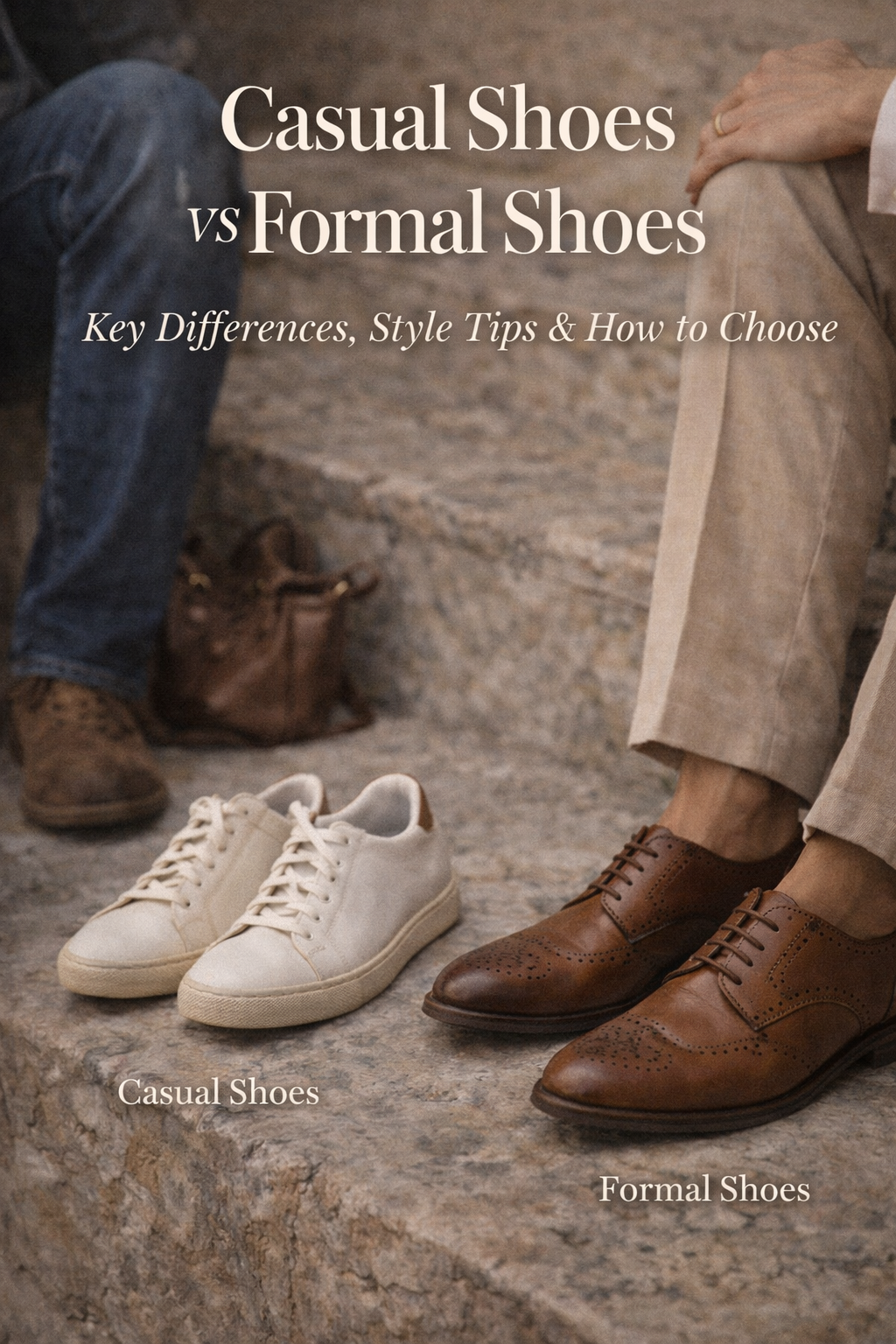
Shoes are the foundation of any outfit, serving as both a protective necessity and a powerful communicator of status, profession, and personal identity. Throughout human history, footwear has evolved from simple protective coverings made of bark and skins to complex engineered marvels that signal social standing.
In the timeline of The Complete Human Shoes Evolution Project, the distinction between “casual” and “formal” is a relatively modern concept. For centuries, footwear was strictly utilitarian or strictly regal. Today, however, the lines are blurring. The corporate office is no longer strictly the domain of the Oxford, and high-end restaurants often welcome pristine sneakers.
Yet, understanding the technical and aesthetic differences between these two categories remains essential. Whether you are building a wardrobe from scratch or looking to invest in high-quality leather goods, knowing how to distinguish a Derby from a sneaker—and understanding the historical context of each—will empower you to make smarter sartorial decisions.
Read Here: Complete Guide to Types of Shoes
Casual Shoes vs Formal Shoes – What’s the Difference?
At a glance, the difference seems obvious: one is for comfort, the other for occasions. But from a design perspective, the distinction lies in the silhouette, the construction method, and the history of the shoe’s purpose.
Definition of Casual Shoes
Casual footwear is defined by soft construction, flexible materials, and a focus on utility or leisure. Historically, many shoes we now consider casual, such as boat shoes or moccasins, began as specific tools for work or sport.
In the modern context, a casual shoe is designed for “off-duty” hours. They prioritize immediate comfort, often utilizing synthetic cushioning, rubber soles, and softer uppers like canvas, suede, or softer grades of leather. The defining characteristic of casual footwear is the lack of strict structural rules—patterns can be wild, colors vibrant, and silhouettes bulky.
Definition of Formal Shoes
Formal shoes are rooted in tradition, hierarchy, and rigid construction. Almost exclusively made of leather, formal footwear relies on sleek, streamlined silhouettes that mimic the natural shape of the foot without adding unnecessary bulk.
The quintessential formal shoe is the Oxford (or Balmoral), characterized by “closed lacing,” where the shoelace eyelet tabs are stitched underneath the vamp. This creates a clean, unbroken line across the top of the foot. Unlike casual shoes, formal footwear is not designed for athletics or leisure; it is designed to complement tailoring. It signals seriousness, respect for occasion, and adherence to social codes.
When to Wear Casual vs Formal Footwear
The “when” is dictated by the level of formality required by the environment.
- Strictly Formal: Black Tie events, funerals, traditional corporate boardrooms. (Requires: Patent leather, highly polished Oxfords).
- Semi-Formal/Business: Client meetings, standard office days, weddings. (Requires: Oxfords, Derbies, Monk Straps).
- Smart Casual: Dates, creative offices, dinner parties. (Requires: Loafers, Chelsea boots, pristine minimal sneakers, Brogues).
- Casual: Weekend errands, walking the dog, the gym. (Requires: Running shoes, canvas sneakers, sandals).
Read Here: Office Shoes Explained
Design & Style Differences
To truly understand footwear evolution, one must look at the architecture of the shoe. The way a shoe is built dictates its formality just as much as its appearance.
Materials and Construction
Formal Shoes:
High-end formal shoes are often built using the Goodyear welt or Blake stitch method. This involves stitching the upper leather to the sole, often using a strip of leather (the welt) as an intermediary. This construction is durable, water-resistant, and crucially, allows the shoe to be resoled. The leather used is typically full-grain calfskin, chosen for its ability to hold a shine and develop a rich patina over time.
Casual Shoes:
Casual footwear frequently uses “cemented” construction, where the upper is glued directly to the sole. While this makes the shoe lighter and more flexible immediately out of the box, it often means the shoe cannot be repaired once worn down. Materials range from cotton canvas and nylon mesh to suede and nubuck—textures that absorb light rather than reflect it, contributing to a relaxed aesthetic.
Sole Types and Comfort Levels
The sole is the chassis of the shoe.
- Leather Soles: The hallmark of a formal shoe. They are sleek, thin, and make a distinctive “clack” sound when walking. They offer less traction and shock absorption but provide an elegant, low profile that slips easily in and out of stirrups (historically) or sits neatly under suit trousers (modern use).
- Rubber and EVA Soles: The standard for casual shoes. Rubber provides grip and weather resistance, while EVA (Ethylene Vinyl Acetate) is a foam-like material used in sneakers to absorb impact. These soles are generally thicker and “chunkier,” disrupting the clean lines required for formal wear.
Popular Casual Shoe Styles
- The Sneaker: From the canvas Converse All-Star (originally a basketball shoe) to the modern “dad shoe,” this is the king of casual.
- The Boat Shoe: Originally designed with siped rubber soles for grip on wet decks, now a staple of summer leisure.
- The Desert Boot: A crepe-soled, suede ankle boot with military origins, bridging the gap between rugged and refined.
- The Espadrille: A simple canvas shoe with a rope sole, dating back to the 14th century, ideal for beachside leisure.
Popular Formal Shoe Styles
- The Oxford (Balmoral): The gold standard. Closed lacing, low heel, exposed ankle.
- The Derby (Blucher): Slightly less formal than the Oxford due to “open lacing” (where the eyelet tabs are sewn on top of the vamp).
- The Monk Strap: Features a buckle (or two) instead of laces. It sits historically between the Oxford and the Derby in terms of formality.
- The Loafer: A controversial entry. Originally a casual house slipper, the leather Penny Loafer or Horsebit Loafer is now accepted in many business environments, though traditionalists still view it as casual due to the lack of laces.
Comfort Comparison – Which Shoes Feel Better?
There is a common misconception that formal shoes are inherently uncomfortable. This is largely due to modern consumers buying incorrect sizes or low-quality stiff leather. However, the mechanics of comfort differ greatly between the two.
Cushioning and Flexibility
Casual shoes win on immediate “step-in” comfort. A pair of running shoes engages soft foam to compress under your weight, masking the impact of the ground. They are flexible right out of the box.
Formal shoes rely on structure. They utilize a leather stack heel and a cork filling between the insole and outsole. Initially, this feels hard. However, over time, the heat and pressure of your foot mold the cork to your specific footprint, creating a custom footbed that offers superior support to soft foam.
Breathability and Daily Wear
Casual sneakers made of synthetic mesh offer high airflow but little moisture management. Leather formal shoes are naturally breathable; animal hide has pores that allow moisture to escape. However, thick, corrected-grain leather (often found in cheaper formal shoes) is coated in plastic, turning the shoe into a sauna. High-quality calfskin regulates temperature surprisingly well.
Long-Term Foot Support
If you are standing for 12 hours, a high-quality running shoe is superior. However, for day-to-day walking and office wear, the lack of structure in soft casual shoes can sometimes lead to foot fatigue. The rigid shank (a metal or fiberglass strip inside the sole) of a dress shoe provides arch support that prevents the foot from collapsing, which is beneficial for posture over decades of wear.
Casual Shoes vs Formal Shoes for Different Occasions
Navigating the modern dress code can be a minefield. The “Complete Human Shoes Evolution Project” recognizes that social norms are shifting, but context remains King.
Office and Business Settings
The “Suit and Tie” era is waning, but the “Professional” era is not.
- Traditional Corporate (Law, Finance): Stick to Oxfords or polished Derbies. Black or dark brown are the only acceptable colors.
- Business Casual: This is the grey area. A leather Loafer, a suede Chukka boot, or a minimal white leather sneaker (common in tech) works well here.
- Creative/Start-up: Casual rules apply, but your footwear should still be clean. A beaten-up running shoe signals a lack of care; a fresh retro sneaker signals intentional style.
Weddings and Formal Events
Always err on the side of formality. It is respectful to the hosts to dress up.
- Black Tie: Patent leather Oxfords or Opera Pumps.
- Cocktail/Semi-Formal: A well-shined calfskin Oxford or a sleek Monk Strap.
- Beach/Outdoor Wedding: Loafers or pristine suede Derbies. Sandals are rarely appropriate unless explicitly stated.
Travel and Everyday Lifestyle
Travel requires versatility. Packing space is limited. The ideal travel shoe is a “hybrid”—perhaps a Chelsea boot with a rubber sole, or a brown leather sneaker. These can handle a walking tour during the day and a nice dinner at night. Formal leather soles are generally poor for travel as they slip on cobblestones and ruin easily in rain.
How to Choose the Right Shoes for Your Needs
When adding to your rotation, move beyond “I like how this looks” and consider “How does this function?”
Style Goals and Wardrobe Matching
Look at your current wardrobe. If you wear denim 90% of the time, buying a $500 pair of black patent Oxfords is a waste—they will clash with the rugged texture of jeans. Conversely, if you wear wool trousers, chunky basketball sneakers will disrupt the drape of the fabric.
- Rule of Thumb: Match the visual weight of the shoe to the pant leg. Slim trousers need slim shoes (loafers, minimalist sneakers). Wide trousers can handle bulkier boots or chunky sneakers.
Budget and Durability Factors
Fashion history teaches us that quality footwear is an investment.
- Casual: Expect to replace these every 1-2 years if worn daily. The foam breaks down, and the glue fails. Spend less here unless you are a collector.
- Formal: A Goodyear-welted shoe can last 20 years if resoled and polished. Spending $300-$500 upfront is cheaper than buying $100 shoes every year for a decade.
Common Buying Mistakes to Avoid
- Ignoring Width: Many people buy shoes that are too long because their feet are wide. Get measured on a Brannock device.
- Buying for a Fantasy Life: Don’t buy hiking boots if you live in Manhattan. Don’t buy velvet slippers if you work on a construction site.
- Neglecting the “Last”: The “last” is the wooden mold the shoe is formed on. Some lasts are pointy, some are round. If a shoe hurts your pinky toe, it is not the wrong size; it is the wrong last shape for your foot.
Pros and Cons of Casual Shoes vs Formal Shoes
| Feature | Casual Shoes | Formal Shoes |
|---|---|---|
| Primary Material | Canvas, Mesh, Suede, Rubber | Full-grain Leather, Suede |
| Construction | Cemented (Glued) | Welted or Stitched |
| Comfort | Instant softness, flexible | Requires break-in, structural support |
| Durability | Low to Medium (Disposable) | High (Repairable/Resolable) |
| Maintenance | Machine wash or spot clean | Requires polishing, conditioning, shoe trees |
| Price | $50 – $200 (Average) | $150 – $1000+ (Investment) |
| Best For | Walking, sports, errands, leisure | Business, weddings, events, dates |
Read Here: Smart Casual Footwear Guide
FAQ – Casual Shoes vs Formal Shoes
Can casual shoes be worn for formal occasions?
generally, no. While rules are relaxing, wearing sneakers to a funeral or a black-tie wedding is still considered a faux pas. However, high-end “dress sneakers” or loafers can work for semi-formal events if the rest of the outfit is sharp.
Are formal shoes less comfortable than casual shoes?
Initially, yes. However, a properly fitted, high-quality formal shoe offers better orthopedic support for standing than a soft sneaker. If your dress shoes hurt after the break-in period, you likely have the wrong size or width.
Which shoes are better for daily office wear?
This depends entirely on your office culture. For most modern offices, a leather Loafer or a Chelsea boot offers the perfect balance—easy to take on and off, comfortable for sitting, but sharp enough for a surprise meeting.
How many pairs of formal shoes should you own?
At a minimum, two: one black Oxford (for the strictest events) and one brown Derby or Loafer (for daily versatility). Rotating them allows the leather to dry out between wears, doubling their lifespan.
Do casual shoes last longer than formal shoes?
No. Formal shoes made with stitched construction can be resoled multiple times, potentially lasting decades. Casual shoes rely on foam and glue, which degrade chemically over time and cannot be easily repaired.
The Future of Footwear
As we look toward the future of the Human Shoes Evolution Project, the binary of “Casual vs Formal” will likely dissolve further. We are already seeing “hybrid” footwear—Oxfords with sneaker soles, and sneakers made of Italian dress leather.
However, the psychology of footwear remains. We will always need shoes that signal “I am relaxed” and shoes that signal “I am ready for business.” By understanding the history and mechanics behind these signals, you can ensure your feet are not just comfortable, but communicating the right message.
Leave a Reply