

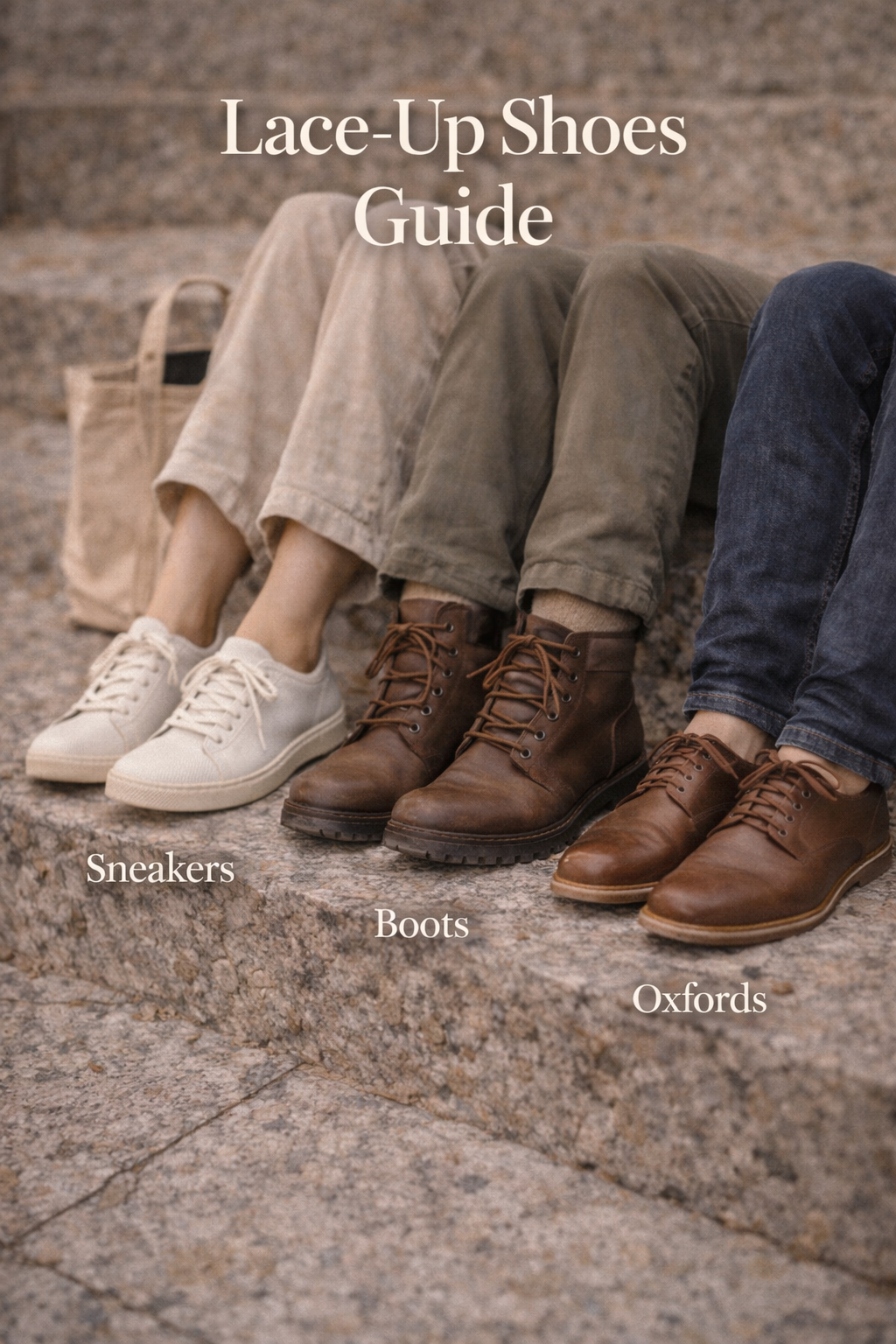
Laces let you adjust how a shoe closes over the top of your foot. They appear on sneakers, dress shoes and boots, but the fastening does not make every pair fit or perform the same way. Start with where you will wear the shoe, then try the exact model.
This guide explains common styles and fit checks rather than ranking shoes through independent tests.
Common lace-up styles
Sneakers and walking shoes
Lace-up sneakers can suit casual outfits and everyday walking. Athletic and lifestyle models vary in construction and intended activity. For longer walks, compare fit and route needs using the walking-sneaker guide.
Dress shoes
Oxfords and derbies are common lace-up dress-shoe styles. Their appearance can vary with material, finish and shape. Check the event or office dress code rather than assuming a single style is required everywhere. Our office-shoe guide offers practical examples.
Lace-up boots
Boots range from casual ankle styles to footwear designed for outdoor or workplace use. Check the fastening around the ankle, the outsole and the exact product’s weather claims. Laces and a high upper do not automatically establish protective-toe or slip-resistance performance.
How to assess the fit
Try both shoes with your usual socks and any insoles. Fasten them as you would normally, then stand, walk and turn. Your toes need room, the sides should not pinch and your heel should stay secure without rubbing. The AAOS fit guidance recommends checking length and width rather than buying a pair that does not fit.
Laces can adjust the closure, but they cannot correct a shoe that is the wrong length, width or shape. If you need very tight laces to stop your heel slipping, compare another fit. If laces cause pressure across the top of your foot, loosen them and try a different size or design.
Lace-ups or slip-ons?
The choice depends on what you find convenient and secure. A lace-up may offer more adjustment, while a well-fitting slip-on can be quick to put on. Compare the exact pairs during the movements you expect; our slip-on shoe guide covers heel fit and use.
For a smart casual setting, check the actual dress code and outfit. The smart casual guide compares sneakers, loafers and boots.
Buying and maintenance
Check the brand’s size chart and return policy. Try online orders indoors first if required. Inspect laces, eyelets and the outsole for damage and replace worn laces when needed. Follow the care label for the upper; different materials need different cleaning methods.
Frequently asked questions
Are lace-ups always more comfortable than slip-ons?
No. Fit and preference vary. Laces offer adjustment, but the shape and size of the shoe still matter.
Can lace-up sneakers be worn to an office?
Some offices allow them. Check the dress code and any safety requirements.
Should I tighten laces to fix a loose shoe?
Tightening can adjust the closure, but it should not cause pressure. If the shoe remains loose, try another size or model.

Leave a Reply