

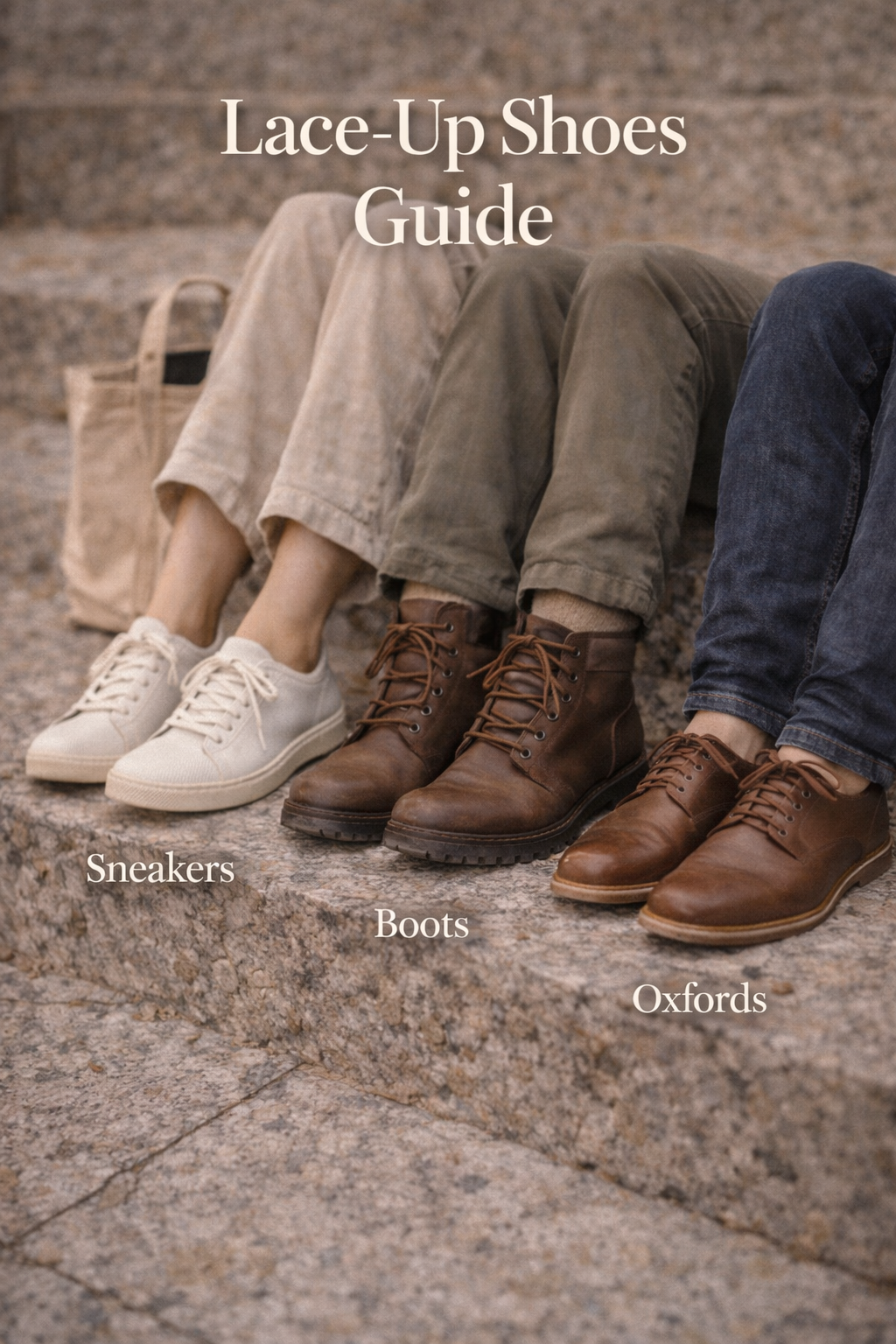
Learning to tie your shoelaces is one of the first major milestones of childhood independence. Yet, for many adults, navigating the complex world of lace-up footwear can feel just as tricky as learning that first knot. From the boardroom-ready Oxford to the weekend-warrior sneaker, lace-up shoes form the foundation of a functional, stylish wardrobe. They offer a blend of history, utility, and aesthetic appeal that slip-ons simply cannot match.
While trends come and go, the lace-up shoe remains a constant. It is the footwear choice for marathons, weddings, construction sites, and casual Fridays alike. The simple mechanism of laces passing through eyelets provides a level of customization and security that has kept this design dominant for centuries. However, knowing the difference between a Derby and a Blucher, or understanding which sneaker pairs with a suit, requires a bit of sartorial knowledge.
Read Here: Parts of a Shoe
This guide explores the vast landscape of lace-up footwear. We will break down the essential styles every person should know, offer practical advice on achieving the perfect fit, and provide styling tips to ensure you look sharp for any occasion. Whether you are upgrading your office attire or hunting for the ultimate walking shoe, understanding the mechanics and fashion of lace-ups is the first step toward better style.
What Are Lace-Up Shoes?
At its core, a lace-up shoe is any footwear secured to the foot by means of a shoelace that passes through eyelets, hooks, or lugs. While this definition seems broad, it encompasses a specific engineering philosophy: the wearer should control the fit. Unlike loafers or Chelsea boots, which rely on elastic or the shape of the last (the mold the shoe is made on) to stay on the foot, lace-ups rely on tension. This tension creates a bond between the foot and the sole that offers superior stability.
Key Features of Lace-Up Footwear
The anatomy of a lace-up shoe is defined by the “quarters” and the “vamp.” The vamp covers the toes and front part of the foot, while the quarters wrap around the heel and meet in the middle to house the laces. How these two pieces interact determines the shoe’s formality and function.
Another critical feature is the tongue. Sitting beneath the laces, the tongue protects the top of the foot (the instep) from the pressure of the knot. In athletic shoes, tongues are often padded for comfort. In dress shoes, they are usually made of thin, pliable leather to maintain a sleek silhouette. The eyelets themselves also vary; they can be simple punched holes for a minimalist look, reinforced with metal grommets for durability, or fashioned into speed hooks for rapid lacing on boots.
Why Lace-Up Shoes Remain Popular
The enduring popularity of lace-up shoes comes down to one word: adjustability. Feet are rarely perfectly symmetrical, and they change volume throughout the day. Your feet might swell after a long flight, a salty meal, or hours of standing. Lace-up shoes accommodate these fluctuations. You can loosen the laces in the afternoon or tighten them before a brisk walk.
Beyond comfort, there is a psychological element of security. When you lace up a pair of running shoes or work boots, you are physically locking your foot into a tool designed for performance. This secure fit reduces friction, prevents blisters, and provides the necessary ankle support for dynamic movement.
Casual vs Formal Lace-Up Styles
The distinction between casual and formal lace-ups is often dictated by the lacing system itself. Formal shoes generally utilize a “closed” lacing system, where the quarters are sewn under the vamp. This creates a smooth, unbroken line that looks elegant with tailored trousers.
Casual shoes typically use an “open” lacing system. Here, the quarters are sewn on top of the vamp, creating flaps that can open wider. This construction, found in boots and sneakers, allows for easier entry and a more rugged appearance. Material plays a role as well; patent leather and high-shine calfskin lean formal, while suede, canvas, and matte nubuck imply a relaxed vibe.
Read Here: Casual vs Formal Shoes
Types of Lace-Up Shoes Explained
To build a versatile shoe rack, you must understand the major players in the lace-up category. Each style has a specific history and intended use.
Oxford Shoes
The Oxford is the undisputed king of formal footwear. Tracing its roots to Scotland and Ireland (where it was originally called the Balmoral), it gained popularity at Oxford University in the 1800s. Its defining characteristic is the closed lacing system mentioned earlier. The eyelet tabs are stitched underneath the vamp, so when the shoe is tied tight, the “V” shape disappears, and the leather meets perfectly in the middle. Oxfords are sleek, low-profile, and strictly for dressy occasions. If you are wearing a tuxedo or a charcoal business suit, you are likely wearing Oxfords.
Derby Shoes
The Derby is often confused with the Oxford, but the difference is in the construction. The Derby features open lacing, meaning the eyelet tabs are sewn on top of the vamp. This might seem like a minor technicality, but it changes the entire profile of the shoe. Derbies are wider, more comfortable for people with high arches, and inherently less formal. While a black leather Derby can certainly be worn with a suit, the style is more at home with chinos, wool trousers, or dark denim. In the United States, this style is sometimes referred to as a Blucher, though purists will argue there are slight structural differences between the two.
Brogues
“Brogue” refers to a detail rather than a distinct shape, but it is a vital category of lace-up shoes. Broguing is the decorative perforation (holes) along the seams and toe cap of the shoe. Historically, these holes were functional, designed to let water drain out of shoes when Scottish farmers walked through wet bogs. Today, they are purely aesthetic.
A shoe can be an Oxford Brogue or a Derby Brogue. The rule of thumb is that the more holes a shoe has, the less formal it is. A “Full Brogue” or “Wingtip” features a decorative ‘W’ shape on the toe and is excellent for smart-casual wear, while a “Quarter Brogue” has minimal perforation and can pass in conservative offices.
Lace-Up Sneakers
The evolution of the sneaker from athletic equipment to fashion staple has been the biggest footwear shift of the last century. Lace-up sneakers range from the minimalist (like Common Projects or Adidas Stan Smiths) to the technical (like Asics or New Balance).
Minimalist leather sneakers have become acceptable in many modern workplaces. They feature clean lines, premium leather, and flat laces. On the other hand, canvas sneakers like Converse Chuck Taylors offer a retro, rebellious aesthetic that pairs perfectly with casual weekend wear. The lacing on sneakers allows for various tying techniques to relieve pressure points, a feature runners rely on heavily.
Hiking and Outdoor Lace-Up Shoes
When the terrain gets rough, the laces get serious. Hiking boots and trail shoes utilize robust lacing systems often involving D-rings and speed hooks. These allow the wearer to isolate tension—keeping the foot tight in the heel box to prevent slippage while leaving the toe box looser for comfort. The laces themselves are usually round and braided for strength, distinct from the flat, waxed cotton laces found on dress shoes. The goal here is ankle stability and protection from the elements.
How to Style Lace-Up Shoes
Owning the right shoes is only half the battle; knowing what to wear them with is the key to looking put-together.
Formal and Office Outfits
For the most formal settings, stick to the Oxford. A black cap-toe Oxford is the safest bet for weddings, funerals, and job interviews. It pairs seamlessly with black, charcoal, and navy suits. Ensure your trousers have a slight break (where the fabric rests on the shoe) or no break at all to show off the silhouette.
If your office is business professional but not strictly formal, brown or oxblood leather adds personality. A dark brown Oxford wears beautifully with a navy pinstripe suit. Remember to match your belt leather to your shoe leather.
Smart Casual Looks
This is where the Derby and the Brogue shine. A tan leather Brogue looks fantastic with navy chinos and a white button-down shirt. The perforations add texture that complements the weave of the chinos.
Suede is another excellent texture for smart casual. A pair of suede bucks or desert boots (a high-top lace-up) bridges the gap between jeans and trousers. Pair grey suede lace-ups with dark denim and a blazer for a look that works for a nice dinner or a creative office environment.
Read Here: Smart Casual Footwear
Everyday Casual Styling Tips
For casual settings, sneakers and boots are your go-to options. White leather sneakers are incredibly versatile; wear them with light-wash jeans and a t-shirt, or even with shorts in the summer. When wearing lace-up boots with jeans, you have a choice: cuff the jeans to show off the laces and the top of the boot, or let the jeans stack naturally for a rugged, workwear aesthetic. Avoid wearing athletic running shoes with jeans unless you are actually going for a run; it often looks mismatched.
How to Choose the Right Lace-Up Shoes
Selecting the perfect pair requires looking beyond the price tag and the brand name.
Fit and Support
Fit is paramount. When trying on lace-up shoes, wear the socks you intend to wear with them. There should be about a thumb’s width of space between your longest toe and the end of the shoe. The heel should feel locked in; if your heel slips out every time you step, the shoe is too big or the last shape is wrong for your foot. Unlike slip-ons, you can tighten the midfoot, but you cannot fix a shoe that is too short or too narrow.
Materials and Durability
Full-grain leather is the gold standard for dress shoes and boots. It is durable, breathable, and develops a patina (a personalized shine and color shift) over time. “Genuine leather” is a lower grade that often cracks. For sneakers, look for sturdy canvas or soft calfskin.
Check the sole construction as well. High-quality dress shoes often use a “Goodyear Welt” or “Blake Stitch,” meaning the sole is stitched to the upper. These can be resoled, potentially lasting decades. Cheaper shoes are glued (cemented), meaning once the sole wears out, the shoe is trash.
Color and Versatility
If you are building a wardrobe from scratch, start with these three colors:
- Black: For strict formalities.
- Dark Brown: For almost everything else (suits, jeans, chinos).
- White: For casual sneaker days.
Avoid overly bright colors or extreme patterns for your core shoes, as they are harder to match and less likely to be worn often.
Common Mistakes When Buying Lace-Up Shoes
Even seasoned shoppers can fall into a few common traps when purchasing lace-up footwear.
Choosing the wrong lace style
The laces themselves dictate the formality. Thick, round laces belong on boots. Flat, wide laces belong on sneakers. Thin, round, waxed laces belong on dress shoes. Putting thick athletic laces on a pair of dress Oxfords will immediately ruin the look. If your laces fray or break, replace them immediately; dirty laces make the whole shoe look sloppy.
Ignoring comfort features
There is a myth that good shoes must be painful to “break in.” While high-quality leather does need time to mold to your foot, a shoe should not cause excruciating pain in the store. If the leather bites into your Achilles tendon or squeezes your toes numb, size up or try a wider width. Look for insoles with arch support if you plan to be on your feet all day.
Buying shoes that don’t match lifestyle needs
Be realistic about your daily life. If you walk three miles to work in the rain, a leather-soled dress shoe is a bad investment; you need a rubber-soled Derby or a boot. If you work in a conservative bank, high-end designer sneakers might be too casual. Buy for the life you live, not just the look you like in a magazine.
FAQ – Lace-Up Shoes Guide
Are lace-up shoes more supportive than slip-ons?
Generally, yes. Because you can tighten the laces to wrap the upper material firmly around your midfoot and ankle, lace-up shoes offer superior lateral stability. This is why athletic shoes are almost exclusively lace-up.
Which lace-up shoes are best for office wear?
For a traditional corporate environment, the Oxford shoe is the best choice due to its clean lines and formal closed lacing. Cap-toe Oxfords are the standard for business attire.
Can lace-up sneakers be worn smart casual?
Yes, provided they are clean, minimalist, and usually made of leather. Avoid logos, neon colors, and bulky “dad shoe” silhouettes. A pristine white or black leather sneaker can be worn with chinos and a blazer.
How tight should lace-up shoes be?
They should be snug across the midfoot so the foot doesn’t slide forward, but loose enough that you can wiggle your toes freely. If you feel a pulse in your foot or see the leather bulging significantly around the laces, they are too tight.
How long do lace-up shoes typically last?
A cheap, cemented pair might last 6 to 12 months with daily wear. A high-quality, stitched leather pair can last 10 to 20 years if properly maintained (polished, conditioned, and resoled). Rotating your shoes so you don’t wear the same pair two days in a row also significantly extends their lifespan.
Step Out With Confidence
The world of lace-up shoes is vast, but it doesn’t have to be overwhelming. By understanding the fundamental differences between styles like the Oxford and the Derby, and prioritizing fit and quality materials, you can build a shoe collection that serves you for years. Whether you are tying the knot on a pair of rugged boots for a hike or polishing Oxfords for a gala, the right pair of shoes provides the foundation for both your outfit and your day. Invest wisely, care for your leather, and lace up with intention.
Leave a Reply