

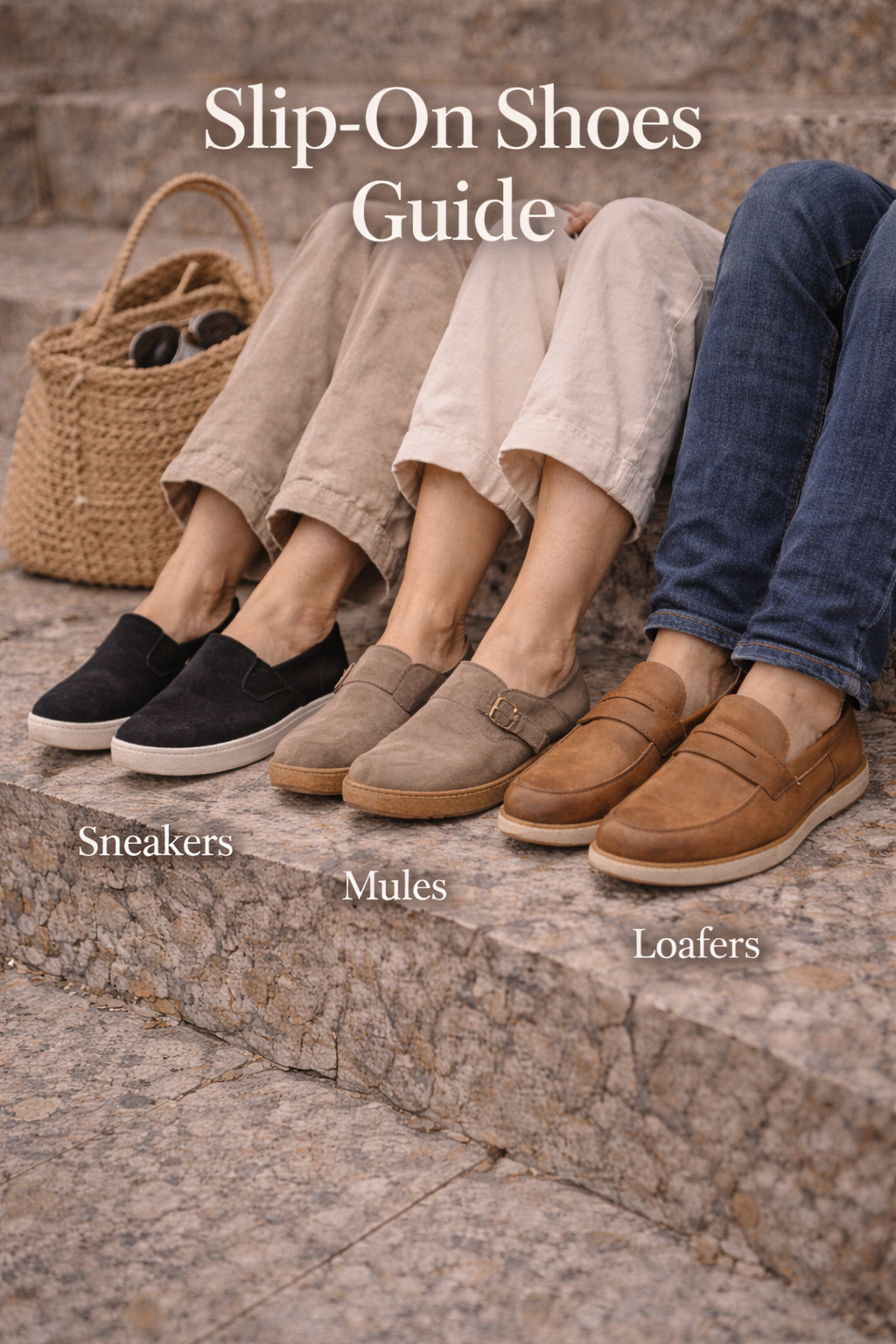
Slip-on shoes are convenient when you want to get out the door without tying laces. The category includes casual sneakers, loafers, flats and other designs, but ease of entry is only one part of a good fit. Check whether the shoe stays securely on your foot as you walk.
This guide compares styles and fit. It does not rank products through independent wear tests or promise comfort for everyone.
Choose a style for your day
Slip-on sneakers
A casual slip-on sneaker can work for errands or a relaxed commute. Check the heel when walking and turning. If your foot moves around, compare another size or shape rather than gripping with your toes to keep it on.
Loafers and flats
Loafers range from relaxed to dressier styles. Flats can also vary in shape and fastening. Try the pair with the socks or hosiery you plan to wear, and check the dress code if you are choosing for work. Our office-shoe guide covers workplace choices.
Backless styles
A backless style may be convenient for a short outing, but consider whether it stays on securely during the amount of walking you plan. Stairs, uneven ground or crowded areas may call for a different pair with more coverage.
Check heel fit and toe room
Measure both feet if possible and try both shoes. The toes should have room, the sides should not pinch and the heel should not rub or slip excessively. The AAOS guide to tight shoes recommends checking length and width and avoiding a pair that does not fit.
A slip-on may have elastic or a strap, but adjustability varies. If you want to change the fit across the top of your foot, compare the lace-up shoe guide. If you use an insole, try it in the shoe and make sure the extra depth does not crowd your toes.
Match the pair to the activity
A shoe that works for a quick errand may not be the best choice for a long walk. Compare distance and surface with the individual pair; the walking-sneaker guide has route-specific advice. For rain, check the manufacturer’s description: a closed upper does not automatically make the shoe waterproof.
If your employer requires protective footwear or slip resistance, ask for the exact requirements before buying. “Slip-on” describes how the shoe goes on, not its safety performance.
Buying and care
Check the size chart and return policy, including whether outdoor wear makes a pair ineligible for return. Try both shoes indoors first if required. Follow the care label and inspect the sole and upper for wear. Our online shoe buying guide covers seller checks.
Frequently asked questions
Should slip-ons feel tight to stay on?
They should not pinch. Try another size or shape if the shoe slips while walking or causes pressure.
Can slip-ons work for the office?
Some can, if the design meets the dress code and any safety rules. Compare the specific pair.
Are slip-ons suitable for long walks?
It depends on the shoe, fit, distance and surface. Try the pair on shorter outings before relying on it for a long day.

Leave a Reply