

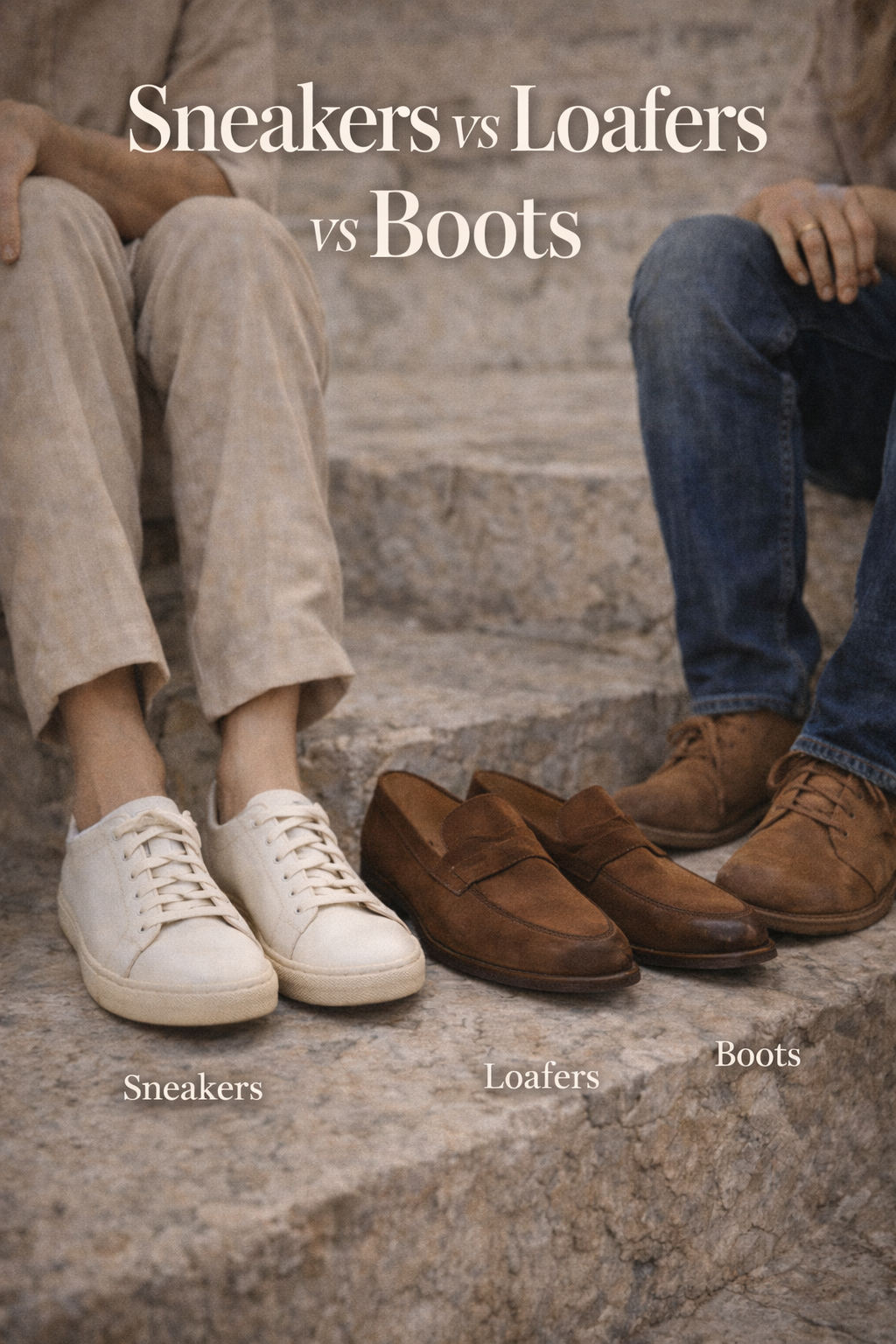
The history of human footwear is a narrative of adaptation. From the earliest protective wrappings used by our ancestors to traverse rugged terrain, to the sleek, status-signaling designs of the modern runway, shoes have always served two masters: utility and identity. Today, the modern wardrobe is dominated by three distinct pillars: the sneaker, the loafer, and the boot.
To the uninitiated, the choice between these three might seem purely functional—one for the gym, one for the office, one for the rain. However, from a design and cultural perspective, these categories represent fundamentally different approaches to human movement and social presentation. The sneaker represents agility and youth culture; the loafer embodies leisure and establishment; the boot signifies resilience and utility.
Understanding the technical construction, historical evolution, and stylistic nuances of each allows you to build a wardrobe that is not just functional, but intentional. This guide explores the “Sneakers vs. Loafers vs. Boots” debate through the lens of design evolution, helping you navigate the complexities of modern footwear.
Read Here: Complete Guide to Types of Shoes
Sneakers vs. Loafers vs. Boots – Quick Overview
Before dissecting the technical differences, we must define what these silhouettes actually are. In the contemporary market, lines blur—boots get sneaker soles, loafers get chunky treads—but the archetypes remain distinct based on their origins and primary construction methods.
What Are Sneakers?
The sneaker is the youngest of the three categories, born from the industrial revolution and the invention of vulcanized rubber. Historically, shoes were loud; leather soles clattered against cobblestones. The “sneaker” got its name in the late 19th century because the rubber sole allowed the wearer to move silently.
Technically, a sneaker is defined by a flexible sole made of rubber or synthetic material and an upper made of leather, canvas, or increasingly, high-tech knit meshes. While originally designed for athletics (tennis, basketball, running), the sneaker has evolved into the dominant footwear of the 21st century, transcending its utilitarian roots to become a canvas for art, hype, and luxury.
What Are Loafers?
The loafer is the quintessential slip-on shoe. It lacks a lacing system, relying instead on the tension of the upper and the shape of the last (the mold the shoe is formed on) to stay on the foot.
The loafer’s origins are debated, often traced back to a bespoke house shoe made for King George VI or the Norwegian “Aurland” moccasin. Unlike sneakers, loafers are traditionally constructed using leather for both the upper and the sole, though rubber-soled variants are common today. The defining feature is the moccasin-style construction, where the leather wraps around the bottom of the foot, offering a glove-like fit that molds to the wearer over time.
What Makes Boots Different?
Boots are the oldest form of specific footwear, predating the separation of left and right shoes. The defining characteristic of a boot is that it covers the foot and the ankle (and sometimes the lower leg).
From a design perspective, boots are about protection and stability. Whether it’s a sleek Chelsea boot or a rugged combat boot, the structure is designed to support the ankle joint and provide a barrier against the elements. Construction methods for boots are often more robust than sneakers or loafers, frequently utilizing Goodyear welting or Stitch-down construction to ensure the sole can be replaced after years of wear.
Key Style Differences Between Sneakers, Loafers, and Boots
When a footwear designer sketches a shoe, they are manipulating silhouette, proportion, and material. These three elements dictate how a shoe interacts with the rest of an outfit.
Design and Structure
The silhouette of a sneaker is generally aerodynamic. Even chunky “dad shoes” have a forward momentum in their design lines. They are built on lasts that prioritize the natural splay of the toes and often feature a “drop” (a difference in height between the heel and toe) designed to propel the wearer forward.
Loafers, by contrast, have a low profile. They expose the ankle and often the top of the foot (the vamp). This lack of coverage makes the leg look longer but requires pants to be hemmed perfectly—usually with no break or a slight break. The structure is soft; a loafer is meant to collapse slightly and move with the foot.
Boots add visual weight. They anchor an outfit. Because they cover the ankle, they interrupt the line of the leg, which changes how trousers fall. A boot demands pants with a wider leg opening or a cuff to accommodate the shaft of the boot. The structure is rigid, providing a stark contrast to the fluidity of a loafer or the flexibility of a sneaker.
Materials and Build Quality
Materiality tells the story of the shoe’s purpose.
- Sneakers: Utilize a mix of synthetics, EVA foams (ethylene-vinyl acetate), and leathers. The focus is on weight reduction and shock absorption. The build quality is often cemented (glued), meaning once the sole wears out, the shoe is done.
- Loafers: Traditionally use calfskin, suede, or cordovan. The quality is judged by the grain of the leather and the stitching of the apron (the top part of the shoe). Unlined loafers offer immediate comfort but less structure, while lined versions take longer to break in but last longer.
- Boots: Feature heavy-gauge leathers (steerhide, horsehide) meant to withstand abrasion. The soles are often dense rubber (like Vibram) or stacked leather.
Casual vs. Smart vs. Rugged Aesthetic
The aesthetic spectrum is clear. Sneakers sit firmly in the casual to smart-casual realm. While a clean white Common Projects sneaker can be worn with a suit, it significantly dresses down the look, signaling a relaxed, modern attitude.
Loafers occupy the middle ground of “smart casual” to “business formal.” A penny loafer is preppy and collegiate; a tassel loafer is sophisticated and European; a horsebit loafer is flashy and luxurious. They bridge the gap between the weekend and the boardroom.
Boots oscillate between rugged and formal. A chunky work boot (like a Timberland or Red Wing) is purely casual and rugged. However, a sleek black Chelsea boot or a Balmoral boot is arguably as formal as an Oxford shoe, appropriate for everything short of black tie.
Read Here: Sneakers vs Loafers vs Boots
Comfort Comparison – Which Shoe Type Feels Best?
Comfort is subjective, but biomechanics are not. Each shoe type supports the human foot differently.
Cushioning and Support
If comfort equals cushioning, the sneaker wins. Modern EVA and polyurethane midsoles return energy to the wearer, reducing fatigue during long periods of walking. However, if comfort equals support, the sneaker can sometimes be too soft, leading to foot fatigue as the muscles work harder to stabilize on a squishy surface.
Boots offer architectural support. The rigid shank (a piece of metal or fiberglass inside the sole) prevents the shoe from twisting, and the ankle support stabilizes the joint. While they lack the “cloud-like” feel of sneakers, a well-broken-in boot offers superior support for standing all day.
Loafers are the wild card. Traditional leather-soled loafers offer very little shock absorption. You feel the ground. However, because they lack laces, they accommodate high insteps well and allow for swelling throughout the day.
Breathability and Daily Wear
Sneakers, particularly those with knit or mesh uppers, offer superior airflow. They are designed to vent heat generated by athletic activity.
Loafers, often worn without socks or with “no-show” socks, are excellent for temperature regulation in warmer climates, provided they are unlined leather.
Boots are heat traps. This is a feature in winter, but a bug in summer. Leather is breathable to a degree, but a high boot shaft restricts air circulation around the ankle, making them the least breathable option for daily wear in temperate climates.
Seasonal Comfort Factors
- Summer: Loafers and canvas sneakers dominate. The exposed ankle of the loafer is essential for cooling.
- Autumn: Leather sneakers and chukka boots.
- Winter: Boots are non-negotiable. Gore-Tex linings, gusseted tongues (to keep water out), and lugged soles are necessary for traction and warmth.
- Spring: A transitional time perfect for white leather sneakers or suede loafers.
When to Wear Sneakers vs. Loafers vs. Boots
Context is the currency of style. Wearing the “wrong” shoe isn’t about breaking rules; it’s about misunderstanding the environment.
Office and Business Casual Outfits
The modern office has relaxed, but hierarchies remain.
- The Loafer: The safest bet. A dark brown penny loafer pairs perfectly with chinos, wool trousers, and even dark denim. It signals that you made an effort without being stuffy.
- The Boot: A Chelsea boot in black or dark brown leather is perfectly acceptable in most business casual environments. It looks like a dress shoe under trousers but offers more durability.
- The Sneaker: Acceptable in creative industries or on “Casual Fridays.” Stick to minimal, monochromatic leather sneakers. Avoid technical running shoes or brightly colored high-tops, which distract from the professional silhouette.
Travel, Streetwear, and Everyday Use
- The Sneaker: The king of travel. Easy to slip off at security (if you don’t tie them too tight), comfortable for miles of walking, and versatile enough to handle a museum or a casual dinner. In streetwear, the sneaker is the centerpiece; the rest of the outfit often revolves around the shoe.
- The Boot: Good for adventure travel, but heavy to pack. Wearing your heaviest boots on the plane is a classic travel hack to save luggage weight.
- The Loafer: The ultimate “resort” shoe. If your travel involves dinners on a terrace or strolling through Italian piazzas, the loafer is superior to the sneaker in terms of style.
Winter, Outdoor, and Formal Occasions
- Winter/Outdoor: Boots are the only logical choice. Salt, slush, and mud will ruin the delicate leather of a loafer and the porous fabric of a sneaker.
- Formal: Loafers (specifically bit loafers or Belgian loafers) can be worn with tuxedos in modern settings, though patent leather lace-ups are traditional. Sneakers should never touch a formal event unless you are a celebrity making a specific counter-culture statement. Boots, specifically sleek dress boots, are acceptable with suits during winter weddings or funerals.
Pros and Cons of Sneakers, Loafers, and Boots
Durability
- Boots: High. A Goodyear-welted boot can last 10–20 years with proper care and resoling. They improve with age, developing a patina.
- Loafers: Medium. Leather loafers last a long time, but the softer leather is more prone to scuffing, and the heels wear down faster than heavy boots.
- Sneakers: Low. Once the foam midsole compresses or the outsole wears through, the sneaker is usually finished. They are generally disposable commodities.
Maintenance
- Boots: Require conditioning, polishing, and occasional resoling. They are high maintenance but high reward.
- Loafers: Require shoe trees to maintain their shape (crucial, as they have no laces to hold structure) and regular polishing.
- Sneakers: Easy to clean with a brush and soapy water. Canvas sneakers can sometimes be machine washed. White sneakers require vigilance to keep them looking crisp.
Versatility
- Loafers: The most versatile across the formality spectrum. They can be worn with shorts or a suit.
- Boots: Versatile across weather conditions but limited in warmer months and with shorts.
- Sneakers: Versatile across social settings but limited in formal or professional environments.
Style Flexibility
- Sneakers: Infinite. There is a sneaker for every subculture: skate, basketball, retro, luxury, avant-garde.
- Boots: High. From punk (Doc Martens) to cowboy to gentlemanly dress boots.
- Loafers: Moderate. They generally skew towards preppy, classic, or European styles.
How to Choose the Right Shoe for Your Lifestyle
Building a rotation requires honesty about how you live, not just how you want to look.
Outfit Matching Tips
The “Visual Weight” Rule: Match the visual weight of the shoe to the visual weight of the pants.
- Heavy Boots: Require heavier fabrics (denim, flannel, tweed) and wider leg openings.
- Slim Loafers: Require lighter fabrics (linen, tropical wool, cotton) and a tapered leg.
- Sneakers: Chunky sneakers need wider pants; slim, low-profile sneakers look best with slim or tapered pants.
Budget and Longevity
If you have a limited budget, where should you invest?
- Invest in Boots and Loafers: Cheap leather looks cheap and ages poorly. It cracks and peels. Spend your money here on stitched construction and full-grain leather.
- Save on Sneakers: A $70 pair of Vans or Converse often looks just as good as a $400 luxury version of the same silhouette. The returns on investment diminish quickly with sneakers.
Common Buying Mistakes
- Buying loafers too loose: Loafers stretch. If they are comfortable in the store, they will be falling off in a month. Buy them snug.
- Ignoring the weather: Buying suede boots as your primary winter shoe is a recipe for disaster (and water stains).
- The “Hybrid” trap: Avoid shoes that try to be everything, like a dress shoe with a sneaker sole. They usually fail at being both dressy and sporty. Stick to the classic archetypes.
Read Here: Smart Casual Footwear Guide
FAQ – Sneakers vs. Loafers vs. Boots
Are sneakers more comfortable than loafers?
Generally, yes, for walking and standing. The foam technology in sneakers provides active cushioning that traditional loafers lack. However, for sitting at a desk or for people with wide feet, a broken-in, unlined loafer can feel less constrictive than a laced sneaker.
Can loafers be worn casually?
Absolutely. This is the modern way to wear them. Pair suede penny loafers with mid-wash jeans and a white t-shirt. The key is to keep the rest of the outfit simple. Loafers also look excellent with tailored shorts in the summer.
Are boots suitable for daily wear?
Yes, but it depends on the boot style and your climate. A heavy work boot might be overkill for an office job, but a chukka boot or Chelsea boot is an excellent “daily driver.” If you live in a hot climate, however, daily boot wear can lead to foot health issues due to moisture retention.
Which shoe type is best for travel?
A comfortable sneaker is usually best for the act of traveling (airports, trains). However, if you are limited to one pair of shoes for a trip that includes both walking tours and nice dinners, a comfortable Chelsea boot or a rubber-soled loafer is the most strategic choice.
Do boots last longer than sneakers?
Yes, significantly longer. A quality boot is made of materials (leather, rubber, cork) that can be repaired. A sneaker is typically a disposable product. From a sustainability standpoint, one pair of boots that lasts 10 years is better than 10 pairs of sneakers that last one year each.
Conclusion: The Evolution of Your Rotation
The “Sneakers vs. Loafers vs. Boots” debate is not a zero-sum game. The well-dressed individual understands that these are tools in a toolkit. The sneaker connects you to the present moment—it is fast, cultural, and comfortable. The loafer connects you to a tradition of leisure and ease. The boot connects you to utility and resilience.
As you build your wardrobe, move away from the idea of finding the “one perfect shoe.” Instead, focus on finding the best version of each archetype for your specific life. Start with a white leather sneaker, a dark brown penny loafer, and a black leather boot. With just these three, you have covered 99% of the sartorial situations the modern world will throw at you.
Leave a Reply