

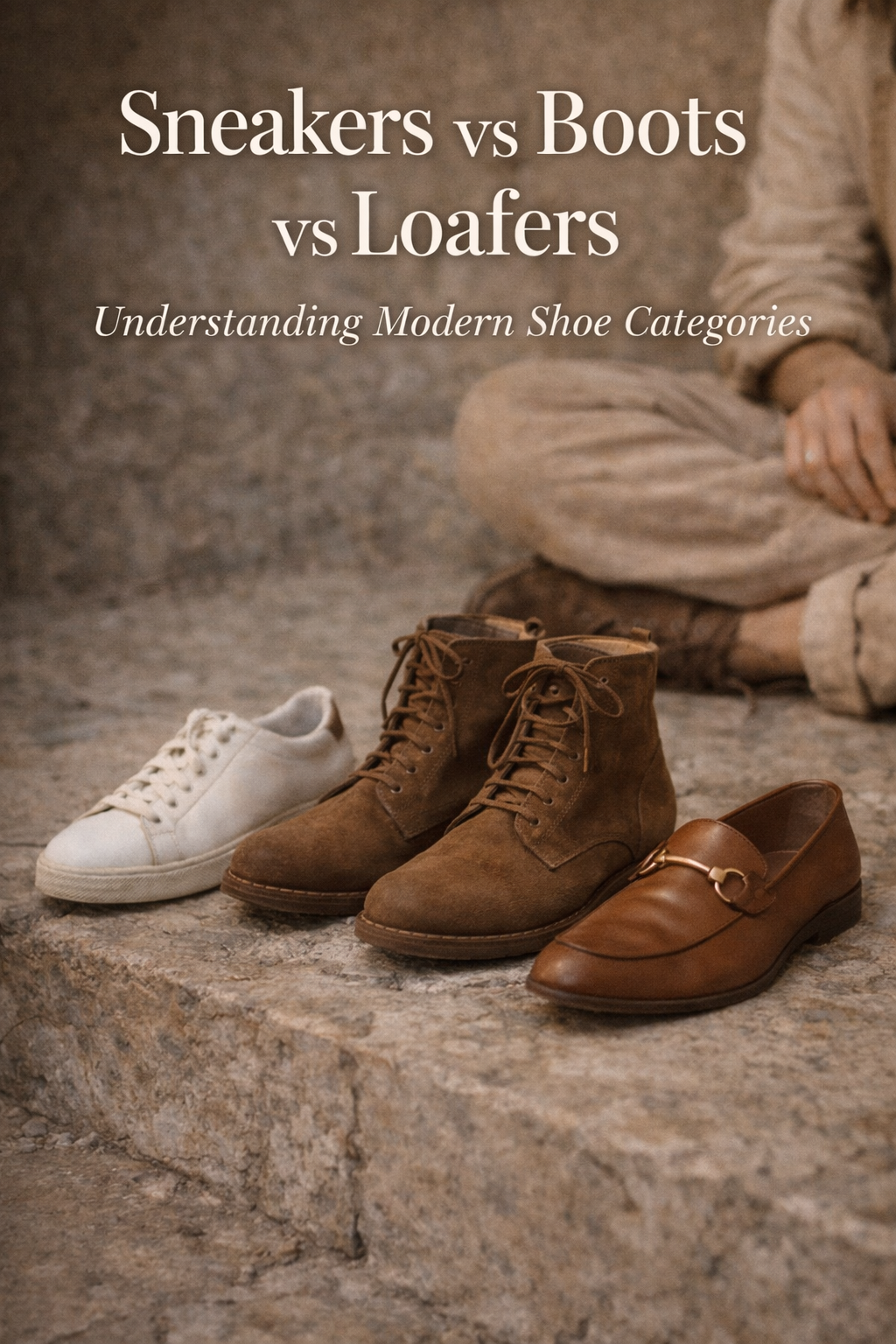
Sneakers, boots and loafers describe broad groups of shoes, not three guaranteed levels of comfort or protection. A casual sneaker, a running shoe and a workplace safety shoe can have very different jobs even when parts of their appearance overlap.
Use the category to narrow your search, then assess the actual pair. The right choice depends on fit, the activity, conditions and any dress or equipment requirements.
Sneakers: distinguish casual and activity use
Sneakers may have textile, leather, synthetic or mixed uppers and many types of soles. A model with sporting origins can now be sold mainly for casual wear. Read the current model’s intended use rather than assuming its history establishes present-day performance.
For everyday outfits, compare the outline with your trousers and check the hem while walking. The hybrid lifestyle sneaker guide explains why a versatile-looking design still needs activity-specific checks.
Boots: coverage is only the beginning
Boots generally extend higher around the foot or leg than low-cut shoes, but height alone does not establish weather protection, ankle support or suitability for a work task. Inspect the exact materials, construction and specification when those features matter.
Try the boot with the socks and trouser length you expect to wear. Check fastening, pressure points and heel movement. A lace-up, zip and pull-on design may fit differently even when their external shapes look similar.
Loafers: pay attention to retention
Loafers are commonly recognised as slip-on shoes with a low opening and no lace closure. Designs vary in shape, sole and upper, so a dressier-looking pair may feel quite different from a softer casual version.
Check that the shoe stays on comfortably when walking without relying on your toes to grip. Try both feet and your intended socks. The absence of laces means you cannot adjust the upper in the same way as a lace-up, making the actual fit especially important.
Match the pair to the day
List the walking, standing, transport and indoor or outdoor conditions involved. Check workplace requirements separately. A rugged-looking boot is not proof of required protection, and a polished loafer is not automatically accepted by every dress code.
For office decisions, use the office shoe guide. If protection is required, follow the specified selection process rather than substituting by appearance.
Try the complete outfit and fit
Wear the usual socks and test fastening, movement and pressure. Check what happens to trouser hems on stairs or when seated. A shoe that looks right in a product photo may not work with your own proportions or route.
The shoe-type glossary explains other style names, and the silhouette guide helps describe visible shape. Use those terms to ask better questions, not to infer performance they cannot establish.
Choose the pair that meets the requirements and fits you, then judge the styling. There is no need for one shoe category to serve every activity or for every wardrobe to contain the same rotation.


Leave a Reply