

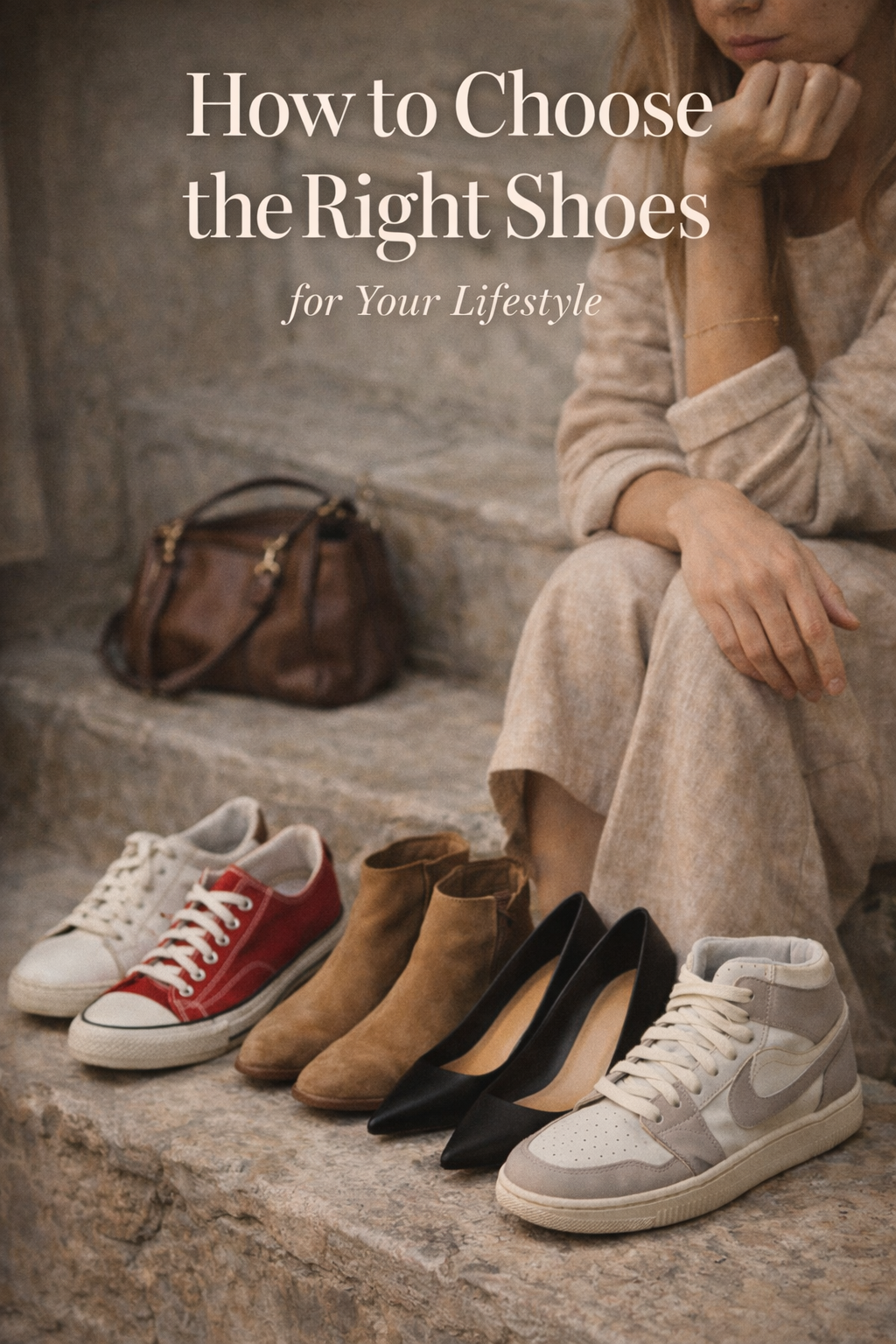
The average person takes anywhere from 3,000 to 10,000 steps a day. Over a lifetime, that equates to walking around the Earth multiple times. Yet, we often treat the vessels that carry us on this journey as afterthoughts—impulse buys based on a fleeting trend or a sale sticker.
Footwear is not merely a protective covering; it is the foundation of our posture, a tool for our daily tasks, and a profound signal of our identity. From the woven grass sandals of our ancestors to the 3D-printed midsoles of today, shoes have always evolved alongside human needs. Choosing the right pair is an exercise in understanding that evolution and applying it to your modern life.
This guide is designed to move beyond simple style advice. We will explore the intersection of anatomy, lifestyle, and design to help you build a rotation that serves your physical needs while expressing your personal narrative.
Read Here: Complete Guide to Types of Shoes
Why Choosing the Right Shoes Matters
It is easy to underestimate the impact of footwear until something goes wrong. A blister on a commute, lower back pain after a standing shift, or the social discomfort of wearing sneakers to a black-tie event—these are all symptoms of a misalignment between shoe and lifestyle.
Shoes are the interface between the human body and the ground. They alter the way we walk (our gait), how we stand (our posture), and even how we are perceived by others. In the context of the Human Shoes Evolution Project, we view shoes not just as accessories, but as tools that have allowed humans to conquer diverse terrains and social hierarchies.
When you select a shoe, you are selecting a tool for a specific environment. A heavy boot offers protection but limits agility. A minimal loafer offers social capital but provides little support. Understanding this trade-off is the first step in curating a functional wardrobe.
Understanding Your Lifestyle Needs
Before you look at a single brand or silhouette, you must audit your life. A “good” shoe is only good if it matches the demands you place upon it.
Daily Activities and Movement
Your primary activity level dictates the structural requirements of your footwear.
- The Commuter: If your day involves walking to transit or standing on subway platforms, you need shock absorption. Thin-soled dress shoes will degrade your joints over time. You require a hybrid silhouette—perhaps a derby with a rubber lug sole or a clean, leather sneaker.
- The Standing Professional: Chefs, retail workers, and medical staff need arch support and toe room. When we stand for long periods, our feet swell. A shoe that fits perfectly at 8:00 AM might be excruciatingly tight by 4:00 PM.
- The Sedentary Creative: If you spend most of your time at a desk, your footwear choices can lean more toward aesthetic expression than performance engineering. However, constriction is still an enemy; tight shoes impede circulation even when sitting.
Climate and Environment
Your geographic location is a non-negotiable factor.
- Urban Concrete: City dwellers often ignore the hardness of concrete. Unlike natural soil, sidewalks offer no energy return. This requires midsoles with denser foams like polyurethane (PU) or encapsulated air units to prevent fatigue.
- Variable Weather: If you live in a region with unpredictable rain, suede requires high maintenance. Treated leathers, Gore-Tex linings, or synthetic uppers become essential functional choices rather than just stylistic ones.
Personal Style Preferences
Finally, your shoes must resonate with your self-image. Are you drawn to the utilitarianism of workwear? The sleek lines of minimalism? The bold experimentation of avant-garde fashion?
- Minimalist: You likely prefer clean lines, neutral colors, and low profiles (e.g., Common Projects, simple loafers).
- Maximalist: You may embrace chunky soles, complex paneling, and “dad shoe” aesthetics (e.g., Balenciaga Triple S, New Balance 990s).
Understanding your aesthetic tribe helps narrow down the overwhelming volume of choices in the market.
Read Here: Walking Shoes vs Running Shoes
Choosing Shoes Based on Function
Form follows function. This design principle is paramount in footwear. While boundaries blur in modern fashion (sneakers with suits, boots with shorts), the core function of a shoe’s category remains relevant.
Casual Everyday Shoes
This is the workhorse category. These shoes bridge the gap between performance and leisure.
- The Cupsole Sneaker: Characterized by a rubber outsole stitched to the upper, these are durable and supportive. They are the standard for modern daily wear.
- The Desert Boot: Originally designed for British soldiers in North Africa, these offer ankle support and breathability (usually via crepe soles) while remaining light.
- The Slip-On: Whether a canvas van or a leather mule, the lack of laces signals leisure. They are ideal for “threshold” lifestyles—moving quickly between indoors and outdoors.
Performance and Athletic Shoes
Here, technology reigns supreme. If your lifestyle involves specific dynamic movements, fashion sneakers will not suffice.
- Running Shoes: Designed for forward motion. They often have a “heel-to-toe drop” (the heel is higher than the toe) to propel you forward. Using these for weightlifting is dangerous because they lack stability.
- Cross-Trainers: These have flat, wide outsoles for lateral stability. They are designed for gym environments where you might move side-to-side or lift heavy weights.
Formal and Professional Footwear
Despite the casualization of the workplace, formal structures persist.
- The Oxford: Closed lacing. The most formal option. It signals precision and tradition.
- The Derby: Open lacing. Slightly more rugged and versatile. It signals approachability and utility.
- The Loafer: No lacing. The ultimate blend of comfort and class. It signals ease and sophistication.
How Shoe Anatomy Affects Comfort
To choose the right shoe, you must think like a designer. You need to look past the logo and understand the construction.
Cushioning and Midsole
The midsole is the heart of the shoe—the layer between the insole (what your foot touches) and the outsole (what hits the ground).
- EVA (Ethylene-Vinyl Acetate): Common in sneakers. It is light and cushy but compresses over time (“bottoms out”).
- PU (Polyurethane): Denser and heavier. It lasts longer and provides better stability, often found in boots and high-end walking shoes.
- Cork: Found in Goodyear-welted boots and Birkenstocks. It molds to your foot over time, creating a custom orthotic fit. This is the gold standard for long-term comfort.
Toe Box Shape
The modern shoe industry has a bad habit of tapering toe boxes for a sleek visual, often at the expense of foot health.
- Narrow Taper: Compresses the toes, leading to bunions and hammertoes. Common in dress shoes and fashion sneakers.
- Anatomical/Wide: Allows the toes to splay naturally. This improves balance and reduces nerve pain. If your lifestyle involves heavy walking, prioritize a wider toe box.
Heel Support
The “heel counter” is the cup that holds the back of your foot.
- Stiff Counters: Provide stability and prevent the ankle from rolling. Essential for hiking or uneven terrain.
- Soft/Deconstructed Counters: Found in minimalist sneakers or loafers. They are comfortable immediately (no break-in period) but offer little support for long days.
The Role of Shoe Silhouettes in Lifestyle Choices
The silhouette is the outline of the shoe. It dictates how the shoe interacts with your pants and the visual weight of your outfit.
High-Top vs Low-Top
- High-Tops: Originally designed for ankle protection in basketball (Converse All-Star, Jordan 1). In a lifestyle context, they shorten the leg line but add a sense of ruggedness or vintage athletic appeal. They work best with cropped pants or wider hems.
- Low-Tops: The most versatile silhouette. They lengthen the leg and work with shorts, chinos, and jeans alike. They are the default choice for a “capsule” shoe collection.
Minimal vs Chunky Designs
- Minimal: A single color, no branding, slim profile. These blend in. They are excellent for environments where you want your ideas or your face to be the focal point, not your feet.
- Chunky: Thick soles, multiple layers of material. These are statement pieces. They anchor an outfit and are useful for balancing out oversized clothing proportions, which is currently a dominant trend in fashion.
Slip-On vs Lace-Up
- Lace-Up: Offers “lockdown.” You can adjust the fit throughout the day. If your lifestyle involves varied terrain or rushing, laces are superior.
- Slip-On: Offers convenience. Perfect for travel (airport security) and cultures where removing shoes indoors is customary.
Matching Shoes With Modern Lifestyles
Let’s look at three specific lifestyle archetypes and how to shoe them.
Office and Smart Casual
The strict suit-and-tie dress code is fading. The “Smart Casual” zone is tricky—it requires looking put-together without looking stiff.
- The Solution: The Chelsea Boot or the Suede Loafer. Both are clean enough for a boardroom but relaxed enough for a post-work drink. They pair perfectly with dark denim or chinos.
Streetwear and Urban Style
This lifestyle values cultural currency and comfort. It is deeply rooted in hip-hop, skate culture, and basketball history.
- The Solution: The Retro Basketball Sneaker or the Technical Runner. These shoes carry cultural narratives. Wearing a Jordan 1 or a Nike Dunk signals a connection to a specific era of history.
Outdoor and Travel Needs
The “Gorpcore” trend has brought outdoor gear into the city. People want to go from a coffee shop to a hiking trail without changing.
- The Solution: The Trail Runner. Brands like Salomon and Hoka have bridged the gap. They offer aggressive traction and waterproofing but are styled in colorways that work in urban settings.
Common Mistakes People Make When Choosing Shoes
Even seasoned shoppers fall into these traps.
Prioritizing Looks Over Structure
We have all bought a pair of shoes because they looked incredible on the shelf, only to find they have zero arch support. Always check the torsional stability (does the shoe twist like a dishrag?) and the heel stiffness. A shoe with no structure is essentially a sock; it offers no mechanical advantage.
Ignoring Construction Quality
Fast fashion shoes are often glued together (cemented). Once the sole peels, the shoe is trash. High-quality footwear often uses stitching (Blake stitch or Goodyear welt).
- The Mistake: Buying three pairs of cheap glued boots over five years.
- The Fix: Buying one pair of welted boots that can be resoled and lasts ten years.
Choosing the Wrong Silhouette for the Body Type
Visual proportion matters. If you are tall and broad, a delicate, thin-soled loafer might make you look top-heavy. If you have a smaller frame, a massive, triple-soled designer sneaker might look like clown shoes. Balance is key.
The Psychological Side of Shoe Choice
In the Human Shoes Evolution Project, we study the psychology of what we wear. Shoes are distinctive because they are one of the few items of clothing we can see on ourselves without a mirror. When you look down, your shoes reinforce your mindset.
- The Power Boot: Putting on a heavy boot can make you feel grounded, tough, and prepared.
- The Agile Sneaker: Lacing up a light runner can trigger a mindset of speed and efficiency.
Socially, shoes are often the first thing people notice. They are socioeconomic markers. Clean, well-maintained shoes signal attention to detail. Rare, limited-edition shoes signal cultural knowledge.
The Future of Lifestyle-Based Footwear
Where do we go from here? The future of footwear is customized and sustainable.
Smart Shoes
We are entering an era of “quantified self.” We will soon see more shoes with embedded sensors that analyze gait in real-time, warning you if your posture is slipping or if you are prone to injury.
Sustainable Choices
The current model of “buy, wear, throw away” is unsustainable. We are seeing a rise in circular footwear—shoes made from single materials that can be ground down and reprinted into new shoes. Brands are exploring mushroom leather (mycelium) and algae foams to reduce reliance on plastics.
Hybrid Categories
The strict lines between “dress shoe” and “sneaker” will continue to dissolve. We will see more hybrid outsoles—dress uppers on performance bottoms—allowing for a lifestyle that is visually formal but physically athletic.
Read Here: Everyday Shoe Styles for Modern Life
Shoes as an Extension of Your Lifestyle
Choosing the right shoes is not about vanity; it is about equipping yourself for your life. It is about respecting the anatomy of your feet and the terrain of your daily existence.
When you curate your footwear with intention, you stop buying products and start investing in tools. You stop suffering for fashion and start using design to enhance your capability.
Whether you are navigating a corporate negotiation, a rocky trail, or a city sidewalk, the right shoe grounds you. It connects the history of human innovation to the reality of your next step.
Leave a Reply