

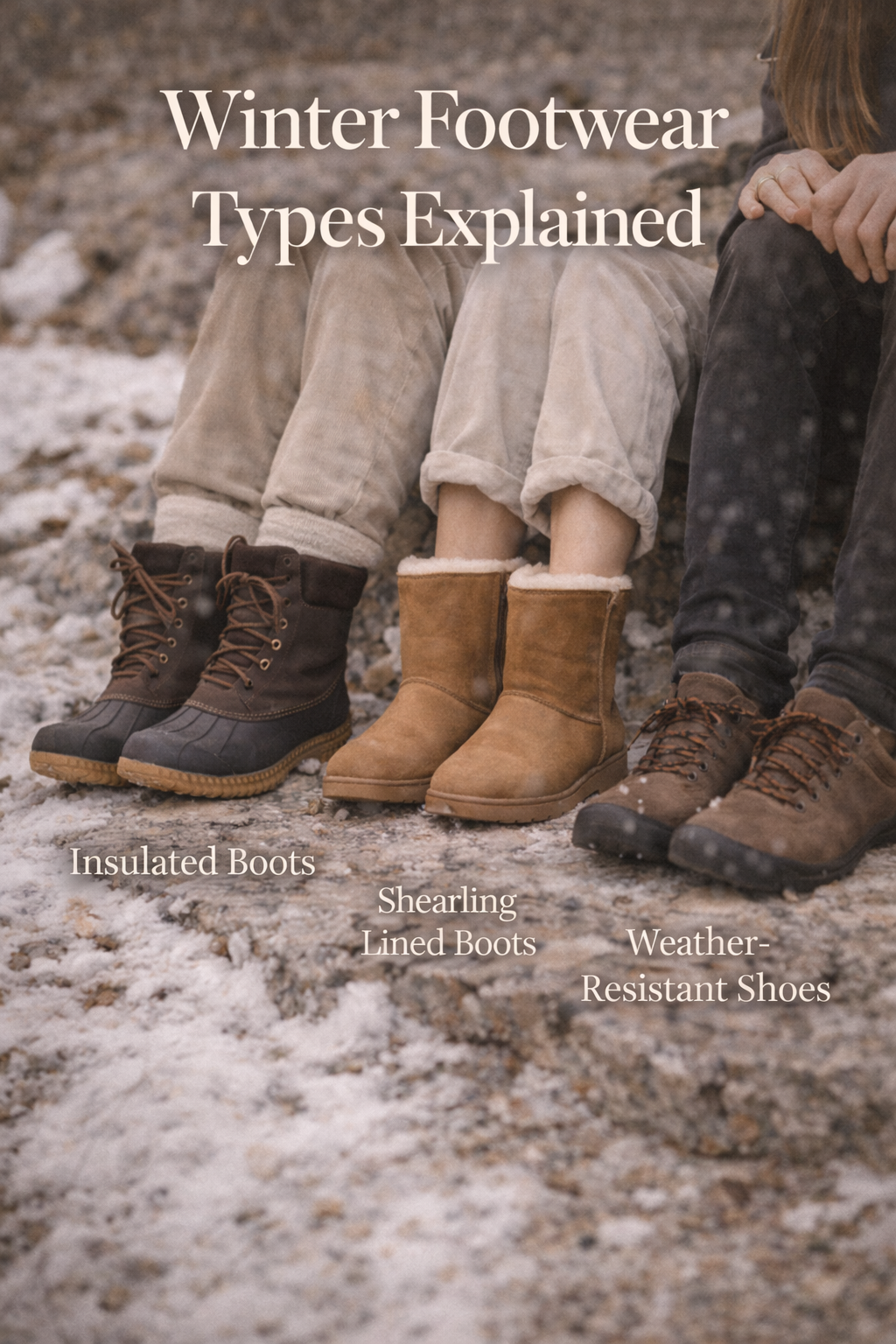
As temperatures drop and frost begins to coat the pavement, our choice of footwear suddenly becomes less about fashion and more about survival. We trade in canvas slip-ons for something sturdy, hoping to keep the biting cold at bay. However, navigating the market of winter shoes can feel overwhelming. Do you really need heavy-duty snow boots for a city commute? Are waterproof sneakers actually effective, or just a marketing gimmick?
The right pair of winter shoes can make the difference between enjoying a crisp, snowy walk and suffering through frozen toes and wet socks. But winter footwear isn’t a monolith; it’s a diverse category filled with specialized options designed for specific environments—from icy urban sidewalks to deep backcountry powder. Understanding these distinctions is key to staying comfortable all season long.
In this guide, we will break down the essential types of winter footwear, explaining the technology behind them and helping you decide exactly what you need to keep your feet warm, dry, and stylish this winter.
Read Here: Complete Guide to Types of Shoes
What Is Winter Footwear?
At its core, winter footwear is a category of shoes and boots engineered to combat the specific challenges of cold weather. Unlike standard footwear, which prioritizes breathability or lightweight construction, winter gear focuses on protection. These shoes act as a barrier against the elements, ensuring that your body heat stays in while moisture and cold air stay out.
Key Features of Cold-Weather Shoes
To be considered true “winter footwear,” a shoe typically needs to possess a combination of three traits: thermal regulation, moisture management, and traction. It isn’t enough for a boot to simply look rugged; it must perform under duress.
The construction usually involves a thicker upper material, often treated for water resistance. Inside, you will find some form of insulation—whether it’s synthetic fibers like Thinsulate™, natural wool, or shearling. Finally, the outsole is composed of rubber compounds designed to remain flexible in freezing temperatures, preventing the “plasticizing” effect that makes normal shoes slippery on ice.
Why Winter-Specific Footwear Matters
You might wonder if you can just wear thick wool socks with your regular leather boots. While thick socks help, they don’t solve the fundamental issues of conduction and moisture. Standard leather boots often lack the thermal barriers needed to stop the cold ground from sapping heat directly through the soles of your feet.
Furthermore, winter-specific footwear addresses safety. Slips and falls on icy patches are a leading cause of winter injuries. Footwear designed for the season features aggressive tread patterns and specialized rubber that provide grip on slick surfaces, offering stability that a standard sneaker or fashion boot simply cannot provide.
Insulation, Waterproofing, and Grip Basics
Understanding the “Big Three” of winter shoe tech helps you read product labels like a pro:
- Insulation: Measured in grams (e.g., 200g, 400g), this indicates how much heat the boot retains. The higher the number, the warmer the boot.
- Waterproofing: This ranges from “water-resistant” (good for light snow) to “waterproof” (can be submerged). Look for sealed seams and gusseted tongues (where the tongue is attached to the sides of the boot) to prevent water and debris from entering.
- Grip: Look for deep “lugs” (the channels in the rubber sole). The deeper and more multi-directional the lugs, the better the traction in snow and slush.
Main Types of Winter Footwear Explained
Winter shoes are not one-size-fits-all. A boot designed for an Arctic expedition will be miserable on a subway commute, and a stylish Chelsea boot will fail you on a mountain hike. Here is a breakdown of the main categories.
Insulated Winter Boots
These are the workhorses of the season. Insulated winter boots are versatile hybrids that sit somewhere between a hiking boot and a snow boot. They are typically lighter than heavy-duty snow boots but offer significantly more warmth than a standard leather boot.
These boots usually feature 200g to 400g of insulation, making them perfect for active winter days—shoveling the driveway, walking the dog, or running errands in freezing temperatures. They often have waterproof uppers made of leather or synthetic nylon. If you need one pair of boots to handle 90% of winter scenarios, this is usually the best category to explore.
Snow Boots
When the weather forecast predicts a blizzard or you plan to trek through deep powder, snow boots are the answer. These are easily identifiable by their bulk. They often feature a high shaft (rising well above the ankle or up to the calf) to prevent snow from entering the boot.
The defining feature of a snow boot is the shell. Most have a rubberized lower “duck shell” that is completely impervious to water and slush. The interior often contains a removable felt or wool liner, which is excellent for drying out the boots after a long day in the snow. While they offer superior warmth (often rated for temperatures well below zero), they can be heavy and clunky, making them less ideal for long-distance walking or driving.
Waterproof Hiking Boots
For the winter adventurer who refuses to stay indoors, waterproof hiking boots are essential. These are similar to three-season hiking boots but are fortified for the cold. They prioritize ankle support and stability on uneven terrain.
Winter hikers differ from standard hikers in two ways: outsole compound and insulation. The rubber on the sole is softer to maintain grip on ice, and they often include a thin layer of insulation. They are compatible with gaiters (to keep snow out) and crampons or micro-spikes for ice traction. If your winter involves elevation gain and rocky trails, stick to this category.
Winter Sneakers
This is a rapidly growing category for urban dwellers who despise the weight of boots. Winter sneakers look like high-top athletic shoes but are re-engineered for the cold.
Brands often take their classic silhouettes and upgrade them with Gore-Tex linings for waterproofing, fleece linings for warmth, and reversed-lug soles for traction. While they won’t stand up to deep snow or sub-zero treks, they are fantastic for city living where sidewalks are shoveled but cold and wet. They offer the comfort and flexibility of a sneaker with just enough protection to get you through a slushy commute.
Chelsea and Leather Boots for Urban Winter Style
Sometimes, you need to look professional while navigating a winter landscape. This is where winter-ready Chelsea and leather boots come in. These boots maintain a sleek, fashionable profile suitable for the office or a dinner date.
The difference lies in the hidden details. A standard fashion boot has a smooth leather sole (a death sentence on ice) and no lining. A winter-ready version will feature a lugged rubber sole (often discreetly designed) and a thin layer of thermal lining or a shearling footbed. They are usually water-resistant rather than fully waterproof, meaning they can handle a splash but not a puddle.
Read Here: Outdoor and Hiking Shoe Types
Materials and Technologies in Winter Shoes
To truly understand what you are buying, it helps to look under the hood. The materials used in winter footwear determine how long they last and how well they perform.
Insulated Linings and Thermal Materials
Insulation technology has come a long way from bulky wool stuffing.
- Synthetic Insulation (e.g., Thinsulate™, PrimaLoft®): These are lightweight synthetic fibers that trap body heat. They perform well even when damp and don’t add significant bulk to the shoe.
- Shearling and Wool: Nature’s best insulators. They offer excellent moisture-wicking properties and are naturally antimicrobial (meaning less foot odor). However, they can take a long time to dry if they get soaked.
- Felt Liners: Common in snow boots, these thick liners provide a physical barrier against the cold. They are durable and replaceable.
Waterproof Membranes
Keeping water out while letting sweat escape is the holy grail of winter footwear.
- Gore-Tex (GTX): The gold standard. It is a membrane with microscopic pores large enough to let water vapor (sweat) out but too small to let liquid water in.
- Rubber Shells: Found on snow boots, this is a physical barrier. It is 100% waterproof but has zero breathability. This is why feet can sometimes feel sweaty in heavy snow boots.
- DWR Coatings: Durable Water Repellent is a chemical spray applied to the outside of leather or nylon. It causes water to bead up and roll off. It wears off over time and needs to be reapplied.
Anti-Slip Outsoles
Not all rubber is created equal. Standard rubber gets hard and slick in the cold. Winter outsoles use softer compounds (like winter tires on a car) that stay pliable. Some advanced soles even feature microscopic fiberglass shards embedded in the rubber to act like sandpaper, creating friction on wet ice. Brands like Vibram® Arctic Grip are leaders in this space, offering soles that feel like sandpaper to the touch and grip exceptionally well on frozen surfaces.
How to Choose the Right Winter Footwear
With so many options, how do you pick? It comes down to analyzing your specific environment and activity levels.
Climate and Temperature Needs
Consider your local weather patterns. Do you live in an area with “dry cold” (like the Rockies) or “wet cold” (like the Pacific Northwest or the UK)?
- Dry Cold: Focus on high insulation ratings. You need warmth above all else. Waterproofing is secondary.
- Wet Cold: Focus on waterproofing. Even if it’s not sub-zero, wet feet become cold feet instantly. Look for Gore-Tex membranes and rubber shells.
Everyday Wear vs Outdoor Activities
Be realistic about what you will be doing. If your winter consists of walking from your front door to your car and then into an office, a 400g snow boot is overkill and will leave your feet sweating indoors. A winter sneaker or lined Chelsea boot is likely sufficient.
Conversely, if you stand still for long periods (watching sports, waiting for buses), you need significantly more insulation than someone who is constantly moving, as your body isn’t generating heat through movement.
Comfort, Fit, and Layering with Socks
Sizing winter boots can be tricky. You generally want enough room to wiggle your toes. If a boot is too tight, it restricts blood flow, which is the fastest way to get cold feet.
Furthermore, you need space for socks. If you plan to wear thick woolen socks, you may need to size up by a half-size. Bring your preferred winter socks with you when trying on boots to ensure the fit is accurate.
Common Winter Footwear Mistakes
Even with the best intentions, shoppers often make errors that lead to cold, wet feet.
Choosing style over insulation
We all want to look good, but thin fashion boots offer zero thermal protection. The cold ground will zap the heat right out of your feet. If you must wear fashion boots, buy them slightly large and add a thermal sheepskin insole to create a barrier against the ground.
Ignoring waterproof features
Assuming a leather boot is waterproof is a common error. Leather is porous. Unless it is treated with a DWR coating or lined with a waterproof membrane, it will eventually soak through in slush. Once the insulation gets wet, it loses its ability to retain heat.
Buying heavy boots for mild winters
Over-buying is real. Wearing a -40°F rated expedition boot for a 30°F day in the city will result in sweaty feet. Sweat is the enemy of warmth; once your sweat cools down, your feet will freeze inside the boot. Match the boot rating to your actual climate, not the climate you imagine.
Read Here: The Evolution of Shoes: From Ancient Sandals to Modern Sneakers
FAQ – Winter Footwear Types Explained
Are winter boots necessary for cold weather?
If you live in a climate where temperatures consistently drop below freezing or where snow and ice are present, yes. Standard shoes lack the insulation to keep blood flowing to your extremities and the traction to keep you upright on slick surfaces.
What is the difference between snow boots and winter boots?
Snow boots are heavier, bulkier, and usually feature a rubber shell for maximum waterproofing in deep snow. Winter boots are generally more versatile, lighter, and designed for walking and general cold-weather activities rather than deep snow immersion.
Can sneakers be worn in winter?
Standard canvas or mesh sneakers should be avoided as wind and water pass right through them. However, “Winterized” sneakers designed with water-resistant leather, Gore-Tex linings, and improved traction are excellent for mild to moderate winter days in the city.
Which materials keep feet warmest?
For natural materials, shearling and wool are top-tier for warmth. For synthetic options, high-gram insulation (like 400g Thinsulate) provides exceptional heat retention without the bulk.
How long do winter shoes typically last?
A high-quality pair of winter boots can last 5 to 10 years if cared for properly. This involves cleaning off salt (which corrodes leather and rubber), reapplying waterproofing sprays, and storing them in a dry place during the off-season.
Step Into Winter with Confidence
Selecting the right footwear is about more than just keeping your toes warm; it’s about reclaiming the season. When your feet are dry, stable, and comfortable, winter stops being an obstacle and starts being an opportunity. Whether you need the rugged protection of a snow boot for backcountry adventures or the sleek utility of a waterproof Chelsea boot for city nights, there is a perfect fit out there for you.
Assess your climate, understand the materials, and don’t compromise on fit. With the right pair of boots laced up, you’ll be ready to tackle whatever the forecast throws your way.
Leave a Reply