

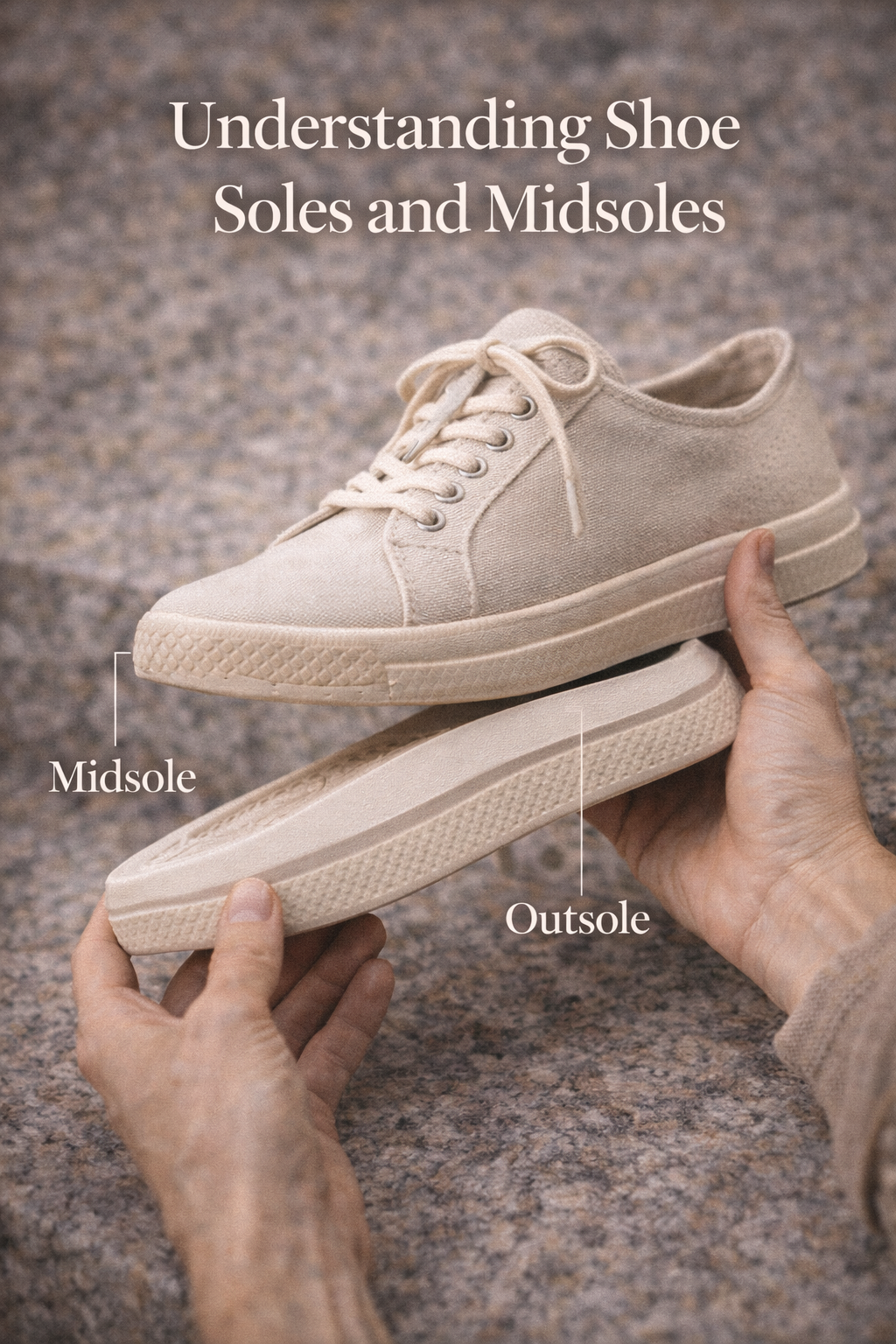
When you look at a shoe, the upper usually grabs your attention first. It’s the canvas for color, texture, and branding. But while the upper provides the style, the bottom of the shoe is where the real work happens. The sole and midsole are the engine of your footwear—they dictate how a shoe feels, how long it lasts, and how it performs under pressure.
From the simple leather bottoms of early historical footwear to the complex, nitrogen-injected foams of modern marathon runners, the technology beneath our feet has evolved dramatically. Understanding this evolution and the anatomy of a shoe isn’t just for sneakerheads or podiatrists. Knowing what separates a TPU midsole from standard EVA foam, or why a lugged rubber outsole matters for traction, empowers you to make better choices for your comfort and health.
This guide breaks down the complex world of shoe bottoms, exploring the engineering behind outsoles and midsoles, and how these critical components shape the silhouettes we wear today.
Read Here: Parts of a Shoe Explained (Full Anatomy Guide)
What Is a Shoe Sole?
The term “sole” is often used colloquially to describe the entire bottom of a shoe, but in technical terms, it usually refers to the outsole. This is the layer that makes direct contact with the ground. It is the first line of defense against the elements and the primary source of traction. Without a well-designed outsole, even the most cushioned shoe becomes dangerous on a wet sidewalk or rugged trail.
Outsole Function and Purpose
The outsole has two main jobs: protection and grip. Durability is paramount here. This layer withstands the friction of concrete, the jagged edges of rocks, and the heat of asphalt. A high-quality outsole extends the lifespan of the shoe significantly. If the outsole wears through, the softer, more vulnerable midsole materials are exposed and will degrade rapidly.
Beyond durability, traction is the outsole’s defining feature. The friction coefficient of the material determines whether you slip or grip. This isn’t just about athletic performance; it’s a safety feature for everyday walking. Whether navigating an icy commute or a polished office floor, the outsole keeps you upright.
Common Outsole Materials
The material used for an outsole depends heavily on the shoe’s intended purpose.
- Carbon Rubber: The most common material for athletic shoes, particularly running shoes. It is extremely durable and abrasion-resistant, similar to the rubber used in car tires.
- Blown Rubber: Softer and lighter than carbon rubber, blown rubber is often injected with air. It provides a more cushioned feel but is generally less durable. You’ll often find this in the forefoot of running shoes where flexibility is needed.
- Leather: The standard for formal footwear. Leather outsoles are sleek, breathable, and mold to the foot over time. However, they offer poor traction on wet surfaces and wear down faster than rubber.
- Synthetic Compounds (PU/TPU): Polyurethane and Thermoplastic Polyurethane are versatile plastics used in everything from work boots to soccer cleats. They resist splitting and offer excellent resistance to oil and chemicals.
- Commando Soles: Often made from heavy lugged rubber, these are staples in boots and outdoor gear, designed to bite into soft terrain like mud or snow.
Pattern Design and Grip
The material is only half the equation; the tread pattern (or “lug pattern”) dictates performance.
In lifestyle footwear, tread patterns are often shallow or geometric, focusing on adequate grip for flat, dry surfaces while maintaining a sleek aesthetic. A classic herringbone pattern on a tennis shoe, for example, allows for lateral movement on a court but looks stylish on the street.
In performance footwear, the design becomes highly technical. Trail running shoes feature deep, widely spaced lugs to shed mud and grip uneven ground. Road running shoes might use grooves designed to flex naturally with the foot’s stride. Specialized shoes, like climbing shoes, might have almost no tread at all, relying on the sheer friction of sticky rubber compounds to hold onto rock faces.
What Is a Midsole?
If the outsole is the tire, the midsole is the suspension system. Sandwiched between the outsole and the upper (and sitting beneath the insole), the midsole is arguably the most important component for comfort. It is responsible for cushioning, energy return, and protecting the wearer’s joints from impact forces.
Cushioning and Shock Absorption
Every time your foot strikes the ground, it generates a force equivalent to several times your body weight. Without a midsole, that shock travels directly up your leg to your ankles, knees, and hips. The primary role of the midsole is to attenuate this shock.
Historically, materials like cork or stacked leather provided minimal shock absorption. Today, polymeric foams compress upon impact, dissipating the energy before it causes damage. The thickness of this foam—known as “stack height”—varies wildly. Maximalist shoes offer massive stack heights for cloud-like softness, while minimalist shoes reduce the midsole to a thin layer to encourage ground feel (proprioception).
Energy Return Technologies
Modern footwear innovation has moved beyond just absorbing shock; manufacturers now want to recycle that energy. “Energy return” refers to the responsiveness of the midsole foam. When you compress the foam, it wants to spring back to its original shape. If it springs back quickly and forcefully, it can propel the runner forward.
This “bounciness” reduces muscle fatigue. Instead of the runner’s leg muscles doing all the work to push off the ground, the shoe provides a mechanical assist. This is the core principle behind the “super shoe” revolution in marathon running, where midsoles act almost like springs.
Stability and Support
While cushioning is great, too much softness can lead to instability. Imagine trying to run on a mattress; your ankles would wobble with every step. The midsole must provide a stable platform.
Designers achieve this through varying densities of foam. A “medial post,” for example, uses a firmer foam on the inner side of the midsole to prevent overpronation (the foot rolling inward too much). The geometry of the midsole also plays a role; a wider base creates a more stable landing zone. In hiking boots, rigid shanks are often embedded within the midsole to stiffen the shoe and protect the foot from twisting on uneven terrain.
Types of Midsole Technologies
The chemistry lab has become just as important as the design studio in sneaker creation. Here are the dominant players in midsole technology.
EVA Foam (Ethylene-Vinyl Acetate)
For decades, EVA has been the industry standard. It is lightweight, cheap to produce, and offers decent cushioning. You’ll find it in everything from entry-level running shoes to casual sneakers. However, standard EVA has a drawback: “compression set.” Over time, the air bubbles inside the foam collapse, and the shoe loses its cushioning, feeling flat and dead.
TPU (Thermoplastic Polyurethane) and Advanced Polymers
To solve the durability issues of EVA, brands turned to TPU. The most famous example is Adidas’ Boost technology, which consists of fused TPU pellets. This material is heavier than EVA but significantly more durable and offers far superior energy return. It retains its bouncy feel for hundreds of miles.
More recently, PEBA (polyether block amide) foams have taken center stage. These are ultra-lightweight and offer incredible energy return, but they are expensive and less durable than TPU. These are the foams typically reserved for elite racing shoes.
Air or Gel Cushioning
Some brands replace foam entirely—or at least partially—with other elements. Nike’s Air technology uses pressurized gas in urethane pouches to provide durable cushioning that doesn’t compress like foam. Asics became famous for its GEL cushioning, pockets of silicone-based gel placed in high-impact areas like the heel to absorb shock. These technologies often work in tandem with foam carriers to provide a balanced ride.
Read Here: Walking Shoes vs Running Shoes
How Soles Influence Shoe Silhouettes
The sole unit isn’t just functional; it defines the visual identity of the shoe. The silhouette—the overall shape and profile of the footwear—is largely determined by the volume and sculpting of the midsole and outsole.
Chunky Platform Designs
The “dad shoe” trend and the resurgence of 90s fashion brought chunky soles back into the limelight. These silhouettes feature exaggerated midsoles that extend beyond the heel and forefoot. While they offer substantial cushioning, the primary purpose here is aesthetic dominance. The sole becomes the focal point of the design, creating a heavy, grounded look that contrasts with slimmer apparel.
Minimalist Flat Soles
On the other end of the spectrum are cup-soles and vulcanized soles, common in skate shoes and classic court sneakers (think Converse or Vans). Here, the midsole is minimal or hidden inside the rubber walls of the outsole. This creates a low-profile silhouette that hugs the ground. It offers less cushioning but maximizes board feel and stability, creating a sleek, timeless look that pairs with almost anything.
Athletic vs Lifestyle Profiles
Performance requirements shape the silhouette of athletic shoes. A running shoe often features a “rocker” shape—a curved sole that lifts at the heel and toe to encourage a smooth transition through the gait cycle. This gives the shoe a speedy, aggressive look even when standing still. Lifestyle shoes, lacking the need for aerodynamic efficiency, often settle for flatter, blockier profiles that prioritize stance and style over forward motion.
Comfort vs Performance: Choosing the Right Sole
Selecting the right shoe involves matching the sole technology to your specific lifestyle needs. The “best” sole is subjective; what works for a marathon runner is terrible for a weightlifter.
Running Shoes
If you are running, prioritize the midsole. Look for advanced foams (PEBA or high-quality EVA) that offer energy return. The outsole should be durable rubber with a tread pattern suited to your terrain (road vs. trail). Cushioning is key here to protect your joints from repetitive impact.
Casual Everyday Shoes
For walking, commuting, or standing all day, you want a balance of stability and moderate cushioning. A super-soft running shoe might actually cause fatigue if you are standing still, as your muscles constantly micro-adjust to balance on the squishy foam. A slightly firmer midsole (like standard EVA or polyurethane) combined with a durable rubber outsole is often the sweet spot for daily wear.
Formal Footwear
In formal settings, sleekness wins. A leather sole is traditional and elegant but requires a break-in period. If you need comfort in a dress shoe, look for brands that integrate sneaker technology—like rubber outsoles or hidden EVA midsoles—into classic leather uppers. This hybrid approach gives you the look of a dress shoe with the walkability of a sneaker.
Sustainability and the Future of Sole Technology
The footwear industry is a major contributor to global waste, and soles are a significant part of that problem. Most foams and rubbers are petroleum-based and take centuries to decompose. However, the future of sole technology is turning green.
Recycled Materials
Brands are increasingly incorporating recycled content into their outsoles. “Grind” rubber, made from shredded manufacturing scraps and old shoes, is being mixed into new outsoles. While this can sometimes reduce durability slightly, processing techniques are improving rapidly.
Bio-Based Foams
The holy grail is a high-performance foam made from plants, not oil. Castor beans, sugarcane, and algae are currently being harvested to create bio-based EVA foams. These materials aim to reduce the carbon footprint of production without sacrificing the cushion and rebound runners expect.
AI and 3D Printing
The future isn’t just about materials; it’s about manufacturing. 3D printing allows for lattice-structure midsoles that can be tuned to the specific weight and stride of the individual runner. AI is being used to design tread patterns that maximize grip using the least amount of material possible, reducing weight and waste simultaneously.
Read Here: Types of Athletic Shoes Explained
Why Soles Are the True Engine of a Shoe
While we may buy shoes for how they look, we keep wearing them for how they feel. That feeling is dictated almost entirely by the sole and midsole. These components are the unsung heroes of footwear, managing the complex physics of human movement with every step.
From the shock-absorbing properties of the midsole to the rugged durability of the outsole, this technology supports our bodies and enables our lifestyles. Whether you are chasing a personal best in a race, navigating a rocky trail, or simply walking to the coffee shop, the structure beneath your feet matters. By understanding the anatomy of your shoes, you can make smarter purchases, avoid injury, and appreciate the incredible engineering that goes into getting you from point A to point B.
Leave a Reply