

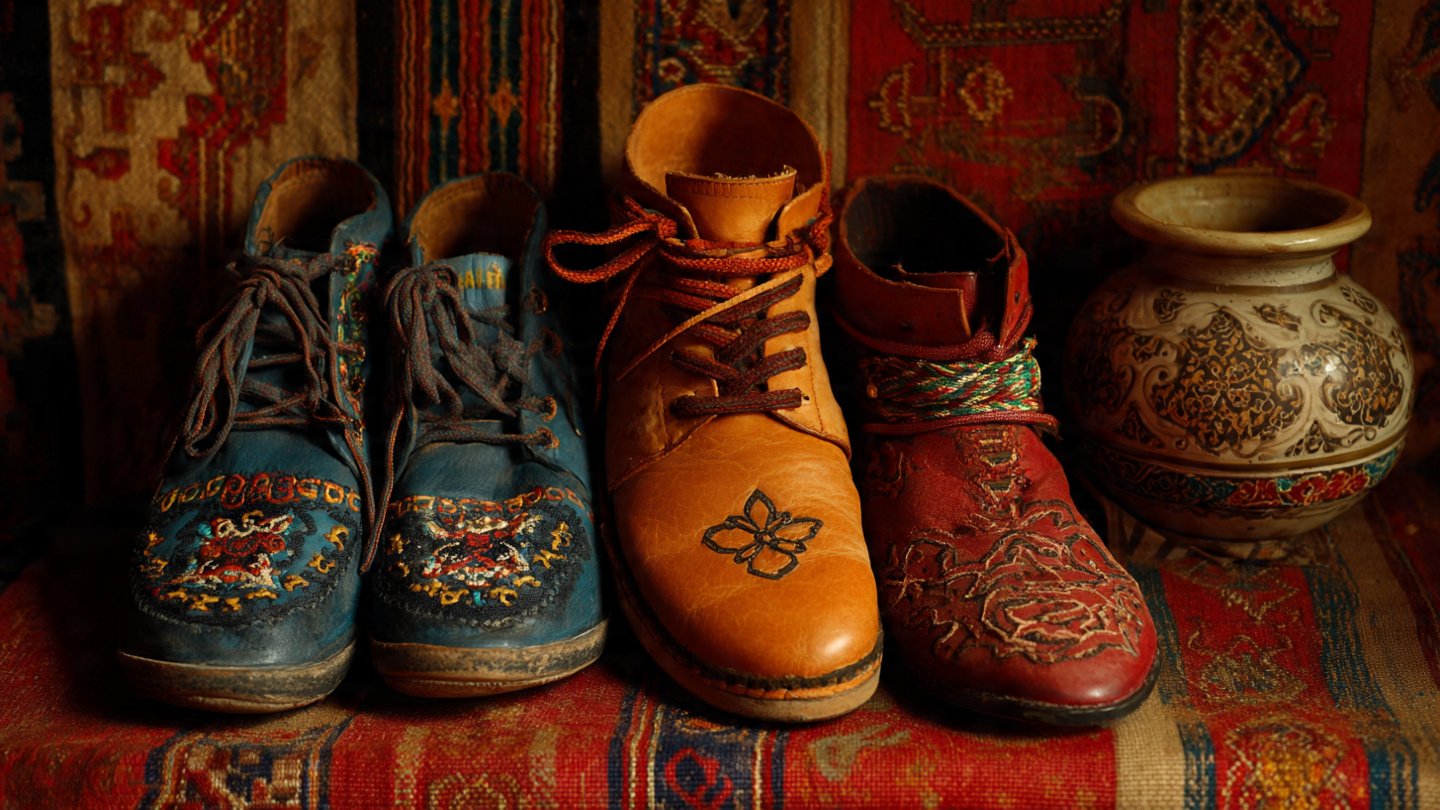
Every pair of shoes tells a story. For some, that story spans centuries of handcrafted tradition passed down through generations. For others, it’s rooted in the machinery and market forces that reshaped how humans dress their feet. The gap between traditional shoes and Western footwear isn’t just about aesthetics—it’s a reflection of two fundamentally different relationships between people, culture, and the objects they create.
Across the globe, footwear has served as a marker of identity, status, and belonging. A Moroccan craftsman stitching babouche slippers by hand operates in an entirely different world from a factory in Vietnam producing thousands of sneaker units per hour. Yet today, both worlds increasingly overlap. Global fashion draws from cultural archives, and traditional cobblers experiment with contemporary materials. Understanding how these two traditions diverged—and how they’re now converging—offers a fascinating lens on human creativity, commerce, and culture.
This post explores the key characteristics of traditional and Western footwear, the differences in their materials and construction, and how globalization has blurred the lines between them. Whether you’re a fashion enthusiast, cultural historian, or simply curious about what your shoes say about the world, this guide covers it all. See also our full breakdown in Cultural Footwear Around the World, and for historical context, our piece on the Evolution of Shoes From Ancient to Modern Times.
Characteristics of Traditional Footwear
Handmade Craftsmanship
Traditional footwear is defined, first and foremost, by the human hand. From the kolhapuri chappals of India to the geta wooden sandals of Japan, these shoes are crafted by skilled artisans who have often trained for years—sometimes decades—to perfect their technique. Every stitch, cut, and finish is deliberate. The result is a product that carries the maker’s touch in a way no machine can replicate.
This craftsmanship isn’t just a production method; it’s a form of cultural transmission. Techniques are passed from parent to child, from master to apprentice. The cobbler’s workshop becomes an archive of knowledge. For more on this distinction, our article on Handmade Shoes vs Factory Shoes unpacks the quality and philosophical differences between the two approaches.
Natural Materials and Local Techniques
Traditional shoes reflect the environment from which they emerge. Leather, jute, cotton, wool, wood, and plant fibers are common materials—chosen not for cost efficiency, but because they were available, durable, and suited to the local climate. Moroccan leather tanning, for instance, follows methods that date back over 900 years. Mexican huaraches use woven leather strips designed specifically for warm, dry conditions.
Local techniques shape the final product just as much as the materials themselves. Embroidery patterns, dyeing methods, and sole construction vary dramatically from one region to the next, making traditional footwear inherently place-specific.
Cultural and Ceremonial Significance
Many traditional shoes carry meaning far beyond their function. The nagra shoes worn during Indian wedding ceremonies, the moccasins of various Native American nations, or the red-soled ceremonial footwear found across sub-Saharan cultures—these are objects loaded with symbolism. They mark rites of passage, signal social standing, and connect the wearer to a shared cultural identity. Shoes reflecting regional identity are, in many cases, as significant as language or dress in defining who a community is.
Characteristics of Western Footwear
Mass Production and Industrial Manufacturing
Western footwear, as we know it today, was transformed by the Industrial Revolution. Prior to the 19th century, shoes in Europe and North America were made by hand, much like their traditional counterparts elsewhere. The invention of the McKay stitching machine in the 1860s changed everything. Factories could suddenly produce hundreds of pairs in the time it once took to make one.
This shift fundamentally altered the relationship between maker and product. Shoes became commodities. Production moved from individual craftspeople to large-scale operations, eventually globalizing into supply chains that span continents. Our article on Industrial Revolution and Mass Shoe Production covers this transformation in depth.
Standardized Sizes and Designs
One of the most significant outcomes of industrial manufacturing was standardization. Before factories, shoes were made to fit the individual. Afterward, consumers adapted to fit the shoe. Sizing systems—first developed in England and later adopted globally—made production scalable but removed the personal fit that handcrafted footwear naturally provided.
Standardization also meant homogenization. Styles became more uniform, with regional variations flattening out in favor of designs that could be produced at volume and sold across markets.
Fashion and Trend Influence
Western footwear quickly became entangled with fashion. As global brands like Nike, Adidas, and Gucci rose to prominence through the 20th century, shoes became powerful symbols of lifestyle, aspiration, and identity—but in a commercial rather than cultural sense. Trends moved in seasons. Collaborations drove hype. The rise of global footwear brands created a new kind of shoe culture: one governed by marketing, celebrity endorsement, and consumer demand rather than heritage.
Traditional vs Western Shoes: Key Differences
Materials Used
The material contrast between traditional and Western footwear is stark. Traditional shoes lean heavily on natural, locally sourced materials: leather, canvas, natural rubber, and plant-based fibers. Western mass-market footwear, particularly in the 20th and 21st centuries, shifted toward synthetics—EVA foam, polyurethane, nylon mesh, and thermoplastic rubber—largely for cost and performance reasons.
Neither approach is inherently superior. Natural materials often offer better breathability and longevity when properly cared for. Synthetics can deliver performance qualities—waterproofing, cushioning, and lightweight flexibility—that natural materials sometimes can’t match. For a deeper comparison, our guide on Leather vs Synthetic Shoe Materials breaks down the trade-offs.
Construction Techniques
Traditional construction methods—hand-stitching, hand-lasting, and hand-finishing—create shoes that can often be repaired and resoled multiple times. This repairability is built into the design philosophy. Western mass-produced shoes, by contrast, are frequently glued rather than stitched, making them difficult or impossible to resole. They are built for affordability and replacement, not longevity.
Cultural Meaning vs Fashion Trends
Perhaps the sharpest distinction lies in intent. Traditional shoes carry cultural meaning. They are made to honor, to protect, to represent. Western fashion footwear is largely designed to sell—to align with trends, create desire, and signal belonging within consumer culture rather than ancestral heritage. The design philosophies are fundamentally different, even when the end product looks superficially similar.
How Globalization Blended Footwear Styles
Traditional Elements in Modern Fashion
Global fashion has spent decades mining traditional footwear for inspiration. Espadrilles, originally from the Pyrenean regions of Spain and France, are now a summer staple worldwide. Birkenstock’s cork-and-jute construction draws from centuries-old European sandal traditions. Designers like Stella McCartney and Vivienne Westwood have long incorporated artisanal references into their collections, drawing from folk traditions across Asia, Africa, and Latin America.
Western Influence on Global Footwear
The influence runs in both directions. Western sneaker culture has penetrated virtually every corner of the globe. In countries with strong traditional footwear histories—India, China, Japan, Nigeria—younger generations now blend local styles with Western silhouettes. Factory production methods have also been adopted locally, changing how traditional shoes are made and distributed.
Hybrid Designs in Modern Shoes
The most interesting footwear today often lives in the space between these two traditions. Brands are combining traditional craft techniques with modern materials. Japanese designers fuse tabi sock construction with contemporary sneaker forms. Indian footwear brands apply kolhapuri-style hand-stitching to minimalist Western silhouettes. These hybrid designs are reshaping what “traditional” and “Western” even mean in the context of global fashion. Retro Silhouettes Making a Comeback explores this trend from a broader fashion perspective.
Cultural Importance of Traditional Shoes
The cultural weight of traditional footwear extends well beyond aesthetics. Shoes have long served as markers of identity—indicators of caste, class, region, religion, and occasion. In many cultures, removing shoes before entering a home or sacred space is a gesture of respect deeply embedded in social ritual. The act of giving shoes carries symbolic meaning in wedding ceremonies across South Asia, the Middle East, and parts of Africa.
The preservation of traditional footwear is, in many ways, the preservation of craft knowledge that took generations to develop. When a traditional cobbler closes shop without passing on their skills, something irreplaceable disappears. This is why organizations and governments across the world have begun classifying certain footwear traditions as intangible cultural heritage. Our article on Why Humans Care About Shoes examines the deeper psychological and anthropological dimensions of this attachment.
Modern Footwear Trends Inspired by Tradition
Heritage Fashion Revival
Heritage fashion has become one of the dominant forces in contemporary footwear. Consumers—particularly younger ones—are turning toward products with story, history, and meaning. Brands that can credibly link their products to a craft tradition or cultural origin have found strong market resonance. The appeal isn’t nostalgia for its own sake; it’s a hunger for authenticity in a market saturated with disposable goods.
Sustainable Handmade Footwear
Sustainability has given traditional footwear a new commercial argument. Handmade shoes made from natural materials, built to last and be repaired, align well with growing consumer awareness about environmental impact. Small-batch and artisanal shoemakers are finding audiences willing to pay a premium for something that lasts. For materials guidance, our Sustainable Shoe Materials Guide covers what to look for when choosing environmentally conscious footwear.
Cultural Fashion Influences
Contemporary designers are increasingly open about drawing from specific cultural traditions—though the conversation about appropriation versus appreciation continues. The most thoughtful approaches involve direct collaboration with artisan communities, ensuring that cultural inspiration translates into cultural support. Designers revisiting traditional designs with this collaborative lens are producing some of the most compelling footwear of the current era.
The Future of Cultural and Global Footwear
The next chapter of footwear will likely be written at the intersection of handcraft and technology. 3D printing is already being used to create custom shoe lasts—a process that mirrors the personalized fit of traditional shoemaking, but at scale. Bio-based materials, including mushroom leather and algae-derived foam, are drawing both from natural material traditions and cutting-edge material science.
At the same time, the sustainable handcrafted footwear revival shows no sign of slowing. Consumer values are shifting in ways that favor durability, story, and craft over disposability and trend-chasing. Global fashion integration will continue—but the direction of influence is increasingly multidirectional. Traditional footwear markets are not simply absorbing Western trends; they are contributing to them.
For a look at where design is heading, Futuristic Shoe Shapes and The Future of Shoes: Technology & Innovation offer forward-looking perspectives on how footwear will continue to evolve.
Tradition and Modernity in Footwear Design
Traditional and Western footwear are not opposites—they are two points on a long, continuous line of human ingenuity. One emerged from the ground up, shaped by environment, community, and cultural necessity. The other was accelerated by industry, capital, and global markets. Both have produced extraordinary objects. Both have also produced waste, exploitation, and cultural erasure when mismanaged.
The most promising direction for footwear—culturally, environmentally, and creatively—lies in honoring what traditional craftsmanship has preserved while thoughtfully applying what modern innovation has made possible. That balance is already being struck by designers, artisans, and consumers who understand that the best shoes aren’t just well-made. They mean something.
For a broader exploration of footwear across cultures and time, visit our authority hub on Cultural Footwear Around the World.
Leave a Reply