

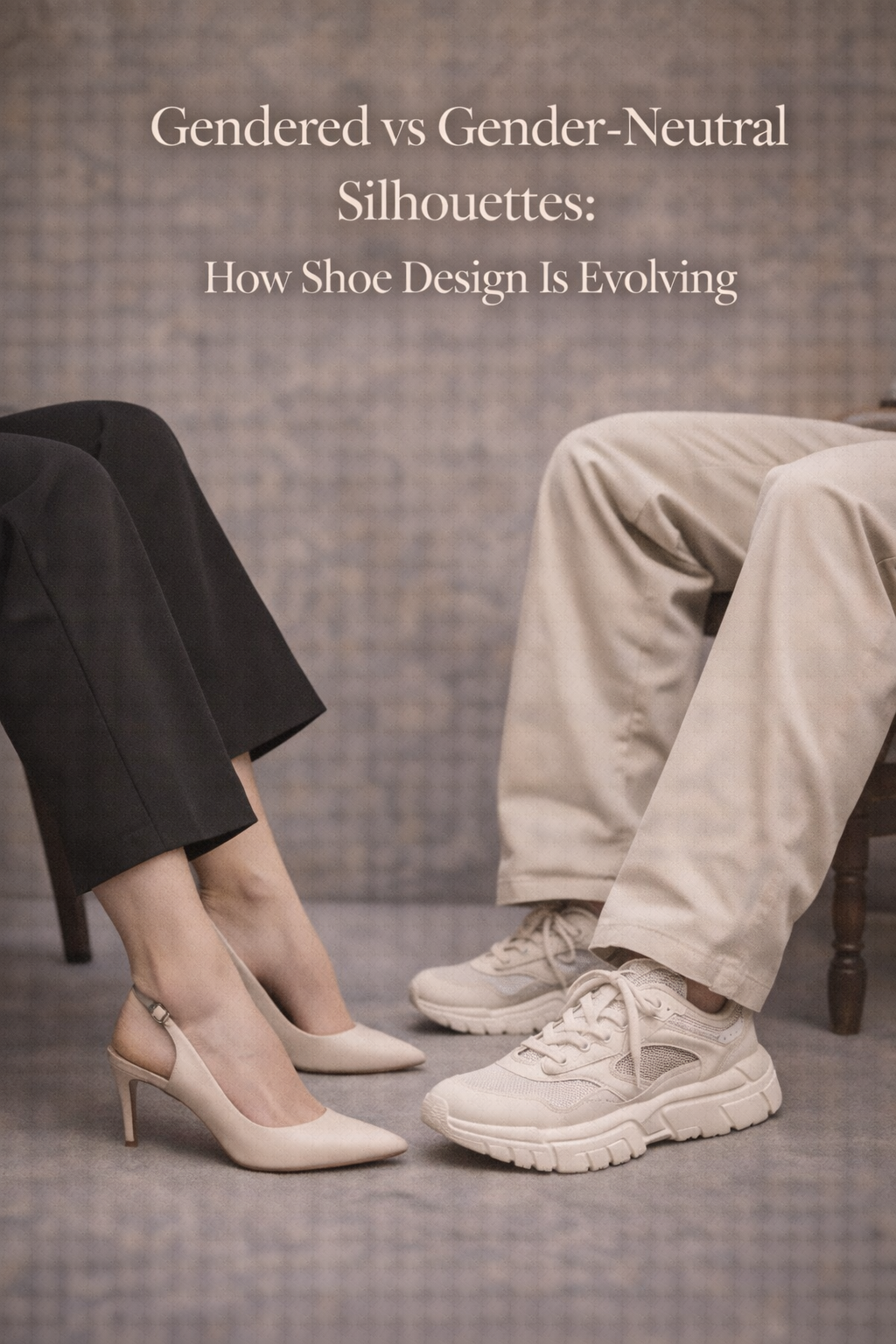
Walk into any department store, and you’ll likely see the physical divide immediately. On one side, the women’s section: rows of tapered toes, elevated heels, and often narrower constructions. On the other, the men’s section: broader soles, utilitarian shapes, and robust designs. For decades, footwear has been categorized by a rigid binary, dictating not just size, but the very shape—or silhouette—of the shoe itself.
However, the ground is shifting beneath our feet. The fashion industry is experiencing a seismic change as designers move away from strictly gendered categories toward more inclusive, universal designs. This isn’t just about offering a sneaker in pink and blue; it’s about a fundamental rethinking of the shoe’s architecture. From the “last” (the mold a shoe is formed on) to the visual weight of the sole, the lines are blurring.
This evolution reflects a broader cultural movement. Consumers are increasingly prioritizing personal expression and comfort over traditional norms. As a result, brands are exploring what happens when you strip away the labels and focus purely on form, function, and style. In this deep dive, we explore how the industry is pivoting from gender-specific mandates to a new era of gender-neutral silhouettes.
Related reading: Why Humans Care About Shoes Culture Identity Psychology Explained
The Shift Toward Inclusive Shoe Design
Historically, shoe design has been deeply entrenched in social cues. High heels were once worn by Persian cavalrymen to secure their feet in stirrups, yet over centuries, the silhouette became exclusively associated with femininity in Western culture. Conversely, broad, flat boots became symbols of masculine utility. These associations haven’t just been aesthetic preferences; they have been design rules.
The modern movement toward universal silhouettes challenges these rules. It asks a simple question: Why does a shoe’s shape need a gender?
We are seeing a rise in “unisex” collections that go beyond simple sizing adjustments. True gender-neutral design involves creating a silhouette that is aesthetically pleasing and anatomically functional for a wide range of foot shapes, regardless of gender. This shift is driven by a blend of changing cultural attitudes, the rise of streetwear dominance, and a consumer base that values authenticity over prescriptive fashion rules.
What Are Gendered Shoe Silhouettes?
To understand where we are going, we have to look at where we’ve been. Gendered silhouettes rely on exaggerating specific features to align with societal ideals of masculinity and femininity.
Narrow vs. Wide Proportions
One of the most defining characteristics of traditional “feminine” footwear is a focus on reducing the visual footprint. Women’s shoes have historically been designed on lasts that are significantly narrower, particularly at the heel and the waist of the foot. The goal was often to make the foot appear smaller and more delicate.
In contrast, “masculine” silhouettes often embrace width. They utilize wider welts (the strip of leather or plastic that runs along the perimeter of the outsole) and broader toe boxes. This communicates stability and grounding, creating a silhouette that takes up more visual space.
Heel Height and Toe Shape Differences
The toe box is a primary indicator of gendered design. Pointed or almond-shaped toes have long been staples of women’s footwear, intended to elongate the leg line. While men’s shoes do feature tapered toes (think of a classic Oxford or Chelsea boot), they rarely reach the extreme points found in women’s pumps or boots.
Heel height is the other obvious differentiator. While the 1970s saw a brief explosion of men’s platform heels, the stiletto and the high block heel remain predominantly female-coded silhouettes. The architecture of a high-heel shoe requires a completely different shank and arch construction, fundamentally altering the silhouette and the wearer’s posture.
Historical Design Norms
These design norms weren’t arbitrary; they were reflections of social roles. Men’s shoes were built for industry, war, and public life—necessitating durable materials and practical shapes. Women’s shoes, particularly in the upper classes, were often designed to restrict movement, signaling a life of leisure.
While we have moved past the Victorian era, the echoes of these design norms persist. Even today, a “women’s version” of a popular sneaker often features a slimmed-down profile and a lower collar height compared to the “men’s version,” reinforcing the idea that female feet require delicate casing.
What Are Gender-Neutral Silhouettes?
Gender-neutral design is not about making men’s shoes smaller or women’s shoes larger. It is about finding a “golden mean”—a silhouette that balances proportion and aesthetic appeal without leaning into stereotypes.
Balanced Proportions
A gender-neutral silhouette typically avoids extremes. You won’t find needle-thin stilettos or aggressively bulky, oversized combat boots (though the latter is becoming increasingly unisex). Instead, these designs focus on balanced proportions.
The outsole usually aligns closely with the upper, avoiding excessive overhang or extreme tapering. The goal is a shape that looks “right” on any wearer. This often results in a silhouette that is substantial enough to feel grounded but streamlined enough to be versatile.
Minimalist Design Approach
Minimalism acts as a great equalizer in design. By removing extraneous details—bows, aggressive hardware, gender-coded stitching patterns—designers create a blank canvas.
Think of the classic white leather sneaker or the slip-on canvas shoe. These are arguably the pioneers of gender-neutral silhouettes. They rely on clean lines and simple geometry. When the design language is stripped back to the essentials, the gender of the intended wearer becomes irrelevant. The focus shifts to the quality of the material and the purity of the shape.
Universal Fit Philosophy
Perhaps the most difficult aspect of gender-neutral silhouettes is the fit. Biologically, male and female feet do tend to have different characteristics; men often have broader feet and higher insteps, while women often have higher arches and narrower heels.
To solve this, gender-neutral brands are adopting a “universal fit” philosophy. This involves developing new lasts that accommodate a wider variance in foot volume. It also means using materials that mold to the foot, such as knit uppers or high-quality leathers that break in over time, allowing the shoe to adapt to the wearer rather than forcing the wearer to adapt to a rigid, gendered shape.
Gendered vs. Gender-Neutral: Key Design Differences
When you place a gendered shoe next to a gender-neutral one, the differences in design philosophy become clear.
Shape and Structure
Gendered shoes often force the foot into a specific visual shape. A women’s dress shoe might pinch the toes to achieve a sleek point, prioritizing the silhouette over the anatomy. A gender-neutral shoe prioritizes the natural shape of the human foot.
The structure of gender-neutral footwear tends to be more “anatomical.” The toe boxes are often rounder or more squared off to allow for toe splay. The heel cup is designed to be secure without being overly narrow. The silhouette follows the function of walking, rather than the function of signaling gender.
Color vs. Silhouette Influence
For a long time, brands thought they could make a shoe “for women” by taking a men’s silhouette and making it pink. This is known in the industry as “shrink it and pink it.”
Gender-neutral design rejects this lazy approach. It understands that silhouette matters more than color. A bulky, high-top sneaker is a bulky, high-top sneaker, whether it is charcoal gray or neon yellow. By decoupling color from the shape, designers allow the silhouette to stand on its own merits. This empowers consumers to choose colors based on personal taste rather than gender norms.
Comfort and Functionality
Functionality is the cornerstone of gender-neutral silhouettes. Because these shoes are often marketed to everyone, they must perform for everyone. This has led to a democratization of comfort.
In the past, advanced cushioning technology was often prioritized in men’s athletic shoes, while women’s fashion sneakers focused on sleekness. Gender-neutral designs tend to integrate high-performance comfort features—like EVA midsoles, arch support, and breathable fabrics—into the standard silhouette. The result is a shoe that looks good and feels good, regardless of who is wearing it.
See also: Why Silhouette Matters More Than Color In Shoe Design
Cultural and Psychological Meaning Behind Inclusive Silhouettes
The shift in shoe silhouettes isn’t happening in a vacuum. It mirrors a changing society where identity is increasingly fluid.
Identity and Self-Expression
Shoes are a powerful tool for self-expression. They change how we stand, how we walk, and how we present ourselves to the world. For non-binary individuals, or simply for people who reject traditional gender performances, gendered silhouettes can feel restrictive or inauthentic.
Inclusive silhouettes offer a form of fashion liberation. They allow the wearer to define the meaning of the shoe, rather than the shoe defining the wearer. A chunky loafer or a sleek runner becomes a canvas for the individual’s style, free from the baggage of “masculine” or “feminine” coding.
Social Media and Fashion Culture
Platforms like TikTok and Instagram have accelerated the adoption of gender-neutral fashion. Trends move faster than product development cycles, and users often mix and match pieces from across the gender spectrum to achieve a specific look.
We see influencers of all genders rocking Jordan 1s, Doc Martens, and Birkenstocks—three iconic silhouettes that have effectively transcended their original gender marketing. This visibility validates the idea that a great silhouette is universal.
Changing Consumer Expectations
The modern consumer is savvy. They know that a “women’s” razor is often just a pink “men’s” razor with a higher price tag. They are applying this same scrutiny to footwear.
Shoppers are asking why they should accept less comfortable shoes just because of their gender. They are questioning why specific styles are gated off from them. Brands that fail to offer inclusive sizing and silhouettes risk alienating a generation that views inclusivity not as a perk, but as a baseline expectation.
How Construction Supports Gender-Neutral Designs
Creating a truly gender-neutral shoe requires a rethinking of the manufacturing process.
Lasting Methods
The “last” is the starting point of all shoe design. Traditionally, brands maintained separate libraries of men’s and women’s lasts. Creating a unisex shoe requires developing a “gender-neutral last.”
This involves analyzing data from thousands of foot scans to find the statistical overlap between male and female foot shapes. The resulting last is a hybrid—perhaps slightly wider in the forefoot than a traditional women’s last, but with a tighter heel lock than a traditional men’s last. This technical innovation is what makes the silhouette possible.
Cushioning and Sole Thickness
Sole thickness plays a huge role in the silhouette. Platform soles, once the domain of women’s fashion and glam rock, have become a staple of gender-neutral sneaker design (thanks in large part to the “dad shoe” trend).
Thicker soles allow for more cushioning, which benefits all wearers. By increasing the volume of the sole, designers can hide advanced comfort technologies without disrupting the aesthetic. This creates a silhouette that looks substantial and purposeful.
Material Flexibility
Rigid materials emphasize fit issues. If a leather boot is too stiff, and the wearer’s foot deviates even slightly from the gendered norm, it will be painful.
To combat this, gender-neutral designs often utilize flexible materials. Primeknit, Flyknit, and soft, tumbled leathers allow the upper to stretch and conform. This flexibility means that the silhouette stays consistent, but the internal volume can adjust to accommodate a wider foot or a higher arch, making the “universal fit” a reality.
Brands and Trends Driving Gender-Neutral Footwear
Who is leading the charge? Both heritage brands and newcomers are reshaping the landscape.
Rise of Unisex Sneaker Culture
Sneaker culture has been the primary driver of gender-neutral silhouettes. The resale market doesn’t care about gender; it cares about hype and design. A Yeezy or a Dunk is coveted for its shape and cultural cachet.
Brands like Nike and Adidas have responded by expanding their size runs. It is now common to see high-heat releases offered in full family sizing, acknowledging that the silhouette appeals to everyone.
Minimalist Silhouettes and Neutral Aesthetics
Brands like Common Projects, Veja, and Allbirds have built empires on minimalist, gender-neutral silhouettes. Their designs are virtually identical across men’s and women’s ranges. They rely on the purity of the shape—a clean, low-top sneaker—to appeal to a broad demographic. This aesthetic argues that good design is universal.
Influence of Digital Fashion
The rise of the metaverse and digital fashion is also pushing boundaries. In a digital space, physical constraints don’t exist. Avatars can wear anything. This creative freedom is bleeding back into the physical world, inspiring designers to create futuristic, blob-like, and architectural silhouettes that have no historical precedent in gendered fashion. Crocs and their various high-fashion collaborations are a prime example of a silhouette that defies gender norms through sheer uniqueness.
The Future of Inclusive Shoe Silhouettes
We are likely only in the early stages of this evolution. As technology improves, the line between genders will continue to fade in footwear design.
AI-Driven Ergonomic Shapes
Artificial Intelligence will play a massive role. Brands will soon be able to use AI to analyze millions of foot scans to create “average” shapes that are far more accurate than current sizing models. We may see the death of the standard “size run” in favor of mass customization, where the silhouette is tweaked slightly to fit the individual’s unique data points.
Adaptive Sizing Systems
We will see a move away from “Men’s 9 / Women’s 10.5” labeling toward a simple length and width system (e.g., 27cm / Wide). This removes the gendered label entirely, allowing the customer to focus purely on the fit and the silhouette.
Sustainable Universal Design
Sustainability fits perfectly with gender-neutral design. Making one high-quality, universal silhouette is more efficient than manufacturing two slightly different variations of the same shoe. As brands look to reduce waste and streamline production, the gender-neutral silhouette offers a smart, eco-friendly solution.
Read here: The Complete Guide To Types Of Shoes Styles Structure Purpose
Silhouettes Beyond Gender Labels
The evolution of shoe design from rigid, gendered binaries to fluid, inclusive silhouettes marks a maturing of the fashion industry. It represents a shift away from arbitrary rules and toward a philosophy of human-centric design.
By focusing on the silhouette—the lines, the proportions, and the structure—designers are creating footwear that honors the foot rather than the gender. Whether it’s a chunky sneaker, a sleek boot, or a minimalist loafer, the shoes of the future will be defined not by who they are for, but by how well they are designed.
In the end, a great silhouette speaks for itself. It doesn’t need a label to tell you it belongs on your feet.
Leave a Reply