

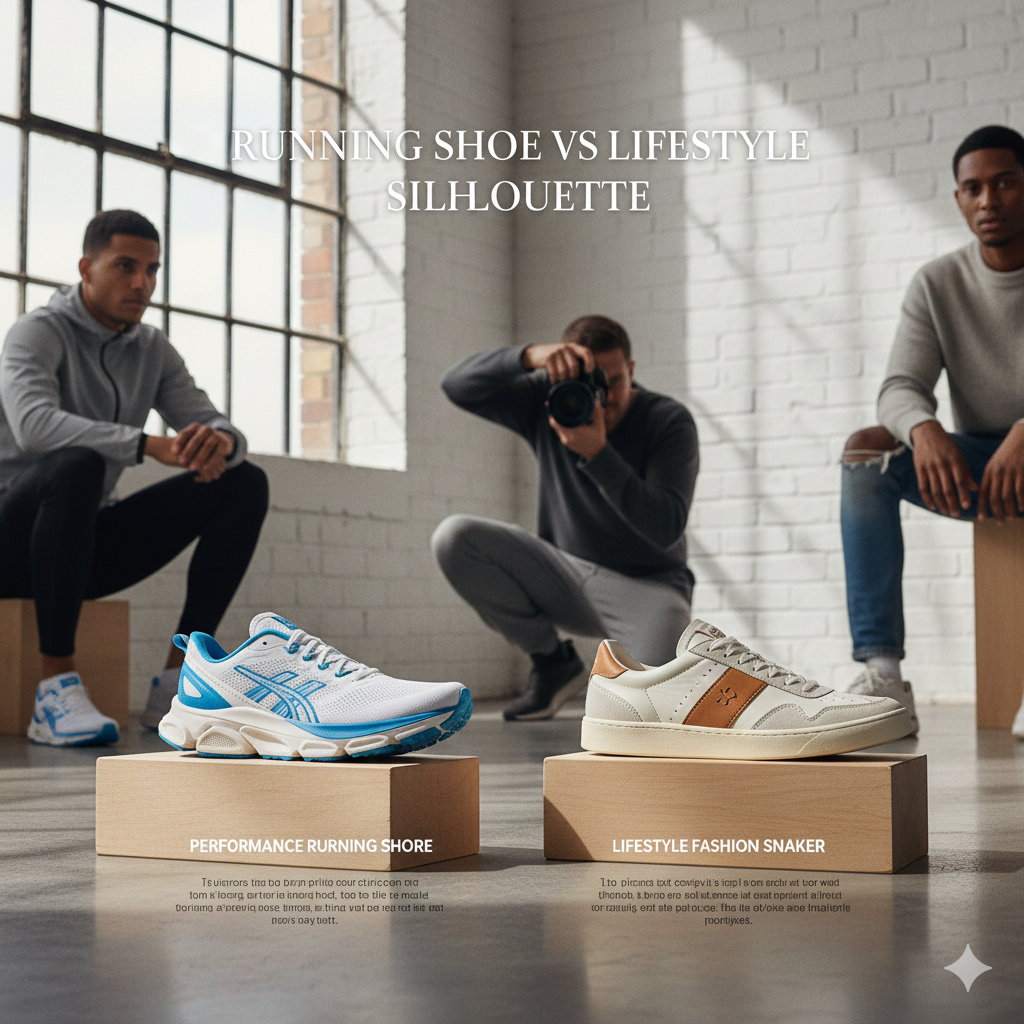
In the vast lexicon of footwear design, few distinctions are as critical—yet frequently blurred—as the divide between the running shoe and the lifestyle silhouette. To the untrained eye, a sneaker is a sneaker. Both feature rubber soles, laces, and uppers made from leather, mesh, or knit. Yet, beneath the surface lies a fundamental divergence in purpose that dictates every curve, angle, and material choice.
The silhouette of a shoe is not merely its outline; it is a visual language that speaks to function. A running shoe screams forward momentum. It is built on a chassis designed to propel the human body through space with efficiency and protection. Conversely, the lifestyle silhouette whispers of culture, heritage, and aesthetic balance. Its primary function is not to shave seconds off a marathon time, but to anchor an outfit and express personal identity.
Understanding this distinction requires looking beyond the brand logo and into the anatomy of the shoe itself. It is a study of how human engineering meets artistic expression, and how our evolutionary need for movement has birthed two distinct lineages of footwear that dominate the modern world.
See also: Walking Shoes Vs Running Shoes Key Differences Comfort How To Choose
Introduction: Two Different Purposes, Two Different Shapes
At its core, the difference between a running shoe and a lifestyle silhouette is a battle between kinetics and aesthetics.
Running shoes are teleological objects—they are designed with a specific end goal in mind: performance. Every millimeter of foam, every stitch in the upper, and the very curvature of the sole is engineered to interact with the biomechanics of the human foot in motion. The silhouette of a running shoe often features an aggressive toe spring (the upward curve at the front), a beveled heel, and a thick, shock-absorbing midsole. These are not stylistic choices; they are functional necessities derived from gait analysis and impact physics.
Lifestyle sneakers, on the other hand, are born from the streets rather than the lab. While they may borrow technology from their athletic cousins, their design priority is visual harmony and everyday comfort. The silhouette tends to be flatter, more grounded, and proportional to the human body at rest or at a walking pace. These shoes are the descendants of tennis trainers, basketball high-tops, and skate shoes—footwear that has transcended its original sporting purpose to become a canvas for cultural expression.
Recognizing the silhouette is the key to understanding this divergence. It is the shadow the shoe casts, the profile it cuts against the pavement. By dissecting these shapes, we gain insight not just into footwear design, but into how we navigate our lives—sometimes sprinting toward a finish line, other times strolling through the theater of the everyday.
Characteristics of Running Shoe Silhouettes
To understand the running shoe silhouette is to understand the physics of movement. When a runner strikes the ground, they generate force up to three times their body weight. The shoe must absorb this impact, stabilize the foot, and return energy for the next stride. This functional mandate creates a distinct visual profile.
Lightweight Profiles
The first commandment of running shoe design is weight reduction. Gravity is the runner’s constant adversary. Consequently, the upper silhouette of a performance runner is stripped of all non-essential elements. You will rarely see heavy leather overlays, metal hardware, or thick padding in a modern marathon shoe. Instead, the silhouette is defined by engineered mesh or translucent mono-filament materials that hug the foot like a second skin.
This creates a profile that looks aerodynamic even when stationary. The collar is often cut lower to allow for maximum ankle articulation, and the tongue is minimal to reduce bulk. The visual result is a shoe that looks fast—sleek, stripped-back, and purely utilitarian.
Thick Cushioned Midsoles
If the upper is about minimalism, the bottom unit of a running shoe is about maximalism. The defining characteristic of the modern running silhouette is the stack height—the thickness of the midsole foam between the foot and the ground.
Historically, running shoes were thin-soled leather spikes. However, the jogging boom of the 1970s and the subsequent cushioning revolution changed the landscape entirely. Today, driven by innovations like EVA (Ethylene Vinyl Acetate) and PEBA (Polyether Block Amide) foams, running shoes feature substantial, often bulbous midsoles.
This creates a “top-heavy” or “bottom-heavy” visual depending on the design, but undeniably, the midsole dominates the silhouette. It is not a flat slab; it is sculpted, featuring cutouts to save weight and flares to provide stability. This architectural foam is the engine room of the shoe, and it dictates the overall volume of the silhouette.
Forward-Leaning Shape
Place a high-performance running shoe on a flat table, and you will notice something immediate: it looks like it is tipping forward. This is the “drop” or “offset”—the difference in height between the heel and the toe—combined with the toe spring.
The silhouette of a running shoe is designed to encourage the rocker motion of the gait cycle. The heel is often beveled or rounded to smooth the initial contact, while the toe curves sharply upward to facilitate the “toe-off” phase where the runner pushes against the ground. This gives the shoe a dynamic, aggressive stance. It looks impatient, ready to roll forward at the slightest provocation. It is a shape born of kinetic necessity, distinct from the flat, planted stance of a lifestyle shoe.
See also: Types Of Athletic Shoes Explained Running Training Sports Guide
Characteristics of Lifestyle Shoe Silhouettes
Lifestyle silhouettes operate under a different set of laws. Here, the metrics of success are not energy return or impact protection, but versatility, durability, and proportion. These are shoes designed for the rigors of modern life—commuting, working, socializing—where the foot is primarily used for walking and standing.
Balanced Proportions
The “Golden Ratio” of footwear design often applies more strictly to lifestyle silhouettes. Because these shoes are worn with a wide variety of clothing—from denim to tailored trousers to skirts—they require a balanced visual weight. They cannot look overly technical or aggressive, lest they clash with the wearer’s outfit.
A classic lifestyle silhouette, like a retro tennis shoe or a casual walker, typically features a 1:1 ratio between the upper and the sole unit. The midsole is visible but not dominant. The toe box is rounded but not bulbous. The collar height sits comfortably below the ankle bone without the extreme cutouts seen in performance runners. This balance creates a sense of visual stability and timelessness. It is a silhouette that feels “correct” to the eye because it mirrors the natural proportions of the foot more closely than the exaggerated geometry of a performance shoe.
Fashion-Oriented Design
While running shoes are dictated by the constraints of biomechanics, lifestyle silhouettes are liberated by the possibilities of fashion. This allows for a much broader palette of materials and structural choices.
Lifestyle silhouettes frequently employ paneling—layers of leather, suede, and synthetic materials stitched together. These panels serve a decorative purpose, allowing designers to play with color blocking and texture contrast. A lifestyle shoe might feature a gum rubber outsole for a vintage aesthetic, or a chunky, jagged sole for a grunge-inspired look. The silhouette is a canvas. It can be bulky and “dad-like” (the chunky sneaker trend) or slim and low-profile (the plimsoll). The unifying factor is that these design choices are made primarily for their visual impact on the wearer’s overall style.
Versatile Everyday Appeal
The ultimate test of a lifestyle silhouette is its versatility. Can it transition from a morning coffee run to a casual office environment to an evening at a bar? This requirement shapes the silhouette into something adaptable.
Lifestyle shoes often feature a flatter outsole profile, providing a stable base for standing for long periods. They lack the aggressive rocker shape of running shoes, which can feel unstable when standing still. The upper is designed for durability and protection against the elements rather than pure breathability. Consequently, the silhouette looks more substantial and grounded. It signals a readiness for the varied terrain of urban life, rather than the singular track of a race.
Running vs Lifestyle: Key Silhouette Differences
To truly distinguish between the two, one must place them side-by-side and observe the anatomical divergences. These differences are not merely cosmetic; they are the physical manifestations of the shoe’s intended use.
Sole Thickness and Cushioning
The most immediate visual difference lies in the verticality of the sole. Running shoes utilize high-stack foams that compress and rebound. This results in a silhouette that lifts the wearer significantly off the ground. The midsole often extends beyond the heel of the upper (a “heel overhang”) to increase surface area for landing stability.
Lifestyle shoes generally feature a lower profile. Cupsole construction—common in basketball and skate-inspired lifestyle shoes—encases the cushioning within a rubber wall, creating a uniform, flat sidewall. Even when lifestyle shoes adopt “chunky” aesthetics, the density of the sole is often harder and heavier, designed for longevity rather than the specific rebound characteristics of performance foam.
Toe Shape and Profile
The “toe box” tells a significant story. In a running shoe, the toe box is often wider to allow the toes to splay upon impact, yet the vertical profile is tapered to cut through the air. The toe spring (the upward curve) is pronounced.
In a lifestyle silhouette, the toe box is shaped for aesthetics. It might be almond-shaped, round, or even square depending on the trend. The toe spring is minimal, allowing the shoe to sit flat on the ground. This lack of upward curve gives lifestyle shoes a more relaxed, static appearance compared to the dynamic tension of a runner.
Weight and Flexibility
While you cannot see weight, the silhouette implies it. The intricate layering of leather and suede on a lifestyle shoe adds visual and physical weight. The shoe looks substantial. It implies durability.
Conversely, the bonded, seamless overlays of a running shoe imply lightness. Furthermore, the flexibility is built into the silhouette differently. A running shoe will often have flex grooves visible in the outsole and midsole, engineered to bend exactly where the foot pushes off. Lifestyle shoes often have stiffer, flatter soles that provide a consistent platform, sacrificing that specific bio-mechanical flexibility for general stability.
Visual Identity
Finally, there is the matter of branding and identity. Performance running shoes often use dynamic lines—vectors, swooshes, and stripes that angle forward to suggest speed. The colorways are often neon or high-contrast for visibility and psychological energy.
Lifestyle silhouettes often rely on heritage branding. The lines are cleaner, more geometric, or rooted in the design language of a specific era (like the 1980s basketball boom). The visual identity is about belonging to a tribe or a subculture, rather than belonging to a sport.
How Construction Shapes Performance vs Lifestyle Shoes
The manufacturing processes behind these silhouettes are as distinct as their shapes. The way a shoe is put together—its construction—fundamentally dictates its final form and function.
Material Choices
Performance requires innovation. Running shoes are the testing ground for the latest material science. We see the use of Jacquard mesh, carbon fiber plates, and super-critical foams (foams injected with gas for lightness). These materials are chosen for their strength-to-weight ratios. They allow for silhouettes that defy traditional shoemaking logic, such as heels that seem to float or uppers that are translucent.
Lifestyle shoes prioritize tactile luxury and ruggedness. Full-grain leather, nubuck, and canvas are staples. These materials require stitching and layering, which naturally adds bulk to the silhouette. A leather sneaker will mold to the foot over time, creating a personalized fit, whereas a synthetic running shoe is designed to retain its specific engineered shape for its lifespan.
Lasting Methods
The “last” is the 3D mold upon which a shoe is constructed. It is the ghost of the foot.
Running shoes are typically “slip-lasted” or “Strobel-lasted.” In this method, the upper is sewn to a fabric sheet (the Strobel board) and then glued to the midsole. This creates a flexible, sock-like feel that allows for the precise contouring seen in performance silhouettes.
Lifestyle shoes, particularly heritage styles, are often “board-lasted.” The upper is pulled tight over a fiberboard and glued or stapled down. This creates a stiffer, more structured silhouette. It gives the shoe its shape and stability, which is why a leather dress sneaker holds its form even when not being worn, while a lightweight runner might collapse slightly.
Glue vs Stitch Construction
Look closely at the junction between the upper and the sole. In modern running shoes, you will rarely see a stitch. They rely on advanced cements and heat-bonding. This seamless construction creates a fluid, uninterrupted silhouette that looks futuristic.
Lifestyle shoes often celebrate the stitch. The “sidewall stitch” on a cupsole sneaker or the visible Goodyear welt on a boot-hybrid sneaker is a mark of quality and durability. This stitching adds a physical rim to the silhouette, outlining the foot and grounding the design in traditional craftsmanship.
Cultural Meaning Behind Running and Lifestyle Silhouettes
Shoes are artifacts of human culture. The divergence between running and lifestyle silhouettes mirrors the divergence in our modern values: the obsession with optimization versus the desire for expression.
Athletic identity is communicated through the running silhouette. Wearing a high-tech marathon shoe with jeans (the “normcore” or “dad shoe” aesthetic) signals a prioritization of comfort and function over traditional fashion norms. It suggests a life in motion, or at least the aspiration toward it. It is a status symbol of the wellness era.
The lifestyle silhouette connects the wearer to a specific cultural lineage. A canvas vulcanized sneaker connects to skate culture and rebellion. A clean, white leather tennis silhouette connects to preppy, country-club luxury. A high-top basketball silhouette connects to hip-hop and street culture.
Interestingly, these lines are blurring. The “athleisure” movement has seen performance silhouettes adopted as lifestyle wear. We see carbon-plated running shoes worn to brunch. This cross-pollination suggests that comfort has become the ultimate luxury, and the aesthetic of “performance” is now a fashion statement in itself.
Choosing Between Running and Lifestyle Shoes
For the consumer, the choice between these two silhouettes should be guided by honesty about one’s daily activities.
Fitness and Performance Needs
If your primary activity involves sustained running, high-impact jumping, or specific athletic training, the lifestyle silhouette is insufficient. Its flat sole and lack of shock absorption can lead to injury (shin splints, plantar fasciitis). You need the engineered rocker, the secure heel lock, and the energy-returning foam of a dedicated running silhouette. Do not be seduced by the style of a “sport-style” sneaker for actual sport.
Casual Everyday Wear
For walking, working, and socializing, the lifestyle silhouette is superior. Running shoes, with their aggressive toe springs and unstable, squishy foams, can actually be fatiguing for standing still or walking slowly. A lifestyle shoe provides a stable, neutral platform that supports the foot during low-impact activities. Furthermore, the materials (leather, canvas) are generally more durable against the scuffs and scrapes of urban life than delicate performance mesh.
Style Preferences
Ultimately, the choice is also aesthetic. A running silhouette adds a technical, sporty edge to an outfit. It disrupts formal wear and complements athletic wear. A lifestyle silhouette is often more cohesive, blending with denim or chinos to create a classic look. The modern wardrobe likely requires both: the tool for the trade (running) and the uniform for the life (lifestyle).
The Future of Running and Lifestyle Shoe Design
The evolution of footwear shows no signs of slowing. As technology advances, the gap between these two silhouettes is both widening and closing simultaneously.
We are entering the era of the “hybrid.” Brands are placing lifestyle uppers (leather, suede) on top of performance tooling (advanced foam midsoles). This creates a shoe with the comfort of a runner and the look of a classic.
AI-driven design is also beginning to influence silhouettes. Generative design algorithms can create midsole structures that look alien and organic—lattices and webs that provide targeted cushioning. These designs are currently moving from high-concept performance into the lifestyle sector, creating a new “futurist” aesthetic.
Finally, sustainability is reshaping the silhouette. The push for circularity is leading to shoes made from single materials to be easily recycled, or modular shoes that can be taken apart. This may lead to simpler, glueless silhouettes that rely on mechanical locking systems, changing the visual language of footwear once again.
See also: High Top Vs Low Top Shoes Structure Support Style Explained
Conclusion: Performance Meets Fashion in Modern Footwear
The distinction between the running shoe and the lifestyle silhouette is a testament to the complexity of modern human needs. We are creatures who run, but we are also creatures who pose. We need equipment that protects our bodies during exertion, and we need artifacts that project our identities during repose.
While the engineering behind them differs—one fighting gravity, the other embracing style—both silhouettes share a common ancestor in our desire to protect and adorn the foot. Whether you choose the forward-leaning aggression of a carbon-plated racer or the grounded cool of a leather court shoe, you are participating in a lineage of design that is as old as civilization itself.
Leave a Reply