

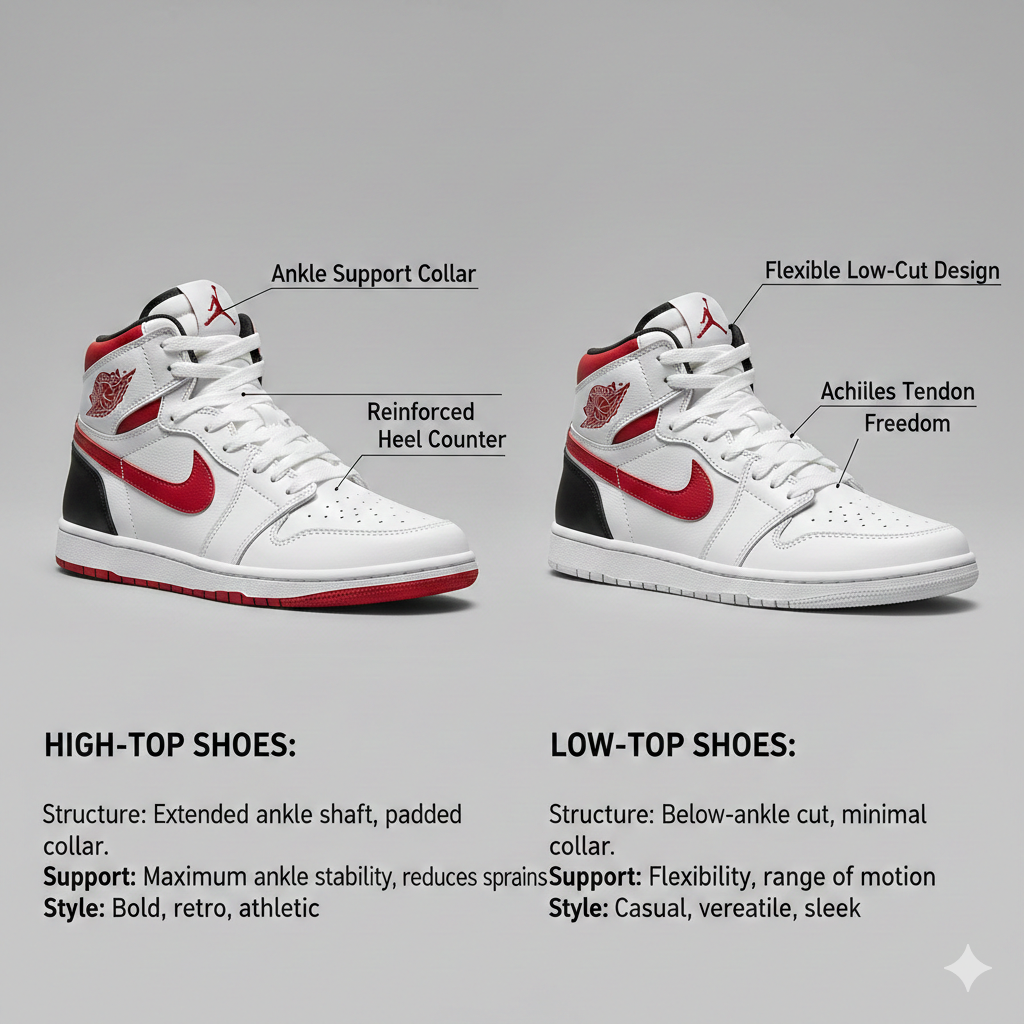
High-top and low-top shoes differ mainly in how high the upper extends around the ankle. That changes coverage and appearance, but collar height alone does not establish comfort, performance or protection. Compare the exact pair for the activity and fit you need.
How the styles differ
High-tops
A high-top extends higher around the ankle than a low-top. Designs vary in collar shape, material and fastening. Check whether the opening rubs and whether you can fasten it comfortably. A higher collar can affect feel and coverage, but it is not a guarantee against ankle injuries.
Low-tops
A low-top leaves more of the ankle uncovered. It may be easier to put on for some people, but fastening and fit vary. Check heel security and whether the upper gives your foot enough room.
Style and practical use
The two profiles can look different with shorts, trousers or a dress. Pick the outline you like, then consider how long you will wear the shoes and the weather. Neither height automatically makes a shoe waterproof or suitable for rough ground.
For a dress code, check the actual setting. A clean low-top or high-top may be acceptable in one office and too casual in another. The smart casual footwear guide offers examples.
Sport and workplace requirements
For sport, begin with the activity and playing surface. Court, field and running shoes are designed for different needs, and league or facility rules may apply. Our athletic-shoe guide compares the categories. Do not treat collar height alone as proof that a shoe will prevent injury.
For a job with protective-footwear requirements, confirm the exact markings and features with your employer. A high upper or boot-like appearance does not by itself establish protective-toe or slip-resistance performance.
Try-on checklist
Try both shoes with the socks and any insoles you plan to wear. Fasten them, then walk and turn: your toes need room, the sides should not pinch and your heel should stay secure. Compare the ankle opening for rubbing. The AAOS fit guide recommends checking length and width.
The shoe silhouette guide explains how collar height contributes to the overall outline. For persistent pain or a known ankle condition, seek advice from a qualified clinician.
Frequently asked questions
Do high-tops prevent ankle sprains?
No shoe guarantees prevention. Consider fit, activity and individual advice rather than collar height alone.
Are low-tops always lighter?
No. Weight depends on the model, size, materials and construction.
Can high-tops be casual or formal?
They can suit different outfits, but appropriateness depends on the design and the dress code.



Leave a Reply