

The footwear industry is undergoing a seismic shift. For decades, the conversation around shoes focused almost exclusively on aesthetics, athletic performance, and status. While those elements remain pivotal, a new criteria has emerged as equally important: impact.
We are witnessing the most significant material evolution in the history of shoemaking since the invention of vulcanized rubber in the 19th century. This isn’t just about “going green” for marketing points; it is a fundamental reimagining of how we construct the objects that connect us to the ground. As we explore the trajectory of human footwear, it becomes clear that the future of shoes isn’t just about new silhouettes—it’s about the very substance they are made of.
This guide serves as a comprehensive exploration of sustainable shoe materials, dissecting the innovations that are redefining durability, comfort, and luxury in the modern era.
Read Here: The Future of Shoes: Technology, Sustainability & AI Design
Why Sustainable Materials Matter in Footwear
To understand the urgency of sustainable materials, one must look at the traditional footprint of a single pair of sneakers. Conventional shoe manufacturing is a resource-intensive beast. It typically involves complex assemblies of over 40 different components—metals, plastics, glues, tanned leathers, and petroleum-based foams—most of which are stitched and cemented together in ways that make recycling nearly impossible.
Historically, the evolution of shoes was driven by necessity and availability. Early humans used what was around them: rawhide, plant fibers, and wood. The industrial revolution introduced mass production and synthetic polymers, which democratized access to footwear but introduced non-biodegradable waste on a massive scale.
Today, we face a dual pressure. On one side, environmental realities demand a reduction in carbon emissions and waste. On the other, a sophisticated consumer base is beginning to view sustainability not as a compromise, but as a marker of quality and innovation. The modern “status shoe” is increasingly defined by its origin story as much as its logo.
What Makes a Shoe Material Sustainable?
“Sustainability” is a broad term often diluted by marketing jargon. From a design and engineering perspective, a truly sustainable shoe material must satisfy specific criteria across its entire lifecycle.
Renewable Resources
A material is renewable if it comes from a source that replenishes itself naturally and quickly. Traditional leather, while natural, has a heavy environmental toll due to land use and the tanning process. Sustainable alternatives look to sources like cork (harvested from bark without killing the tree), bamboo, or agricultural byproducts that would otherwise go to waste. The goal is circularity—using inputs that do not deplete the planet’s finite resources.
Recyclability and Biodegradability
The end-of-life phase is perhaps the biggest challenge in footwear. Most shoes end up in landfills where they sit for centuries. A sustainable material offers an exit strategy.
- Biodegradability: Materials like organic cotton or natural rubber can decompose naturally under the right conditions, returning to the earth without leaving toxic microplastics.
- Recyclability: This refers to materials that can be broken down and re-spun or re-molded into new products. Thermoplastic Polyurethane (TPU), for example, is a plastic that can be melted down and reused, unlike cross-linked rubbers which cannot be reversed once set.
Low-Impact Manufacturing
The raw material is only half the story; how it is processed matters equally. Sustainable manufacturing focuses on minimizing water usage, eliminating toxic chemicals (like chromium in leather tanning), and reducing energy consumption. Innovations such as solution dyeing (dyeing the polymer before it is spun into fiber) can reduce water usage in fabric production by up to 90% compared to traditional immersion dyeing.
Types of Sustainable Shoe Materials
The palette of materials available to modern footwear designers is expanding rapidly. We are moving away from a reliance on virgin plastics and chemically treated hides toward a diverse ecosystem of bio-based and recycled inputs.
Recycled Plastics and Textiles
The most common entry point for sustainability in sneakers is Recycled Polyethylene Terephthalate (rPET). By diverting plastic water bottles from the ocean or landfills, manufacturers clean, shred, and spin them into durable polyester yarns. This material is now ubiquitous in the “knit” uppers of performance running shoes.
While rPET is a significant improvement over virgin polyester, it is not a perfect solution—it is still plastic, and it releases microfibers. However, it represents a crucial step in closing the loop on existing waste.
Plant-Based Leather Alternatives
For centuries, leather was the gold standard for durability and conformity to the foot. Today, bio-engineering offers compelling alternatives that mimic the haptics of leather without the bovine carbon footprint.
- Piñatex: Made from cellulose fibers extracted from pineapple leaves, a byproduct of the fruit harvest.
- Mycelium (Mushroom Leather): Perhaps the most exciting innovation, grown from the root structure of fungi. It can be grown to specific shapes/sizes (reducing waste) and offers a supple, breathable texture similar to calfskin.
- Cactus Leather: A highly durable, organic material made from the Nopal cactus, known for requiring very little water to grow.
Organic Cotton and Natural Fibers
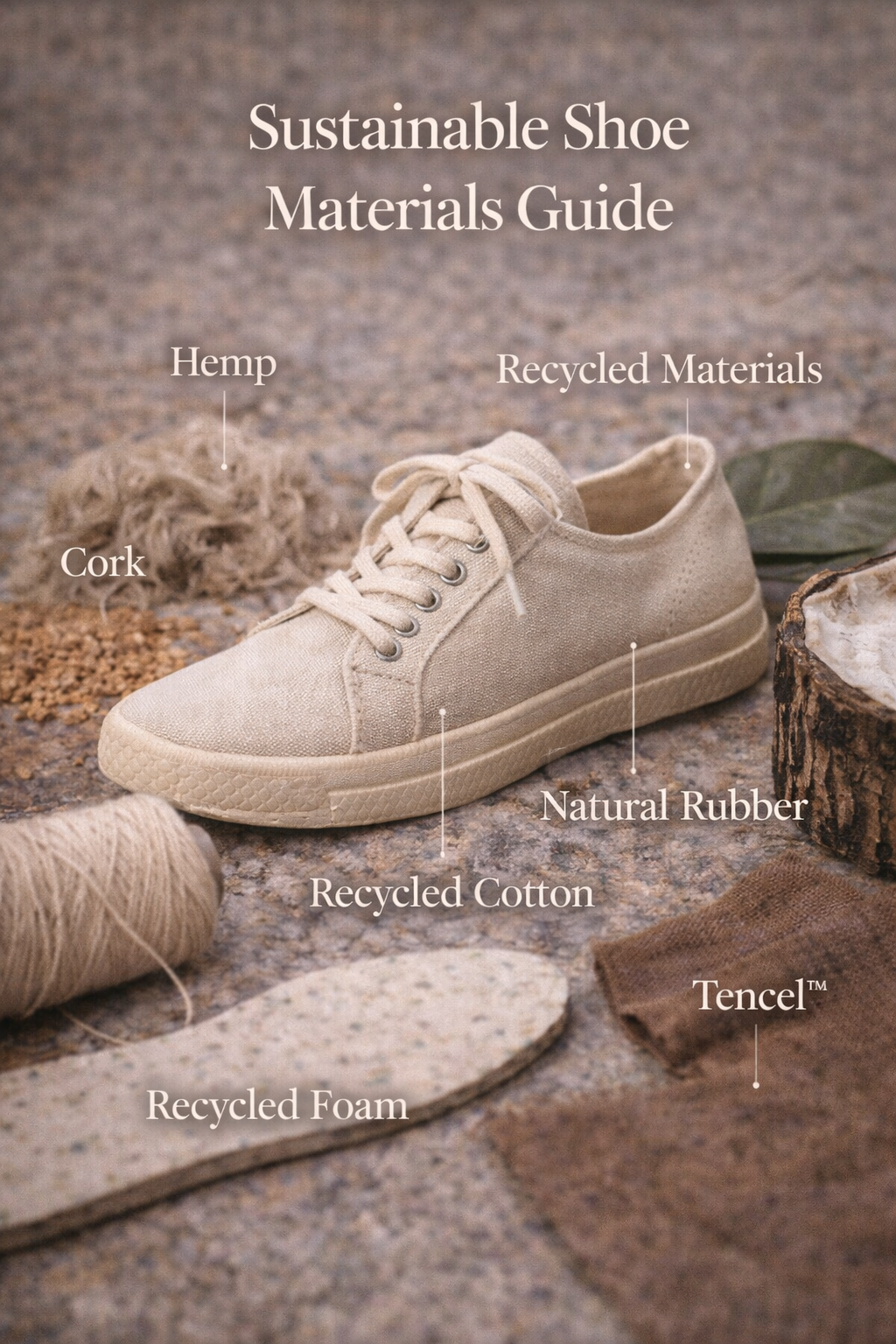
Cotton has been used in shoemaking since the canvas plimsolls of the 19th century. However, conventional cotton is one of the world’s “dirtiest” crops due to heavy pesticide use. Organic cotton removes these chemicals, protecting soil health and water tables.
Beyond cotton, fibers like hemp and wool are seeing a resurgence. Merino wool, specifically, is naturally antimicrobial, moisture-wicking, and biodegradable, making it an excellent material for shoe linings and soft uppers, as seen in the rise of brands like Allbirds.
Bio-Based Foam and Rubber
The midsole is the engine of the shoe—the cushioning system that provides comfort. Traditionally, this is made from EVA (Ethylene Vinyl Acetate), a petroleum-based foam. Sustainable innovation here focuses on replacing the petroleum content with plant oils. Use of sugarcane-derived EVA is becoming prominent. It offers the same rebound and compression set as traditional foam but captures carbon during the growth of the sugarcane, making the component carbon-negative in some applications.
Read Here: Understanding Shoe Soles and Midsoles
Sustainable Midsole and Outsole Innovations
While the upper of a shoe defines the style, the sole unit defines the mechanics. Reinventing the bottom of the shoe is chemically difficult, but essential for a fully sustainable product.
Recycled Foam Technologies
Waste is a massive issue in foam production. When midsoles are cut from large sheets of foam, the excess is often discarded. New processes allow brands to take that scrap foam, grind it down, and mix it into fresh batches. This creates a speckled, “terrazzo” aesthetic that has become a visual identifier of sustainable design. While currently, most recycled foam midsoles can only contain about 10-15% recycled content before performance degrades, technology is rapidly improving to increase this percentage.
Biodegradable Outsoles
The outsole (the part touching the ground) requires extreme abrasion resistance. Natural rubber, tapped from the Hevea brasiliensis tree, is the original sustainable outsole. It offers incredible grip and is inherently biodegradable. However, it is heavier than synthetic rubber. Researchers are now developing bio-composites that blend natural rubber with materials like rice husks or recycled tires to create durable, lighter outsoles that don’t rely entirely on petrochemicals.
Lightweight Eco Cushioning
Weight is a performance metric. Sustainable materials often faced the stigma of being heavy or “clunky.” Innovations in supercritical foaming (injecting gas into the polymer to expand it) allow for lighter, airier bio-foams. This means a performance running shoe can now utilize castor-bean oil-based foam without sacrificing the lightweight, snappy feel runners demand.
How Sustainable Materials Shape Modern Shoe Silhouettes
Material dictates form. You cannot design a shoe with stiff mushroom leather the same way you design with a stretch knit. This constraint is driving a new aesthetic in footwear.
Minimalist Eco Designs
Sustainability favors simplicity. To make a shoe recyclable, it helps to use fewer types of materials. This has led to a rise in “mono-material” designs, where the upper, laces, and sole are all made from the same polymer family (like TPU). This aesthetic is often sleek, futuristic, and devoid of unnecessary overlays or decorative stitching, aligning perfectly with the modern minimalist trend.
Modular and Repairable Shoes
If the glued construction of modern sneakers is the enemy of recycling, modularity is the hero. We are seeing a return to mechanical bonds—interlocking parts, stitching, and lacing systems that hold the shoe together without permanent adhesives. This allows the consumer to replace a worn-out sole without throwing away the perfectly good upper, reviving the cobbler concept for the sneaker age. Visually, this results in exposed mechanisms and a raw, deconstructed look.
Hybrid Lifestyle Sneakers
The blurring of lines between performance and leisure is accelerated by sustainable materials. A wool upper serves the function of a slipper and the structure of a sneaker. A sugarcane foam sole provides athletic comfort for a commuter shoe. These materials naturally lend themselves to hybrid silhouettes that fit the fluid lifestyle of the modern worker.
Challenges of Sustainable Footwear
Despite the progress, the industry faces significant hurdles. An honest conversation about sustainability requires acknowledging the friction points between idealism and reality.
Durability Concerns
The primary function of a shoe is protection. If a biodegradable shoe falls apart too quickly, it fails its purpose and becomes waste sooner, negating its eco-friendly benefits. Finding the “sweet spot” where a material is durable enough to withstand miles of walking but delicate enough to break down at the end of its life is a chemical tightrope walk that engineers are still perfecting.
Cost and Accessibility
Innovation is expensive. Sourcing organic materials, developing new bio-polymers, and ensuring fair labor practices costs more than pumping out cheap plastics. Currently, sustainable footwear often comes with a premium price tag, making it a luxury accessible primarily to affluent consumers. For true impact, these technologies must scale to the mass market.
Greenwashing in Fashion
As “eco” becomes a buzzword, misleading marketing proliferates. A shoe might be advertised as “made with ocean plastic” when the laces are the only recycled component. It is crucial for consumers to look for certifications (like B-Corp, GOTS, or leather working group ratings) and transparency in the supply chain rather than relying on vague slogans.
Cultural Shift Toward Sustainable Shoe Identity
Shoes have always been communicators of identity. In the 1980s and 90s, pristine white leather and limited-edition drops signaled status. Today, the cultural currency is shifting.
Sustainability is becoming a new form of status symbol. Wearing a shoe made of algae foam or wearing a sneaker that looks clearly repaired or recycled signals a specific set of values. It suggests awareness and global citizenship. We are seeing a psychological shift where the “perfect” look is being replaced by the “process” look—materials that show natural variation, textures that look raw, and designs that prioritize function and ethics over pure ornamentation.
This aligns with a broader movement in fashion history where luxury moves away from excess and toward consciousness. The story behind the shoe—the fact that it was made from apple waste or that it can be replanted—is becoming as valuable as the brand name on the heel.
The Future of Sustainable Shoe Design
Where do we go from here? The future of footwear lies in the convergence of biology and technology.
AI-Driven Material Innovation
Artificial Intelligence is accelerating the discovery of new materials. AI can simulate millions of chemical combinations to find bio-polymers that have the exact elasticity and durability needed for footwear, drastically shortening the R&D timeline.
Circular Fashion Systems
The ultimate goal is a fully circular system. Brands are beginning to pilot subscription models where you “lease” a recyclable shoe. When you are done, you return it, and the material is ground down to make your next pair. This moves the industry from a linear “take-make-waste” model to a regenerative loop.
Zero-Waste Production Models
3D printing offers a glimpse of a zero-waste future. Instead of cutting shapes out of fabric and throwing away the scraps, a 3D printer deposits material only exactly where it is needed. This allows for intricate, custom-fit lattices that provide support and cushioning using a fraction of the material of a traditional shoe.
Read Here: Why Humans Care About Shoes: Culture, Identity & Psychology
Conclusion: Sustainability as the Next Evolution of Shoes
The transition to sustainable materials is not a trend; it is the necessary evolution of the product. Just as we moved from sandals to sneakers, we are now moving from synthetic to symbiotic.
The shoes of the future will not just protect our feet; they will protect the ground we walk on. By understanding the materials that go into our footwear—from the renewable rubber outsoles to the pineapple leather uppers—we become active participants in this evolution. The next step in shoe history is being written now, and it is being written in green.
Leave a Reply