

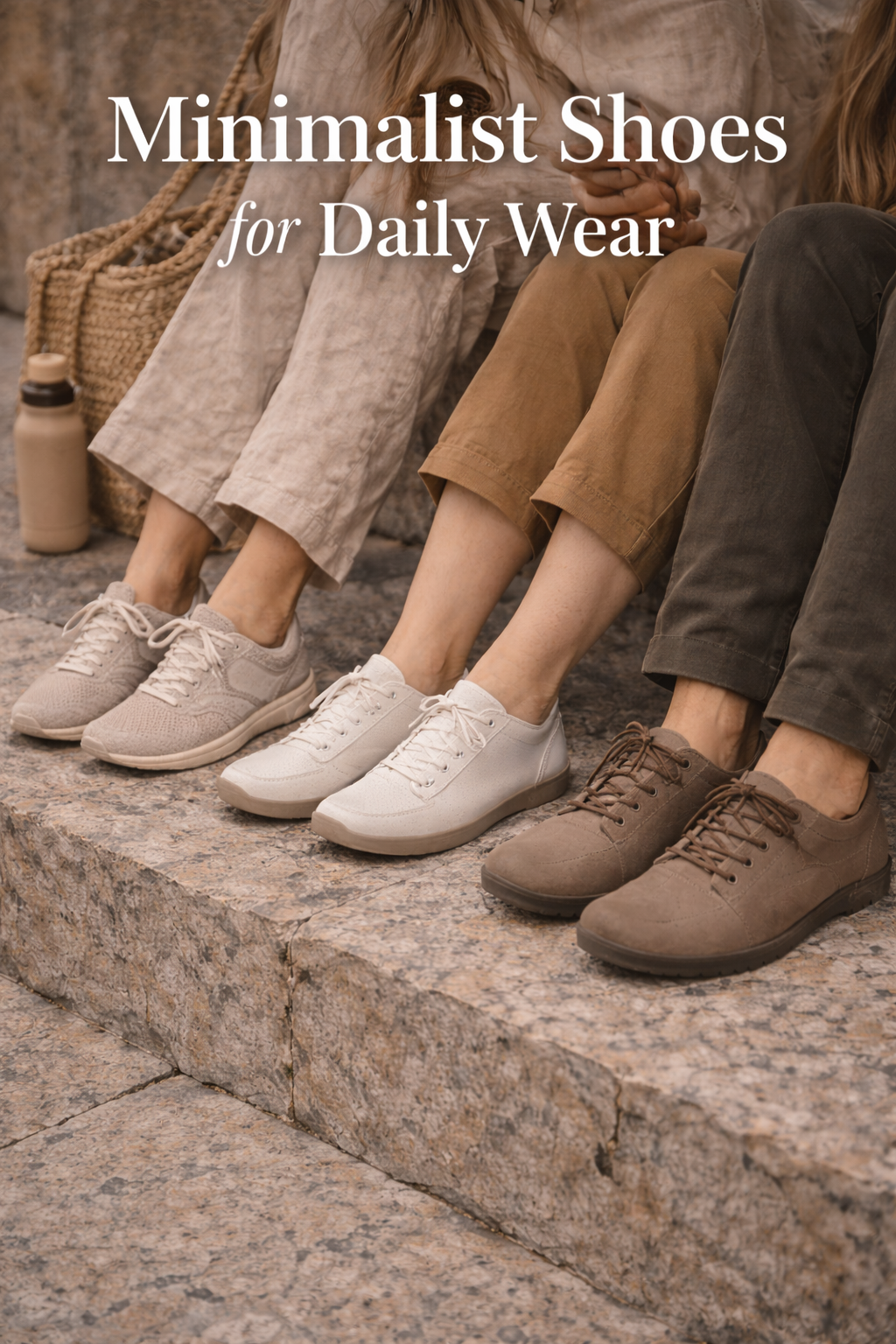
For most of human history, footwear was designed with a singular purpose: protection. From the woven sagebrush sandals of the indigenous peoples of the Great Basin to the simple leather moccasins of North American tribes, shoes were functional tools meant to shield the sole from rough terrain and extreme temperatures. They were minimal by necessity, allowing the foot to function exactly as evolution intended—flexible, sensory, and strong.
It wasn’t until relatively recently in the timeline of human footwear that shoes began to dictate the shape of the foot, rather than the other way around. The introduction of the raised heel in the 16th century, the rigid sole of the industrial revolution, and the extreme cushioning of the modern athletic shoe boom in the 1970s all contributed to a gradual disconnect between our feet and the ground beneath them.
Today, we are witnessing a significant pendulum swing. The rise of minimalist shoes for daily wear represents a return to ancestral wisdom, coupled with modern aesthetic sensibilities. This isn’t just a fleeting trend in fashion; it is a ergonomic correction. As we learn more about biomechanics and the importance of kinetic chains, the “less is more” philosophy of minimalist footwear is reshaping how we navigate our daily lives—from the office commute to the weekend stroll.
Read Here: Hybrid Lifestyle Sneakers
What Are Minimalist Shoes?
To understand minimalist shoes, one must first unlearn the standard definition of a “good” shoe. For decades, marketing has told us that a good shoe requires arch support, motion control, thick cushioning, and an elevated heel. Minimalist footwear challenges every single one of these assumptions.
A minimalist shoe is designed to interfere as little as possible with the natural movement of the foot. It is a protective covering that mimics the experience of being barefoot while providing a layer of defense against glass, asphalt, and debris. In the world of footwear design, we often refer to this as “anatomical neutrality.” The shoe is not trying to fix, support, or alter the foot; it is simply letting the foot exist.
Key Features of Minimalist Footwear
If you were to dissect a standard sneaker and a minimalist shoe side-by-side, the structural differences would be stark. A true minimalist shoe for daily wear generally adheres to three non-negotiable design principles:
- Zero Drop: In traditional shoes, the heel is elevated anywhere from 8mm to 12mm higher than the toes. This alters your center of gravity and shortens the calf muscles over time. Minimalist shoes feature a “zero drop” platform, meaning the heel and the ball of the foot are at the exact same level. This promotes better posture and alignment.
- Wide Toe Box: Most modern fashion shoes taper at the toes, squeezing them into a point. This can lead to bunions and inhibits the toes from splaying—a crucial mechanism for balance. Minimalist shoes feature a wide, anatomically shaped toe box that allows the toes to spread out naturally with every step.
- Thin, Flexible Sole: The sole of a minimalist shoe is often less than 10mm thick and highly pliable. You should be able to roll the shoe into a ball. This flexibility allows the 200,000 nerve endings in the sole of the foot to receive sensory feedback from the ground (proprioception), which improves balance and agility.
Minimalist vs Traditional Shoes
The contrast between these two categories is best understood through the lens of biomechanics. Traditional shoes act as a cast. By providing rigid arch support and thick cushioning, they effectively “turn off” the muscles in the foot. Over time, this leads to atrophy. The foot becomes dependent on the shoe for stability.
Minimalist shoes, conversely, act as a gym for your feet. Because there is no artificial arch support, the intrinsic muscles of the foot must engage to support the arch dynamically. Because there is no motion control, the ankles must stabilize themselves. The transition from traditional to minimalist footwear is not merely a change in style; it is a physiological demand on the body to wake up dormant muscular systems.
Why Minimalist Shoes Are Trending
The current surge in popularity of minimalist footwear is driven by a convergence of health consciousness and a shift in fashion norms.
Culturally, we are moving away from the “no pain, no gain” era of fashion—where stilettos and restrictive dress shoes were status symbols—toward a philosophy of functional wellness. The modern consumer is educated on longevity and mobility. They understand that back pain often starts at the feet.
Simultaneously, the aesthetic of minimalist shoes has evolved. Ten years ago, “barefoot shoes” were synonymous with toe-shoes—those polarizing designs that separated each toe. Today, brands have married the biomechanical benefits of barefoot science with clean, classic silhouettes. You can now wear a minimalist shoe that looks like a high-end leather sneaker or a chic Chelsea boot, allowing the wearer to reap the health benefits without sacrificing professional or social style.
Benefits of Minimalist Shoes for Daily Wear
Adopting minimalist footwear for everyday activities—walking the dog, grocery shopping, commuting—can have profound effects on physical health. These benefits are cumulative, accruing with every step taken in a more natural state.
Natural Movement and Flexibility
The human foot is a marvel of engineering, containing 26 bones, 33 joints, and over 100 muscles, tendons, and ligaments. It is designed to twist, flex, and spring. Traditional stiff-soled shoes inhibit this movement, effectively freezing the foot in a single position.
Minimalist shoes restore this range of motion. When you walk in a flexible shoe, the foot articulates over the ground. The forefoot can bend, the arch can compress and recoil, and the toes can grip. This natural movement ensures that the connective tissues in the foot remain elastic and healthy, potentially reducing the risk of plantar fasciitis and stiffness associated with aging.
Lightweight Comfort for Long Days
One often overlooked benefit of minimalist design is the reduction in weight. Traditional sneakers, with their layers of EVA foam, gel inserts, and rubber stabilizers, can be surprisingly heavy. Over the course of a day involving 10,000 steps, lifting that extra weight adds up to significant energy expenditure.
Minimalist shoes strip away the non-essentials. By using lightweight, durable materials and removing the bulky midsole, these shoes often weigh half as much as their conventional counterparts. This creates a “barely there” sensation that reduces leg fatigue, making them ideal for travel or professions that require standing and walking for extended periods.
Improved Posture and Foot Strength
Perhaps the most significant long-term benefit of minimalist daily wear is the impact on posture. Heeled shoes (even the slight heel of a running shoe) shift the body’s mass forward. To compensate, the pelvis tilts, and the lower back arches. This misalignment is a common culprit in chronic lower back pain.
By returning the foot to a zero-drop position, minimalist shoes encourage a neutral alignment of the spine. The hips stack over the heels, and the shoulders stack over the hips. Furthermore, as the foot muscles strengthen from lack of artificial support, they provide a more stable base for the entire body. A strong foot improves knee stability and hip mechanics, proving that foot health is truly whole-body health.
Popular Types of Minimalist Shoes
As the market matures, the categorization of minimalist footwear has expanded. No longer limited to athletic gear, there are now options for every facet of daily life.
Minimalist Sneakers
This is the most versatile category, often serving as the gateway for new adopters. These shoes retain the visual language of a classic court sneaker or a retro runner but are built on a barefoot last (the mold used to shape the shoe). Brands are utilizing materials like organic cotton canvas, hemp, and ethically sourced knits to create breathable, everyday sneakers that pair as easily with jeans as they do with activewear. They are the “do-it-all” option for the modern minimalist.
Barefoot-Style Walking Shoes
Designed specifically for the mechanics of walking, these shoes often prioritize sole durability and traction without sacrificing ground feel. They are excellent for urban commuters or those who enjoy nature walks. The aesthetic here leans slightly more technical than the casual sneaker, often featuring reinforced toe caps or water-resistant uppers, yet they remain sleek enough for casual office environments.
Slip-On Minimal Shoes
For the ultimate in convenience, the minimalist slip-on has become a staple. Whether modeled after a skate shoe or a loafer, these designs eliminate laces for a streamlined look. However, unlike traditional loafers which can be narrow and restrictive, minimalist versions feature a generous toe box. This is a critical distinction; a slip-on shoe must hold the foot securely at the midfoot to prevent toe-gripping, and minimalist designs are engineered to achieve this lock-down without squeezing the toes.
Minimal Leather Casual Shoes
This category represents the maturation of the industry. We are now seeing chukka boots, oxfords, and desert boots constructed with minimalist principles. Using high-quality, supple leathers that break in beautifully, these shoes offer a solution for business casual dress codes. They prove that you do not need a rigid heel stack to look professional. The leather upper provides a natural structure that molds to the unique shape of the wearer’s foot over time, creating a custom fit that synthetic materials rarely achieve.
Read Here:Walking Shoes vs Running Shoes
How to Style Minimalist Shoes
One of the hurdles in the early days of the barefoot movement was the aesthetic—many shoes looked like medical devices or aquatic gear. Today, the design language has refined significantly, allowing for seamless integration into a curated wardrobe.
Casual Everyday Outfits
The wide toe box of minimalist shoes gives them a distinct, slightly rounded silhouette compared to the pointed toes of fast fashion. To balance this, opt for pants with a relaxed taper or a straight leg. Skinny jeans can sometimes exaggerate the width of the foot, whereas a straight-cut denim or chino creates a harmonious line.
For a classic weekend look, pair canvas minimalist sneakers with cuffed raw denim and a white t-shirt or oversized sweater. The low profile of the sole looks excellent with ankle-grazing hemlines, highlighting the natural shape of the foot without looking bulky.
Smart Casual Minimal Looks
Minimalist leather sneakers or desert boots are perfect for smart casual environments. The key here is to keep the color palette neutral and sophisticated—think tan, cognac, navy, or matte black.
Pair a leather minimalist chukka boot with olive chinos and a textured button-down shirt. The lack of a chunky heel makes the outfit feel grounded and modern. For women, minimalist ballet flats or Mary Janes (with wide toe boxes) pair beautifully with midi skirts or wide-leg trousers, offering elegance without the podiatric punishment of heels.
Travel-Friendly Minimalist Fashion
Minimalist shoes are the ultimate travel hack. Because they are flexible and lightweight, they pack down flatter than any other footwear. Styling for travel is about versatility. A black or white minimalist sneaker can navigate airport security, handle a day of sightseeing on cobblestone streets, and still look appropriate for a casual dinner. Pair them with joggers for the flight and linen trousers for the destination. The aesthetic is one of effortless utility.
How to Choose the Right Minimalist Shoes
Entering the world of minimalist footwear requires a discerning eye. Not every shoe labeled “lightweight” is truly minimalist.
Fit, Toe Box, and Flexibility
The fit should feel different than what you are used to. In a traditional shoe, a “snug” fit often means the shoe is holding your foot. In a minimalist shoe, the fit should be secure at the heel and midfoot, but the toes should have complete freedom. You should be able to wiggle them freely.
When trying on a shoe, remove the insole and stand on it. If your toes spill over the edges of the insole, the shoe is too narrow. Perform the flexibility test: twist the shoe torsionally (like wringing out a towel) and bend it in half. Resistance here indicates a sole that will inhibit your foot’s natural movement.
Materials and Breathability
For daily wear, natural materials are often superior. Leather, wool, and hemp offer natural temperature regulation and odor resistance—a helpful feature if you choose to wear the shoes without socks (which maximizes ground feel). Synthetic meshes are excellent for breathability in hot climates but may not offer the same longevity or weather resistance as natural fibers.
Transitioning Safely to Minimalist Footwear
This is the most critical advice for any new adopter: Go slow.
If you have spent 30 years in supportive, heeled shoes, your Achilles tendon has shortened, and your foot muscles are deconditioned. Jumping straight into 10,000 steps a day in zero-drop shoes can lead to calf strain or Achilles tendonitis.
Start by wearing your minimalist shoes for just 30 to 60 minutes a day. Walk around the house or run a quick errand. Gradually increase the time over several weeks. Listen to your body—soreness in the arch or calves is a sign to rest, not to push through.
Common Mistakes When Buying Minimalist Shoes
Switching too quickly from cushioned shoes
The enthusiasm for foot health often leads people to throw away their old shoes overnight. This is a mistake. Keep your supportive shoes and use them as “recovery” tools while your feet adapt. The transition to full-time minimalist wear can take anywhere from a few months to a year.
Ignoring foot adaptation time
Many people buy minimalist shoes, wear them for a long day on concrete, and conclude that “these shoes have no support and my feet hurt.” This is expected. Your feet hurt because the muscles are working for the first time in years. It is akin to going to the gym after a decade-long hiatus; you will be sore. Respect the adaptation period.
Choosing style over proper fit
Even within the minimalist market, some brands are narrower than others. Do not force your foot into a shoe that isn’t wide enough just because you like the colorway or the brand logo. The primary function of this footwear is to allow splay. If the shoe constricts your toes, it negates the purpose, regardless of how thin the sole is.
Read Here: Everyday Shoe Styles for Modern Life
FAQ – Minimalist Shoes for Daily Wear
Are minimalist shoes good for everyday walking?
Yes, they are excellent for everyday walking once you have transitioned properly. They strengthen the feet, improve posture, and provide sensory feedback that can make walking more engaging and less fatiguing for the joints.
Do minimalist shoes have enough support?
The philosophy of minimalist shoes is that the foot is the support. The arch of the foot is structurally strong, like a stone bridge. By removing artificial support, you encourage the arch to support itself, which strengthens it over time.
Can beginners wear minimalist shoes daily?
Beginners should not wear them all day immediately. Start with short periods and gradually increase duration. It is safe to wear them daily, but only for limited windows of time until your foot strength improves.
Are minimalist sneakers suitable for work?
It depends on the workplace. For offices with business casual dress codes, leather minimalist shoes or clean canvas sneakers are increasingly acceptable. For jobs requiring safety boots (steel toe), there are specific minimalist safety boot options available that meet safety standards while providing a wider toe box and zero drop.
How long do minimalist shoes last?
Because minimalist shoes have fewer components (no air bubbles to pop, no foam to compress), the soles are often very durable. High-quality minimalist shoes can last significantly longer than traditional sneakers because the failure points—cushioning and structural supports—simply aren’t there to fail. The upper material (leather vs. mesh) will usually determine the lifespan.
Conclusion
The evolution of footwear is currently experiencing a necessary regression. We are moving away from the over-engineered, sensory-depriving shoes of the late 20th century and stepping back toward designs that honor the biological reality of the human foot.
Minimalist shoes for daily wear offer more than just a stylistic choice; they offer a pathway to physical resilience. By allowing our feet to feel, flex, and function as they were evolved to do, we build a foundation of strength that supports the entire body. Whether you are drawn to the sleek aesthetic of a leather barefoot boot or the freedom of a canvas slip-on, the benefits of reconnecting with the ground are profound. As we look toward the future of footwear, the most sophisticated technology turns out to be the one we were born with—we just need shoes that let it work.
Leave a Reply