

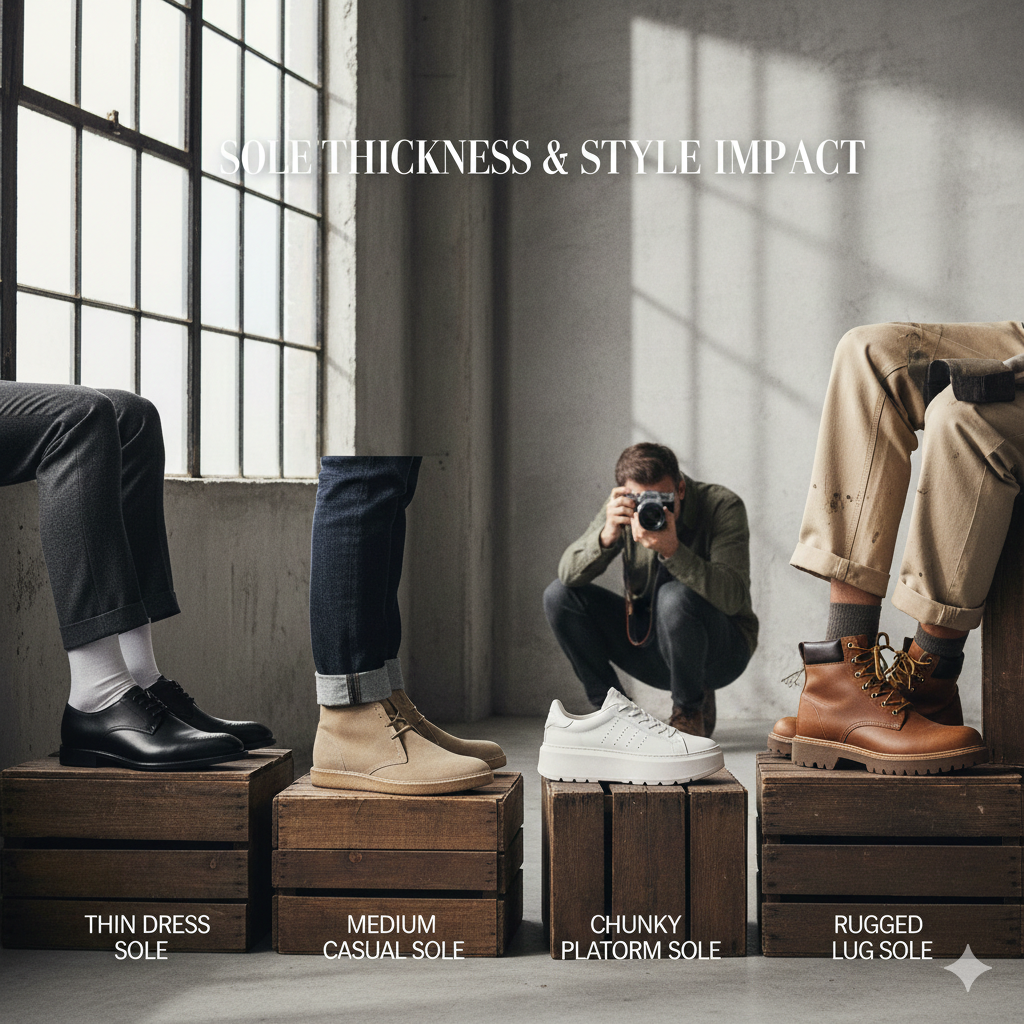
When you pick up a shoe, your eyes might first land on the colorway or the materials used on the upper. But if you look a little lower, you’ll find the feature that truly dictates how a shoe feels, functions, and fits into the fashion landscape: the sole.
Sole thickness is more than just a measurement in millimeters. It is a defining architectural element that separates a sleek dress shoe from a chunky dad sneaker, or a minimalist barefoot runner from a maximalist platform boot. The vertical rise of a sole influences the silhouette, changes the wearer’s gait, and communicates a specific aesthetic message.
From the wafer-thin leather soles of the early 20th century to the towering, cloud-like midsoles dominating today’s streetwear, the evolution of sole thickness tells a story of technology, comfort, and culture. This guide explores how the structure of a sole shapes the design of the shoe—and the experience of the person wearing it.
See also: Handmade Shoes Vs Factory Shoes Craftsmanship Vs Modern Production
Why Sole Thickness Matters in Shoe Design
In the world of footwear design, proportion is everything. The sole acts as the foundation of the shoe’s silhouette. A thin sole creates a low profile, grounding the wearer and offering a streamlined look. A thick sole adds visual weight, height, and a sense of dominance to the design.
Historically, sole thickness was largely dictated by necessity. Early footwear used thin layers of leather or woven plant fibers because those were the materials available. As rubber vulcanization and foam injection molding became possible, designers gained the freedom to experiment with volume. Suddenly, a sole didn’t just have to protect the foot; it could provide bounce, energy return, and aggressive styling.
Today, sole thickness is a primary identifier of fashion identity. A jagged, oversized sole screams “contemporary streetwear,” while a flat, low-profile sole whispers “classic elegance.” Understanding this distinction helps us appreciate why certain shoes become icons while others fade into obscurity.
Thin Soles: Minimalist Design Philosophy
There is an enduring appeal to minimalism. In footwear, this manifests as thin, flexible soles that prioritize ground feel and a natural aesthetic.
Lightweight and Flexible Structure
Thin soles generally mean less material, which translates to lighter footwear. This reduction in weight allows for a “second skin” feel. When you wear a shoe with a low stack height, the barrier between your foot and the ground is minimal. This lack of bulk allows the shoe to bend and twist with the foot’s natural biomechanics, rather than forcing the foot to conform to a rigid platform.
Natural Movement Benefits
The rise of the “barefoot” or natural movement movement has championed thin soles. The philosophy here is simple: the human foot is an engineering marvel designed to absorb shock and propel the body. Thick cushioning can sometimes dampen this natural feedback loop. Thin soles allow sensory information from the ground to reach the brain, potentially improving balance and proprioception (body awareness).
Clean Aesthetic Appeal
From a visual standpoint, thin soles offer a sharp, clean look. Think of a classic loafer, a ballet flat, or a retro tennis shoe like the Adidas Stan Smith or Onitsuka Tiger. These styles rely on sleek lines and understated elegance. They don’t demand attention with bulk; instead, they complement an outfit without overpowering it. This makes thin-soled shoes incredibly versatile, easily transitioning from casual settings to semi-formal environments where a bulky sneaker might feel out of place.
Thick Soles: Chunky and Platform Styles
On the other end of the spectrum, we have the maximalist movement. Thick soles have surged in popularity, driven by advancements in foam technology and a cultural shift toward bold, expressive fashion.
Cushioning Technology Influence
The primary functional driver behind thick soles is cushioning. Brands like Hoka One One and Nike revolutionized the running world by proving that more foam could equal better performance. High-stack midsoles are packed with advanced compounds—EVA foam, polyurethane, or proprietary air units—designed to compress upon impact and rebound with energy. This “squish” factor reduces fatigue over long distances, making thick soles a favorite for nurses, runners, and anyone on their feet all day.
Bold Visual Identity
Designers use thick soles to create exaggerated proportions. A chunky sole acts as a pedestal for the upper, instantly making the shoe the focal point of an outfit. This is evident in the “dad shoe” trend (epitomized by the New Balance 990 or Balenciaga Triple S), where the sole is intentionally over-engineered with complex tooling and layers. The thickness creates a sense of ruggedness and durability, even if the shoe is purely for lifestyle use.
Streetwear and Fashion Trends
In streetwear, the silhouette is king. Baggy trousers and oversized hoodies require footwear with enough visual mass to balance the look. A thin plimsoll might disappear under wide-leg cargo pants, but a thick-soled sneaker holds its own. This interplay between clothing volume and shoe volume is a crucial aspect of modern styling. Platform boots and sneakers also offer the practical benefit of added height, which remains a desirable trait for many consumers.
How Sole Thickness Changes Comfort and Performance
The structural differences between thick and thin soles result in vastly different wearing experiences.
Shock Absorption
This is the most obvious trade-off. Thick soles, generally speaking, offer superior shock absorption. The added material dissipates the force of a heel strike, protecting joints and muscles from impact. Thin soles offer little to no shock absorption, relying instead on the body’s natural mechanics to handle the load. For high-impact activities on concrete, a thicker sole is often more forgiving.
Stability and Balance
Here, the advantage often shifts to thin soles. Being lower to the ground creates a lower center of gravity. This enhances stability, which is why weightlifting shoes have very thin, hard soles—you don’t want to be wobbling on a marshmallow when squatting heavy weights. Conversely, very thick, soft soles can sometimes feel unstable, especially on uneven terrain, increasing the risk of rolling an ankle if the platform is too high or too narrow.
Weight and Flexibility
Thick soles add mass. While modern foams are incredibly light, a maximalist shoe will almost always be heavier than a minimalist one. Furthermore, a thick slab of foam or rubber is harder to bend. To combat this stiffness, designers of thick-soled shoes often curve the sole (a “rocker” shape) to help roll the foot forward, artificially mimicking the flexibility that a thin-soled shoe possesses naturally.
Sole Thickness Across Different Shoe Types
The application of sole thickness varies significantly depending on the category of footwear.
Sneakers and Athletic Shoes
This category sees the most variety. You have minimalist cross-training shoes with 4mm soles alongside marathon super-shoes with 40mm stack heights. In athletics, thickness is a tool used to tune performance. A sprinter needs a thin, stiff plate for power transfer; an ultra-runner needs maximum cushion to survive 50 miles.
Boots and Outdoor Footwear
Hiking boots utilize thick, rugged lugs for traction and protection against sharp rocks. However, the “stack height” (the foam between the outsole and the foot) can vary. Heavy-duty backpacking boots have thick, stiff soles to support heavy loads. Conversely, tactical boots or approach shoes might have thinner, more sensitive soles to allow for precise foot placement during climbing or scrambling.
Formal Shoes
Formal footwear has traditionally adhered to thin leather soles. This sleek profile is synonymous with sophistication. A thick rubber sole on an Oxford shoe was once considered a fashion faux pas, reserved only for orthopedic needs. However, the rules are blurring. Hybrid dress shoes with thicker, sneaker-like comfortable soles are becoming acceptable in office environments, signaling a shift in how we value comfort alongside tradition.
See also: Minimalist Vs Chunky Shoe Trends Shape Comfort Style Explained
Cultural Meaning Behind Thin vs Thick Soles
Fashion is a language, and the soles of our shoes speak volumes about who we are and the times we live in.
Minimalism in footwear often aligns with a lifestyle of intentionality and connection. The wearer of a thin-soled, simple shoe might value authenticity, heritage, and being “grounded.” It reflects a rejection of excess and a preference for timeless utility.
On the other hand, platform shoes and chunky sneakers are often about disruption and confidence. They take up space. They are unapologetic. In the 90s, platform shoes were a symbol of “Girl Power” (thanks to the Spice Girls) and rave culture. Today, the oversized sneaker represents a blend of irony and comfort-seeking. It says, “I prioritize my comfort, but I want you to notice my style.”
Psychologically, the height provided by thick soles can offer a literal and figurative boost in confidence. It changes the wearer’s posture and eye level, which can subtly alter how they interact with the world.
Choosing the Right Sole Thickness for Your Lifestyle
So, which structure is right for you? It depends largely on your daily activities and personal style.
Everyday Comfort
If you stand on hard surfaces all day (retail, healthcare, hospitality), a thicker sole with ample cushioning is usually the better choice to reduce fatigue. If you work in a carpeted office or spend your day seated, a thinner sole might feel less restrictive and lighter on the foot.
Performance Needs
Analyze your activity. For weightlifting or yoga, go thin and stable. For running on pavement or walking long distances, a moderate-to-thick sole will save your legs. For trail running, you might want a middle ground—enough cushion for protection, but thin enough to feel the roots and rocks underfoot to prevent tripping.
Fashion Expression
Look at your wardrobe. Do you wear slim-fit tailoring and classic cuts? A thinner sole will maintain that streamlined silhouette. do you prefer oversized streetwear, wide-leg denim, or flowy skirts? A chunky sole can provide the necessary visual anchor to balance those proportions.
See also: Oversized Sneaker Design Trend The Rise Of Chunky Silhouettes
The Future of Sole Design and Innovation
As we look forward, the concept of sole thickness is being reimagined through technology.
We are entering the era of AI-generated cushioning systems. Computers can now model complex lattice structures (often 3D printed) that vary the “thickness” and density of a sole within the same shoe. A sole might look thick but be mostly air, offering the stability of a thin shoe with the shock absorption of a thick one.
Sustainability is also driving change. As brands move toward circular manufacturing, we are seeing the rise of mono-material soles that can be easily recycled. This might influence thickness, as designers figure out how to get maximum comfort out of recyclable materials without relying on layers of glue and different foams.
Adaptive sole technologies are also on the horizon. Imagine a sole that can change its thickness or firmness based on the terrain or the user’s activity—stiff and thin for a sprint, soft and thick for the walk home.
Sole Thickness as a Key Element of Shoe Identity
Whether you gravitate toward the barely-there feel of a minimalist flat or the aggressive bounce of a maximalist sneaker, the thickness of the sole shapes your experience. It dictates the silhouette, influences your comfort, and acts as a foundation for your personal style.
Sole thickness is rarely an accident; it is a deliberate design choice that balances physics with fashion. By understanding how structure shapes design, you can make smarter choices about what you put on your feet, ensuring that your shoes not only look good but support the life you want to lead.
Leave a Reply