

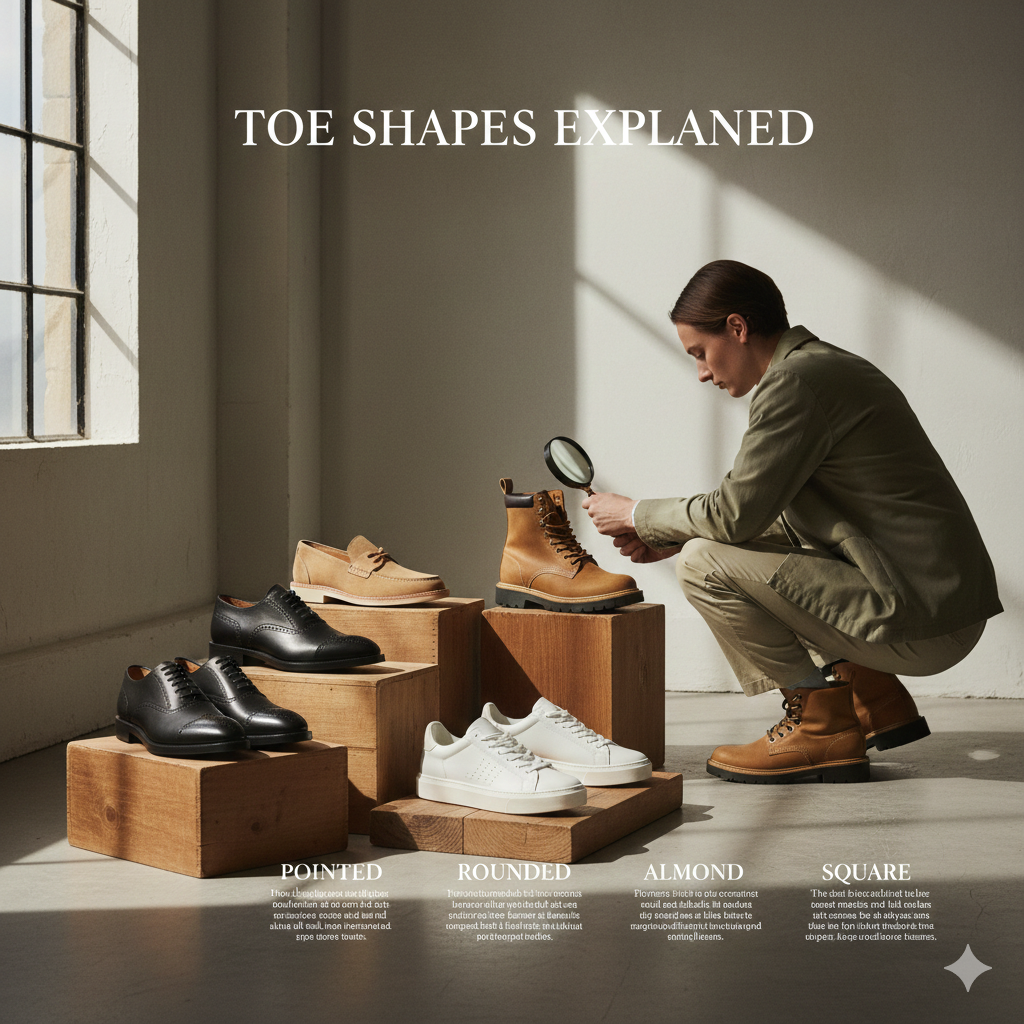
Shoes are more than just protective gear for our feet; they are complex structures designed to balance biomechanics with aesthetic expression. While we often focus on the heel height, the material, or the colorway, one crucial design element dictates both the comfort and the character of a shoe more than any other: the toe shape.
This seemingly small detail defines the shoe’s silhouette, influences how pants fall against the foot, and plays a significant role in the health of your feet. From the sharp aggression of a pointed toe to the relaxed, anatomical nature of a rounded one, the toe box is where function meets fashion.
This guide explores the anatomy, style, and structural importance of toe shapes, helping you understand how this fundamental design choice impacts your daily life and personal style.
See also: Parts Of A Shoe Explained The Complete Footwear Anatomy Guide
Why Toe Shape Matters in Footwear Design
The toe shape is the “face” of the shoe. It is often the first thing people notice when looking at footwear, and it sets the tone for the entire outfit. A sleek, tapered toe communicates formality and precision, while a broad, rounded toe suggests approachability and comfort.
Beyond aesthetics, the toe shape is a critical component of the shoe’s “last”—the 3D mold upon which a shoe is constructed. The last determines the volume and fit of the toe box. If the toe shape does not align with the natural shape of the wearer’s foot, it can lead to discomfort or long-term foot issues. Therefore, understanding toe shape is not just a matter of fashion; it is a matter of ergonomics.
Designers manipulate toe shapes to create optical illusions. A longer toe can make the leg look longer, while a square toe can shorten the appearance of the foot. It is a powerful tool in silhouette creation, bridging the gap between the anatomy of the foot and the trends of the runway.
Main Types of Toe Shapes in Shoes
While fashion trends cycle through various extremes, most footwear falls into four primary categories of toe shapes. Each has a distinct visual language and functional purpose.
Round Toe
The round toe is the most common and versatile shape in footwear history. It mimics the natural curve of the toes, providing ample room for movement. You will find this shape on everything from combat boots and sneakers to ballet flats and work shoes.
Visually, a round toe softens the silhouette. It is less aggressive than a point or a square, making it ideal for casual and semi-formal wear. Because it follows the foot’s natural geometry, it is widely considered the most comfortable option for long-term wear. In the realm of sneakers, the round toe is king, essential for athletic performance where toe splay is necessary for balance.
Square Toe
The square toe is a bold, structural choice. It features a flat edge across the front of the shoe, creating a boxy, angular silhouette. This shape tends to cycle in and out of high fashion, often associated with modernism and avant-garde design.
Functionally, a square toe can offer significant comfort, particularly for those with wider feet, as it does not taper or pinch the toes. However, it can make the foot appear shorter and wider. In men’s dress shoes, the square toe (often called the “bicycle toe” when stitched) had a controversial heyday in the 90s but has since been refined into narrower, more elegant variations like the chisel toe.
Pointed Toe
The pointed toe is the epitome of elegance and drama. It elongates the leg and creates a sharp, streamlined profile. This shape is a staple in formal wear, seen on classic pumps, stilettos, and men’s winklepickers or Chelsea boots.
To achieve this look without crushing the toes, designers often extend the shoe length beyond the actual toes. This “dead space” allows the shoe to taper sharply while still accommodating the foot, though it often sacrifices width. Consequently, pointed toes are notorious for being less comfortable, often compressing the toes and altering weight distribution. They remain a favorite for evening wear where aesthetics take precedence over utility.
Almond Toe
The almond toe is the diplomat of shoe shapes. It sits comfortably between the round and pointed toe. It features a tapered, rounded point that resembles—you guessed it—an almond.
This shape is widely regarded as the most balanced and flattering. It offers the elegance of a pointed toe without the discomfort, and the comfort of a round toe without the bulk. It is a standard for quality dress shoes (like Oxfords and Derbies) and versatile boots. The almond toe creates a clean, classic line that works with almost any trouser width or skirt length.
How Toe Shape Affects Comfort and Fit
Fashion often demands sacrifice, and nowhere is this more evident than in the toe box. The shape of the shoe dictates how your toes interact with the shoe’s interior, influencing everything from blister formation to posture.
Toe Box Space
The volume within the front of the shoe is known as the toe box. A restrictive toe box prevents the toes from lying flat or spreading naturally. Pointed toes significantly reduce this volume, forcing the toes into a triangular formation. Over time, this compression can lead to bunions, hammertoes, and neuromas. Conversely, a wide, rounded, or anatomical toe box (often seen in “barefoot” style shoes) allows for full toe splay, which enhances stability.
Natural Foot Movement
When we walk, our toes play a vital role in the “push-off” phase of the gait cycle. They need to flex and grip. A shoe with a rigid or narrow toe shape can inhibit this natural mechanism. Square and round toes generally offer better flexibility across the metatarsals (the ball of the foot), allowing for a more natural stride.
Pressure Distribution
The shape of the toe influences where pressure is applied to the foot. In a narrow, pointed shoe, pressure is often concentrated on the sides of the big and little toes. In a square or round shoe, the pressure is distributed more evenly across the width of the foot. Understanding your own foot shape—whether you have a “Greek” foot (second toe longer), “Egyptian” foot (sloped toes), or “Roman” foot (square toes)—is crucial for choosing a toe shape that minimizes pressure points.
Toe Shapes in Sneakers vs Formal Shoes
The dichotomy between sneakers and formal shoes highlights the functional divide in toe design.
Athletic Rounded Profiles
Sneakers are performance tools first, fashion items second. Therefore, the vast majority utilize a rounded toe. This is non-negotiable for athletics; whether running, jumping, or lifting, the toes must be able to spread to absorb impact and provide balance. The silhouette is often reinforced with rubber bumpers or toe caps to protect the foot and the shoe material from abrasion.
Sleek Formal Designs
Formal shoes operate on a different set of rules. Here, the shoe is an extension of the leg’s line. Dress shoes frequently employ almond, chisel, or pointed toes to create a sleek profile that slides easily under suit cuffs. The construction is often stiffer, using leather toe puffs to maintain that sharp shape indefinitely, prioritizing the preservation of the silhouette over the flexibility of the toe box.
Lifestyle Hybrid Shapes
We are currently seeing a massive rise in hybrid footwear. Sneakers are adopting sharper, more angular toes to fit into “smart casual” office environments. Conversely, dress shoes are being built on wider, rounder lasts to accommodate the modern consumer’s demand for sneaker-like comfort. This cross-pollination is creating exciting new silhouettes that blur the lines between the gym and the boardroom.
Toe Shape and Shoe Silhouette Trends
Fashion is cyclical, and toe shapes are reliable indicators of the era.
Minimalist Low-Profile Designs
In the era of minimalist footwear (think Common Projects or streamlined loafers), the almond and round toes dominate. These shapes are unobtrusive and clean, fitting perfectly with the “less is more” aesthetic. They allow the material quality and color to take center stage rather than the shape itself.
Chunky Oversized Sneakers
The “dad shoe” trend brought the aggressive, oversized round toe back into the limelight. These shoes feature exaggerated, bulbous toe boxes that emphasize bulk and weight. It’s a deliberate rejection of the sleekness of the previous decade, focusing on comfort and a retro-90s aesthetic.
Retro Sneaker Shapes
As we see a resurgence of 70s runners and 80s basketball shoes, specific toe shapes are returning. The low-profile, slightly tapered round toe of a 70s track shoe is distinct from the boxy, perforated toe of an 80s court shoe. Collecting these specific silhouettes has become a major part of sneaker culture.
See also: Shoe Silhouettes Explained Understanding Shape Structure Style
Cultural Meaning Behind Toe Shapes
We subconsciously assign personality traits to toe shapes.
The pointed toe has historically been associated with danger, rebellion, and high status. From the medieval Poulaine (which were so long they had to be tied to the knees) to the winklepickers of the British punk rock scene, the point says, “I am distinct, and I am not here to do manual labor.”
The rounded toe signals approachability, youth, and utility. It is the shape of the school shoe, the work boot, and the running shoe. It implies a grounded nature, someone ready for action or play.
The square toe represents a break from tradition. It is often seen as bold, architectural, and modern. In the late 90s and early 2000s, it represented a “future-forward” look, and its recent return signals a nostalgia for that specific vision of the future.
Choosing the Right Toe Shape for Your Lifestyle
Selecting the right shape is a balancing act between the health of your feet and the demands of your social environment.
Everyday Casual Wear
For daily drivers, the round or almond toe is the safest bet. They offer the versatility to match with jeans, chinos, or shorts while providing the necessary room for your feet to swell naturally throughout the day. If you walk a lot, avoid aggressive tapers.
Formal Occasions
For weddings, black-tie events, or strict business environments, the almond or sleek chisel toe is standard. They provide the requisite elegance without looking like a costume. A pointed toe can work well for evening wear or cocktail attire but may be too aggressive for a conservative boardroom.
Athletic Performance
Function is the only metric that matters here. Always opt for a rounded, anatomical toe box that allows for maximum splay. If your athletic shoes are tapering your toes, you are compromising your stability and power transfer.
See also: How Formal Shoes Are Built Differently Structure Craftsmanship Design
The Future of Toe Design in Shoes
The future of footwear is being shaped by technology and a growing awareness of foot health.
We are moving toward AI-designed ergonomic toe boxes. Brands are beginning to use massive datasets of foot scans to create “average” lasts that are far more accurate to the human population than traditional molds. This means better-fitting toe boxes right out of the box.
Sustainable material shaping is also changing design. New plant-based leathers and knit technologies allow for different types of stretching and molding, potentially allowing for sleeker shapes that still stretch to accommodate the foot, removing the conflict between style and comfort.
Finally, we will likely see more hybrid silhouette trends. The rigid distinction between the “comfortable round sneaker” and the “uncomfortable pointed dress shoe” is dissolving. Expect to see formal shoes with anatomically correct toe boxes that use clever patterning to maintain a sleek visual profile.
Toe Shape as the Detail That Defines Shoe Identity
The toe shape is a small detail with massive implications. It dictates the silhouette of your outfit, the health of your feet, and the message you send to the world. Whether you prefer the sharp authority of a point or the relaxed utility of a round toe, understanding the “why” behind the design allows you to make better choices. Next time you pick up a pair of shoes, look past the logo and the laces—look at the toe. It tells you everything you need to know about where that shoe has been and where it can take you.
Leave a Reply