

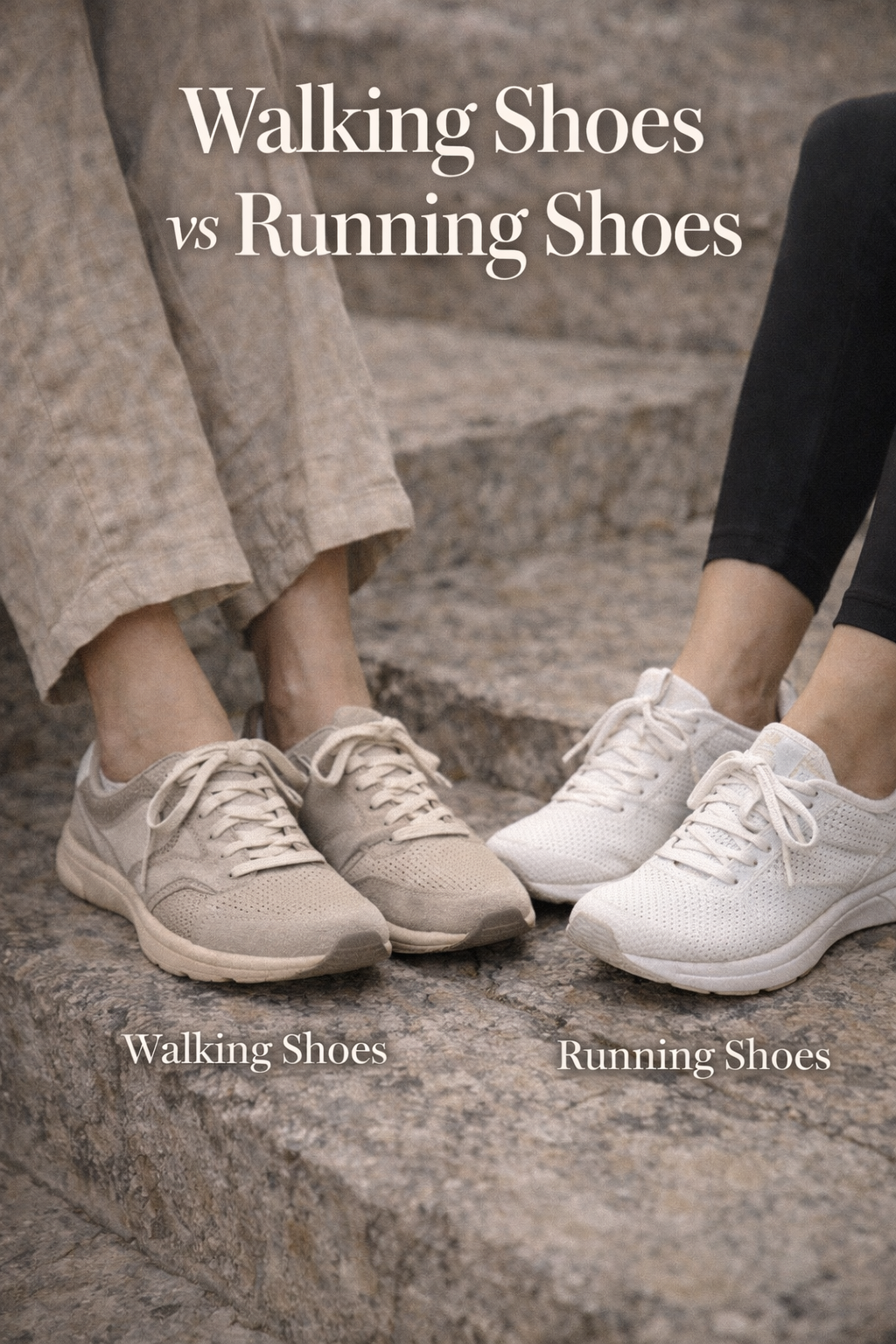
For centuries, the concept of a “sport-specific shoe” was nonexistent. Humans moved barefoot or in simple hide coverings that offered protection from the elements but little in the way of mechanical support. As our understanding of kinesiology evolved, so too did our footwear. The divergence of the walking shoe and the running shoe is not merely a marketing tactic; it is a design response to two fundamentally different biomechanical events.
To the untrained eye, a sneaker is a sneaker. They both feature rubber soles, foam midsoles, and mesh or leather uppers. Yet, beneath the aesthetic similarities lies a world of difference in engineering. Understanding these nuances isn’t just about comfort—it’s about honoring the evolutionary mechanics of the human foot and preventing injury. Whether you are a brisk city walker or a marathon trainee, the choice of footwear dictates how your body interacts with the ground.
Read Here: Types of Athletic Shoes Explained
Walking Shoes vs Running Shoes – What’s the Difference?
The primary distinction between walking and running lies in the gait cycle. Walking is a low-impact activity where one foot is always in contact with the ground. Running, conversely, is a series of plyometric leaps where the body becomes airborne, landing with a force of up to three times the runner’s body weight. Footwear design pivots around this singular reality: impact management versus consistent stability.
What Are Walking Shoes?
Walking shoes are engineered for the “rocking chair” motion of the walking gait. When we walk, we strike with the heel and roll smoothly through to the toe-off. Consequently, walking shoes are constructed with a flexible sole (particularly in the forefoot) and a beveled heel to facilitate this rolling motion. They prioritize stability and arch support over shock absorption, as the impact forces are significantly lower than in running.
Historically, the “walker” was often associated with orthopedic aesthetics—utilitarian, bulky, and uninspiring. However, modern design has reclaimed the walking shoe, integrating sleek silhouettes with medical-grade support. The focus remains on evenly distributing body weight across the foot to reduce fatigue during prolonged standing or slow-paced movement.
What Are Running Shoes?
Running shoes are shock absorbers. Their primary function is to mitigate the vertical ground reaction forces generated during the flight phase of running. They feature complex midsole technologies—EVA foams, air pockets, gel inserts, or carbon plates—designed to compress upon landing and rebound for energy return.
From a design perspective, running shoes are more segmented. You will find categories like “neutral,” “stability,” and “motion control,” each addressing specific pronation issues (how the foot rolls inward). They often feature a higher heel-to-toe drop (the difference in height between the heel and forefoot) to propel the runner forward and protect the Achilles tendon from excessive strain.
Why the Right Shoe Type Matters
Wearing the wrong tool for the job compromises biomechanical efficiency. Running in a stiff-soled walking shoe can lead to shin splints and plantar fasciitis because the shoe fails to absorb the high-impact shock. Conversely, walking long distances in a heavily cushioned, high-drop running shoe can alter your natural stride, causing instability and tripping hazards due to the flared heels often found in runners.
Design Differences Between Walking and Running Shoes
To truly appreciate the divergence in these footwear categories, we must look at the architecture of the shoe. A footwear designer approaches a running silhouette with a focus on aerodynamics and propulsion, whereas a walking shoe is drafted with a focus on posture and endurance.
Cushioning and Impact Support
This is the most visible differentiator.
- Running Shoes: The cushioning is substantial, particularly in the heel and forefoot. Manufacturers invest millions in developing proprietary foams (like Adidas’ Boost or Nike’s ZoomX) that offer “energy return.” The goal is to spring the runner forward.
- Walking Shoes: The cushioning is moderate and consistent. Walkers do not need the spring-like effect; they need a stable platform. The foam density is usually firmer to support the arch and prevent the foot from sinking too deep into the midsole, which can cause fatigue over long distances.
Heel-to-Toe Drop and Flexibility
The “drop” refers to the slope of the shoe interior.
- Running Shoes: Typically feature a higher drop (8mm to 12mm). This elevation lifts the heel, reducing the load on the calf muscles and Achilles tendon during the vigorous push-off phase of running. However, the rise of “zero-drop” running shoes (championed by the barefoot running movement) has added complexity to this category, catering to forefoot strikers.
- Walking Shoes: Generally have a lower drop (4mm to 8mm) or are nearly flat. This encourages a more natural foot position. Flexibility is paramount here; a walking shoe must flex significantly at the ball of the foot to allow for the full range of motion during the push-off. Running shoes tend to be stiffer in the midfoot to provide leverage.
Weight and Breathability
Weight equates to energy expenditure.
- Running Shoes: Designers are obsessed with shedding grams. Uppers are often made of engineered mesh or thin knits to maximize airflow and minimize weight. Over a marathon, lifting an extra few ounces thousands of times adds up to significant fatigue.
- Walking Shoes: While modern iterations are lighter than their leather ancestors, weight is less of a critical factor. Durability often takes precedence, leading to slightly heavier constructions with more substantial upper materials like leather or reinforced synthetics that offer better protection and longevity.
Read Here: Lightweight Shoes vs Heavy Shoes
Comfort Comparison – Which Shoes Feel Better?
“Comfort” is subjective, but in the world of footwear, it is a measurable outcome of fit, thermal regulation, and support. The perception of comfort changes depending on the activity intensity.
Everyday Walking Comfort
For casual strolling, errands, or a commute, the walking shoe usually reigns supreme. Its firmer platform provides better feedback from the ground (proprioception), helping with balance. The wider toe box often found in walking shoes accommodates the natural splaying of the toes, preventing bunions and blisters during all-day wear. The comfort here is defined by relief—the absence of pressure points.
High-Impact Running Support
Running shoes feel “bouncy.” Standing still in a high-end running shoe can sometimes feel unstable due to the thick, soft foam and the rocker shape of the sole (which curves up at the toe and heel). However, once in motion at speed, this instability translates into propulsion. Comfort here is defined by responsiveness—how well the shoe mitigates the violence of impact.
Long-Distance Performance
In an endurance context, heat management becomes critical. Running shoes, with their superior ventilation, often keep feet cooler. However, if you are walking a long distance (10km+), the softness of a running shoe can actually become detrimental. “Bottoming out” the foam can lead to a lack of support, causing the ankles to roll. A walking shoe maintains its structural integrity longer under constant load.
Can You Use Walking Shoes for Running (or Vice Versa)?
This is the most common question posed to footwear specialists. The answer requires a nuanced understanding of risk versus utility.
Benefits and Limitations
- Running Shoes for Walking: Generally acceptable. Many people prefer the aesthetic and “cloud-like” feel of running shoes for walking. If you are a brisk fitness walker, the forward momentum of a running shoe can be beneficial.
- Limitation: The higher heel can catch on uneven pavement, and the excessive cushioning can feel “wobbly” if you have balance issues.
- Walking Shoes for Running: Generally ill-advised. Walking shoes lack the necessary shock absorption and flexibility required for the flight phase of running.
- Limitation: They are often too heavy and the soles too stiff.
Injury Risks and Safety Considerations
Running in walking shoes significantly increases the risk of repetitive strain injuries. The lack of cushioning sends shockwaves up the tibia, leading to shin splints (medial tibial stress syndrome). Furthermore, because walking shoes are designed for a heel-strike roll, they can force a runner into an unnatural gait pattern, stressing the knees and hips.
Conversely, elderly individuals or those with balance issues should be wary of “max-cushion” running shoes for daily walking. The high stack height creates a greater distance from the ground, increasing the torque on the ankle if a misstep occurs.
How to Choose Between Walking Shoes and Running Shoes
Selecting the correct footwear is an exercise in self-awareness. It requires an honest assessment of your biology and your intended activity.
Based on Activity Level
If your routine involves a mix of 30% running and 70% walking, lean toward a running shoe. It is better to have “too much” shock absorption for walking than “too little” for running. If you are exclusively walking for fitness or work, a dedicated walking shoe will provide better long-term postural support.
Foot Type and Arch Support
- Flat Feet (Overpronation): Look for “Motion Control” shoes. These have a rigid medial post (a harder foam on the inner side) to prevent the foot from rolling inward excessively. Both running and walking categories offer this, but stability running shoes are often more technologically advanced.
- High Arches (Supination): Look for “Neutral” or “Cushioned” shoes. You need shock absorption because high arches are naturally rigid and do not absorb impact well. A cushioned running shoe is often the best choice here, even for walkers.
Terrain and Surface Factors
Consider where the rubber meets the road.
- Pavement/Concrete: Requires maximum cushion. Running shoes are superior here due to the abrasive and unforgiving nature of concrete.
- Trails/Dirt: Requires traction and stability. Trail running shoes act as a fantastic hybrid. They offer the rugged sole of a hiking boot with the agility of a sneaker, making them excellent for both trail running and hiking.
Pros and Cons of Walking Shoes vs Running Shoes
To synthesize the technical details, we can look at the trade-offs inherent in each design philosophy.
Durability
Walking Shoes: Winner. Because they utilize denser rubber and more durable upper materials (often leather), they tend to outlast running shoes. Running shoes rely on soft, blown rubber for grip, which wears down quickly on asphalt.
Cushioning
Running Shoes: Winner. The R&D poured into running foams is unparalleled. If “pillow-soft” is your metric, the running shoe wins every time. Walking shoes offer “firm comfort,” which is better for skeletal alignment but less plush immediately upon step-in.
Stability
Walking Shoes: Winner. With wider bases and lower stack heights, walking shoes provide a grounded, secure feeling. They are less prone to lateral rolling than high-stack running shoes.
Versatility
Running Shoes: Winner. A running shoe can function as a walking shoe, a gym shoe, and a casual fashion statement. A walking shoe is rarely functional for anything other than walking or standing.
Read Here: How to Choose the Right Shoes for Your Lifestyle
FAQ – Walking Shoes vs Running Shoes
Are running shoes good for daily walking?
Yes, for most people. They are lightweight, breathable, and comfortable. However, if you stand all day for work, a walking shoe with a firmer sole may prevent your feet from fatigue caused by constantly stabilizing on soft foam.
Which shoes last longer, walking or running shoes?
Walking shoes typically have a longer lifespan. Running shoes are generally designed to last between 300 to 500 miles before the foam midsole compresses and loses its rebound properties. Walking shoes, undergoing less impact force, maintain their structural integrity longer.
Do walking shoes have less cushioning?
Yes, but by design. They have different cushioning. It is denser and supportive rather than compressive and bouncy. This protects the arch during the slower, rolling gait of a walk.
How do I know which shoe is right for me?
Perform the “Wet Test.” Wet your foot and step on a piece of paper.
- Full imprint: Flat feet. You likely need stability/motion control (firm arch).
- C-shape (heel and toes only): High arches. You need cushioning (soft midsole).
- Somewhere in between: Neutral. You can wear a wide variety of neutral shoes.
Can beginners use running shoes for walking?
Absolutely. In fact, for a beginner starting a fitness journey that might eventually include intervals of jogging, a running shoe is the safer, more versatile investment.
Moving Forward: The Future of Footwear
As we look toward the future of the “Complete Human Shoes Evolution,” the line between walking and running shoes may continue to blur. The rise of “athleisure” has already pushed walking shoes to adopt the sleek aesthetics of runners. Simultaneously, the maximalist running trend (shoes with massive foam soles) is influencing walking footwear, bringing higher comfort levels to stability shoes.
Ultimately, the distinction matters because you matter. Your joints, your spine, and your kinetic chain rely on the foundation you place beneath them. Whether you are navigating the concrete jungle or training for a 5K, respecting the design intent of your footwear is the first step toward a lifetime of healthy movement. Choose wisely, and let your shoes facilitate the journey, not hinder it.
Leave a Reply