

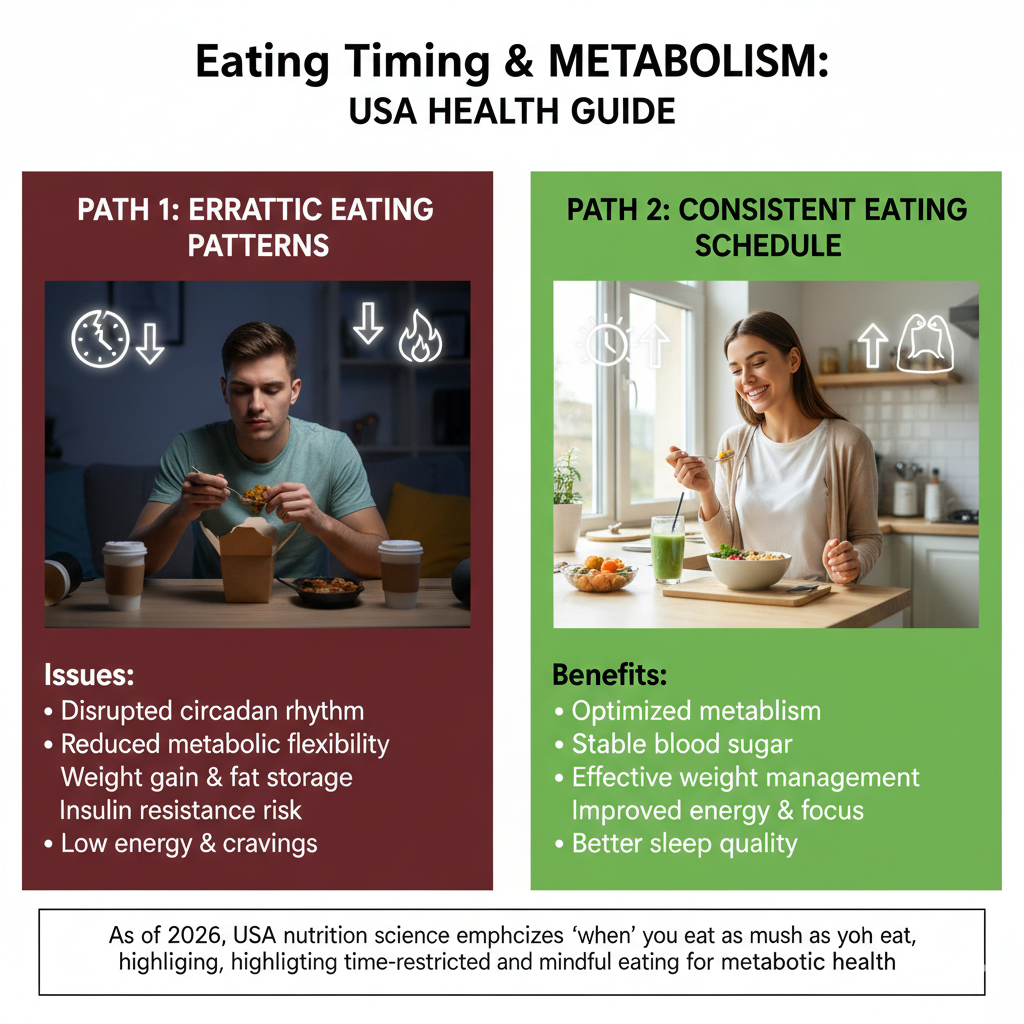
Meal timing research asks whether when people eat affects health alongside what and how much they eat. It is an interesting question, but it does not produce a single ideal dinner time for everyone in the United States.
Work shifts, medication, sleep, activity and access to food all affect an eating routine. Before following a strict window from social media, distinguish a study finding from a personal treatment recommendation.
Separate the research questions
Researchers may study the time of the first meal, the length of an eating window, late eating or meal frequency. Those are related but different questions. A study that changes an eating window may also change total food intake, making it difficult to assign the outcome to timing alone.
Observational research can identify associations but cannot by itself prove that a schedule caused a result. Animal experiments can help explain mechanisms, yet they do not establish a universal human meal plan. Check the design before applying a headline to your day.
Read a trial in context
A 2024 randomised trial studied personalised time-restricted eating alongside usual care in adults with metabolic syndrome over three months. It reported a modest improvement in a measure of blood-glucose regulation. Its short duration and specific participant group limit wider conclusions.
That finding is not evidence that every adult should skip breakfast, that eating after a particular hour automatically causes fat gain, or that a schedule permanently speeds up metabolism. Look at the participants, comparison group and measured outcome rather than the most dramatic summary.
Start with the routine you have
For a few ordinary days, note meal times, sleep, work breaks and any practical difficulties. You may discover that the problem is an unreliable lunch break or lack of food after a late shift. Those problems need a workable plan, not necessarily a smaller eating window.
The everyday eating guide focuses on making meals feasible. Our sleep and daily performance guide addresses sleep separately, without assuming every symptom comes from meal timing.
Get individual advice before fasting
If you have diabetes, use medicines affected by food intake, are pregnant or breastfeeding, have a history of eating disorders or have other medical needs, discuss schedule changes with a qualified clinician. Do not alter medication doses or delay necessary food based on an article.
The NIDDK discussion of intermittent fasting and diabetes explains why the research and clinical considerations require care. A clinician can assess whether any approach is appropriate for your circumstances.
Avoid making the clock the whole plan
A schedule cannot tell you whether meals meet your needs, whether food is handled safely or whether fatigue has a medical cause. Use the meal planning guide for practical combinations, and treat timing as one question within a much larger routine.


Leave a Reply