

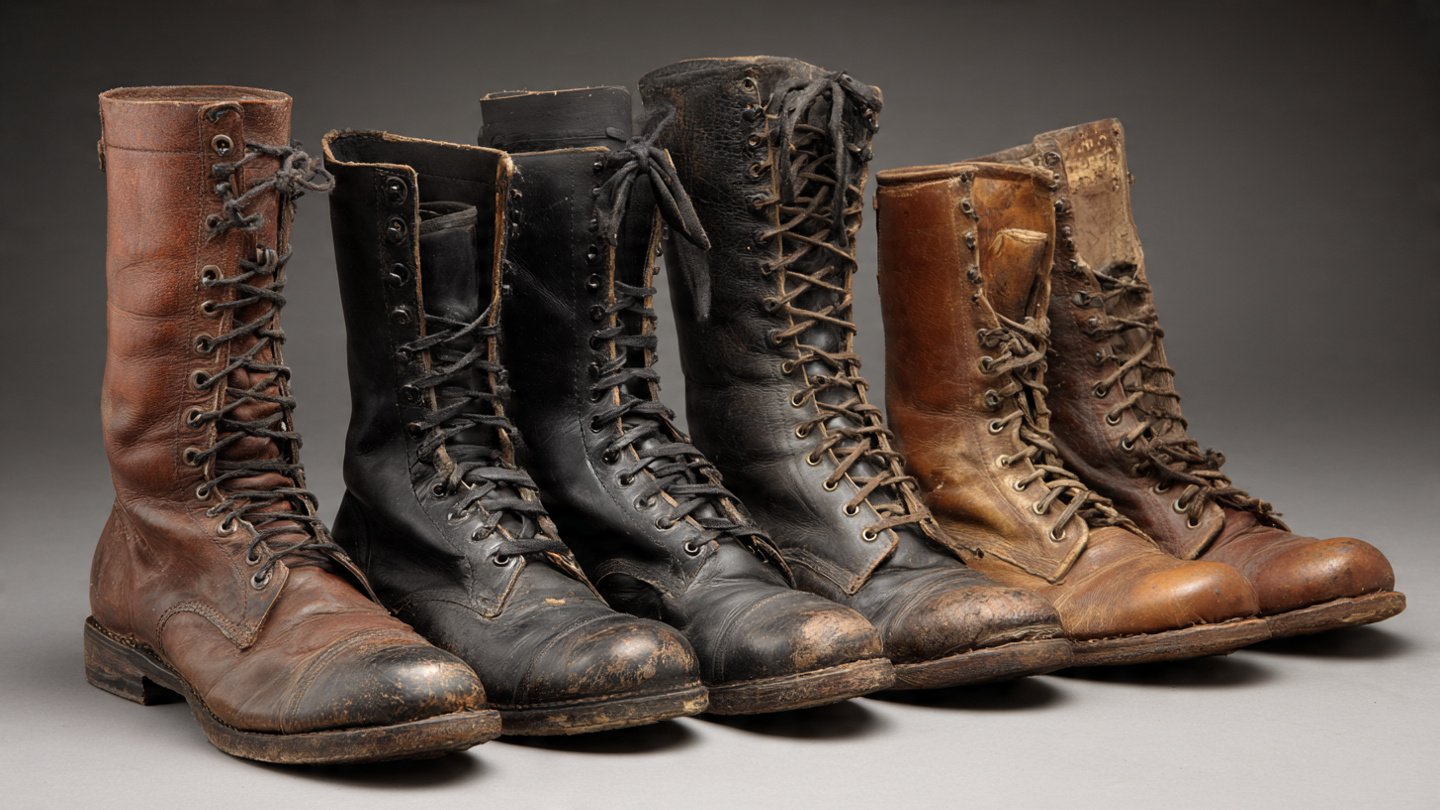
Armies march on their stomachs, but they fight on their feet. For thousands of years, the success of military campaigns has heavily depended on the quality of a soldier’s footwear. A poorly equipped infantry faces devastating consequences, from debilitating blisters to severe infections. Because of this, military footwear has constantly adapted to meet the extreme demands of warfare.
Durability and protection are the primary forces driving combat boot design. Soldiers carry heavy packs across brutal landscapes, requiring shoes that can withstand constant friction and impact. Over the centuries, shoemakers and military engineers have worked tirelessly to protect feet from sharp rocks, freezing mud, and blistering sand. The resulting innovations have shaped the way we make and wear shoes today.
Terrain and climate also play a massive role in how military boots evolve. A boot designed for the dense, humid jungles of Vietnam looks entirely different from one built for the arid, rocky mountains of Afghanistan. These shifting geographical requirements have pushed designers to experiment with new materials, tread patterns, and ventilation systems.
Ultimately, military needs have accelerated footwear innovation faster than civilian fashion ever could. Every major conflict has forced advancements in shoe construction. If you look at the Evolution of Shoes From Ancient to Modern Times, you will see that many of our most common shoe styles have their roots on the battlefield.
Early Military Footwear in Ancient Civilizations
Ancient armies needed practical gear for long campaigns. While early humans wore primitive foot coverings, organized military forces required standardized, function-first military footwear to keep soldiers moving across vast empires.
Leather Sandals for Soldiers
The Roman legions famously wore the caligae, a heavy-duty leather sandal designed specifically for marching and fighting. These sandals featured thick leather soles heavily studded with iron hobnails. The open design allowed for excellent ventilation, preventing fungal infections during long marches across warm Mediterranean climates. The hobnails provided crucial traction on uneven ground and could even be used as a weapon to stomp on fallen enemies.
Protective Footwear for Marching
As armies expanded their territories into colder northern regions, sandals were no longer sufficient. Soldiers needed protective footwear for marching through snow and freezing mud. Ancient militaries began adopting closed-toe designs, wrapping their feet in thick animal hides and wool. These early adaptations prioritized warmth and completely enclosed the foot, shielding it from frostbite and rough brush.
Early Boot Designs
By the time the ancient world transitioned into the Middle Ages, early boot designs began to take shape. Shoemakers started crafting taller footwear that protected the ankle and lower calf. These pieces were entirely handmade, using thick layers of treated leather to defend against both the elements and glancing blows from enemy weapons. The function-first approach of these eras perfectly illustrates The Origin of Shoes as survival tools.
Medieval and Early Modern Military Boots
Warfare changed dramatically during the Middle Ages. The rise of heavily armored knights and horseback combat required a completely different approach to military gear. Boots were no longer just for walking; they became essential military gear for mounted combatants.
Leather Riding Boots
Cavalrymen required specific footwear to control their horses and stay secure in the saddle. Tall leather riding boots became the standard issue for knights and mounted soldiers. These boots featured stiff, high shafts that prevented chafing against the horse’s flanks and the leather saddle. They also incorporated a slightly elevated heel to keep the rider’s foot firmly locked inside the stirrup during a heavy cavalry charge.
Protection During Cavalry Warfare
Protection during cavalry warfare extended beyond armor plating. The heavy leather boots worn by mounted troops offered a strong defense against enemy infantry trying to slash at their legs. Some designs even incorporated hidden metal splints or chainmail layers underneath the leather for added protection.
Craftsmanship in Early Combat Boots
The craftsmanship in early combat boots was highly specialized. Cobblers spent days measuring, cutting, and stitching custom boots for noble warriors. They used dense ox-hide and early tanning methods to make the leather incredibly tough. If you review Medieval Footwear Styles Explained, you will notice that military boots from this era heavily influenced the footwear worn by the general nobility.
Military Boots During the Industrial Era
The Industrial Revolution permanently altered the way humans fought wars. Armies grew to unprecedented sizes, and the traditional method of hand-crafting boots for individual soldiers could no longer keep up. Industrial manufacturing stepped in to support these massive fighting forces.
Standardized Military Footwear
Governments realized they needed a system to outfit hundreds of thousands of troops quickly. They introduced standardized military footwear. Instead of custom measurements, boots were produced in a set range of sizes. This allowed quartermasters to distribute gear rapidly. The famous “Ammunition Boot” used by the British Army is a prime example of this standardization, featuring a uniform design of unlined leather and an iron-studded sole.
Mass Production for Armies
Factories utilized new machinery to achieve mass production for armies. Steam-powered cutting tools and mechanized sewing machines replaced the slow hand-stitching of village cobblers. This shift allowed nations to supply troops on a massive scale during the major conflicts of the 19th and early 20th centuries. The rapid expansion of factories directly correlates with the Industrial Revolution and Mass Shoe Production.
Improvements in Durability
With mass production came a need for improvements in durability. Soles were nailed or screwed into the leather uppers to prevent them from separating in muddy trenches. Thick, stiff leather was treated with heavy oils to repel water. While these boots were famously uncomfortable and required weeks to break in, they survived grueling conditions that would have destroyed earlier shoe designs.
Modern Combat Boot Design
The harsh realities of World War II and the subsequent conflicts in diverse environments like Korea and Vietnam forced a massive leap forward in shoe technology. Modern combat boot design relies heavily on science and engineering to improve soldier mobility and comfort.
Reinforced Soles and Traction
Soldiers need to move quickly over slick rocks, deep mud, and shattered urban streets. Modern boots feature reinforced soles and traction systems made from advanced rubber compounds. Deep, aggressive lug patterns help clear mud from the bottom of the boot, ensuring a firm grip on any surface. For a deeper look at how these bottoms are constructed, see Understanding Shoe Soles and Midsoles.
Lightweight Materials
A pound on the feet equals five pounds on the back. Recognizing this, the military shifted away from heavy, all-leather designs. Designers started integrating lightweight materials like nylon and canvas into the boot uppers. These breathable panels reduced the overall weight of the boot, allowing soldiers to run faster and march further without severe fatigue. You can explore the differences in these textiles by reading about Leather vs Synthetic Shoe Materials.
Waterproof and Breathable Technology
Wet feet are a soldier’s worst enemy, leading to conditions like trench foot. Modern boots utilize waterproof and breathable technology, such as Gore-Tex membranes, to solve this problem. These microscopic synthetic barriers prevent external water from entering the shoe while allowing internal sweat vapor to escape. This technology keeps the foot dry and regulates temperature in extreme climates.
Military Boots Influencing Civilian Fashion
Combat boots eventually marched off the battlefield and onto the city streets. Surplus military gear flooded civilian markets after major wars, providing cheap, durable clothing to the public. Soon, combat boots entered street fashion as a symbol of rebellion and toughness.
The punk and grunge movements of the late 20th century adopted heavy black combat boots as their uniform. They appreciated the rugged aesthetic and the anti-establishment statement the boots made. Over time, high-end fashion designers took notice, creating luxury versions of tactical footwear.
This military history also had a massive influence on work boots and outdoor footwear. The heavy-duty stitching, steel safety toes, and high-traction soles originally developed for soldiers are now standard features for construction workers and hikers. The cultural symbolism of combat boots remains strong today, representing strength, resilience, and practicality. To understand why we assign so much meaning to our footwear, you can read Why Humans Care About Shoes.
Construction and Engineering of Military Boots
Building a boot that can survive a warzone requires precision. The engineering behind combat durability focuses on keeping the boot intact under the worst possible stress.
Reinforced Stitching Techniques
The upper sections of a military boot endure constant flexing and pulling. Manufacturers use reinforced stitching techniques to hold the panels together. Double and triple-stitching with high-tensile nylon thread prevents seams from blowing out. These methods ensure that even if one thread breaks, the rest of the seam will hold. Learn more about these methods in Shoe Stitching Techniques Explained.
Durable Outsole Design
A boot is only as good as its foundation. Durable outsole design involves molding thick, abrasion-resistant rubber directly to the upper material. Many modern tactical boots use a direct-attach construction method, where liquid polyurethane is injected into a mold to bond the sole to the leather without glue or stitching. This creates a watertight, nearly unbreakable seal.
Quality Control in Military Footwear
Military contracts require strict adherence to specific standards. Quality control in military footwear is intense. Inspectors test boots for water resistance, slip resistance, and tear strength. Batches that fail these rigorous stress tests are rejected. This guarantees that every soldier receives reliable gear. You can read more about these testing standards in Quality Control in Shoe Production.
The Future of Military Footwear Technology
The evolution of combat boots is far from over. Militaries around the world are investing millions in research and development to create the next generation of tactical gear.
Smart tactical boots are currently in development. These boots feature embedded sensors that can track a soldier’s location, monitor their physical fatigue, and even analyze the terrain they are walking on. This data is transmitted back to command centers to help officers make better tactical decisions.
We are also seeing a push for even more lightweight performance materials. Engineers are experimenting with carbon fiber support shanks and advanced foam midsoles that return energy to the wearer with every step. Furthermore, sustainable military footwear innovations are gaining traction. Militaries are looking for ways to produce boots using recycled plastics and eco-friendly tanning processes to reduce their environmental footprint. Discover more about these concepts in Futuristic Shoe Shapes and The Future of Shoes: Technology & Innovation.
Military Boots as a Foundation of Modern Boot Design
It is impossible to look at modern footwear without seeing the ghost of the military boot. The rigorous demands of combat have forced shoemakers to prioritize durability, protection, and comfort above all else.
The innovations developed for soldiers—from standardized sizing and vulcanized rubber soles to breathable synthetic fabrics and advanced tread patterns—have completely reshaped the civilian shoe market. The boots worn by today’s hikers, construction workers, and fashion icons are direct descendants of the gear worn by ancient legionnaires and trench soldiers. To trace this incredible journey further, read about the Evolution of Shoes From Ancient to Modern Times. The history of the combat boot proves that sometimes, the most challenging environments produce the most enduring designs.
Leave a Reply