

A torn shirt, an unworn coat and a stained towel may need different next steps. Repair, reuse and recycling are related, but they are not the same thing. What happens to a garment depends on its condition and the services available where you live.
What does circular fashion mean?
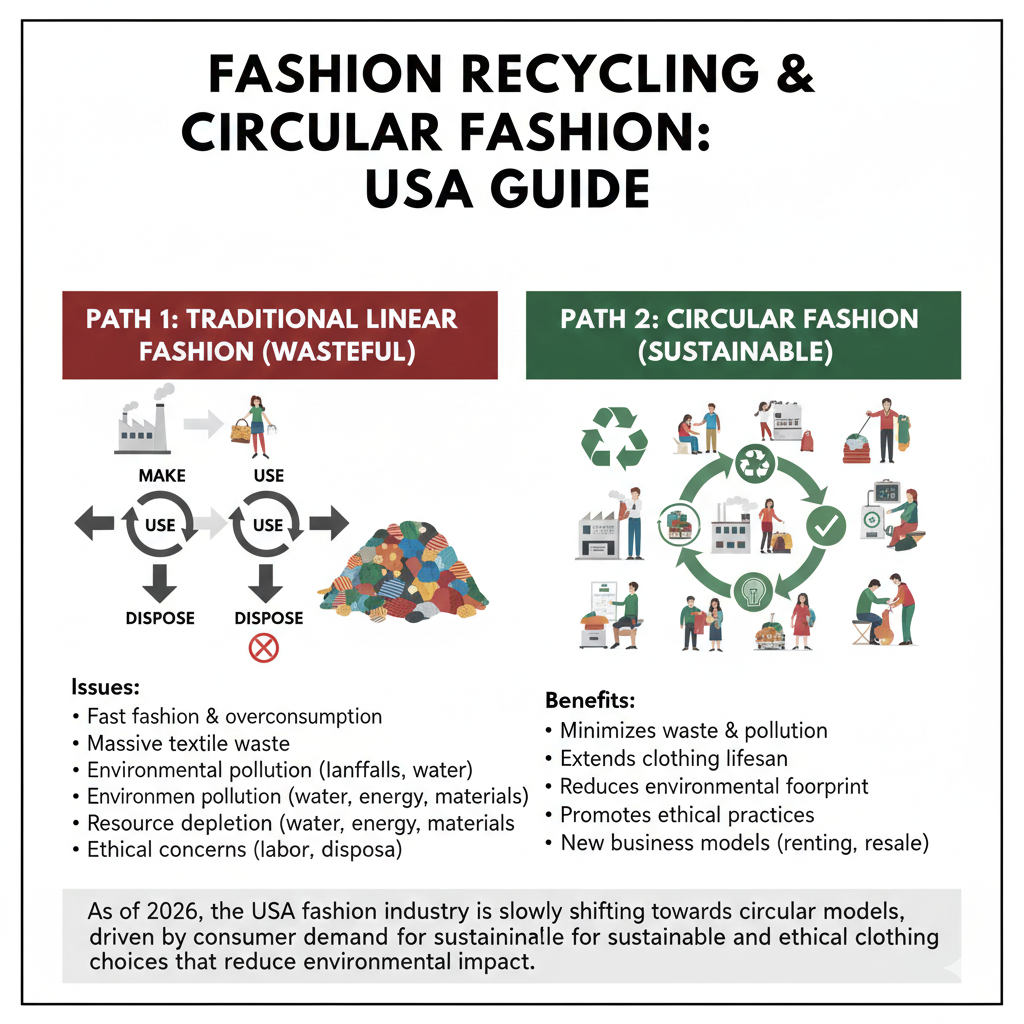
Circular fashion describes approaches that keep clothing and materials in use for longer, through design, care, repair, resale and other systems. It is an aim rather than a guarantee that every item will return as a new garment. Collection, sorting and processing all affect the outcome.
Reuse versus recycling
Reuse means another person can wear or use the item. Selling, swapping or donating suitable clothing can be forms of reuse. Ask the recipient what condition and items it accepts.
Repair might mean replacing a button, mending a seam or using a tailor. Check care instructions and the cost before deciding.
Recycling involves processing material into another product or material. A garment collected for recycling will not necessarily become a new garment; results depend on fibers, condition and processing facilities.
Check local collection rules
The US Environmental Protection Agency says textiles generally cannot go in curbside recycling and advises checking local rules. Do not put clothing in a household recycling bin unless the provider accepts it. Keep items clean and dry as required by the collector.
Why recycling can be difficult
Garments can combine fibers, dyes, trims, zippers and coatings. Collection and sorting capacity also vary. A label saying “recyclable” does not establish that a program near you can process the whole item. Ask the collector what happens to accepted textiles and whether damaged items are eligible.
What can a shopper do?
Choose items you expect to wear, follow care instructions and repair when practical. For unwanted clothing, compare local reuse and collection options before dropping it off. The guide to fashion sustainability claims explains how to assess brand programs.
A program can be useful without solving every environmental issue. Look for its scope, eligibility and evidence, and avoid assuming that a collection box guarantees recycling.
Frequently asked questions
Is donation the same as recycling? No. Donation may support reuse; the recipient determines what happens next.
Can every garment be recycled? No. Material, condition and local processing options matter.
Can clothing go in curbside recycling? Usually not. Check your local provider first.
For a related example, our shoe material claims guide discusses recycled content and end-of-life claims.



Leave a Reply