

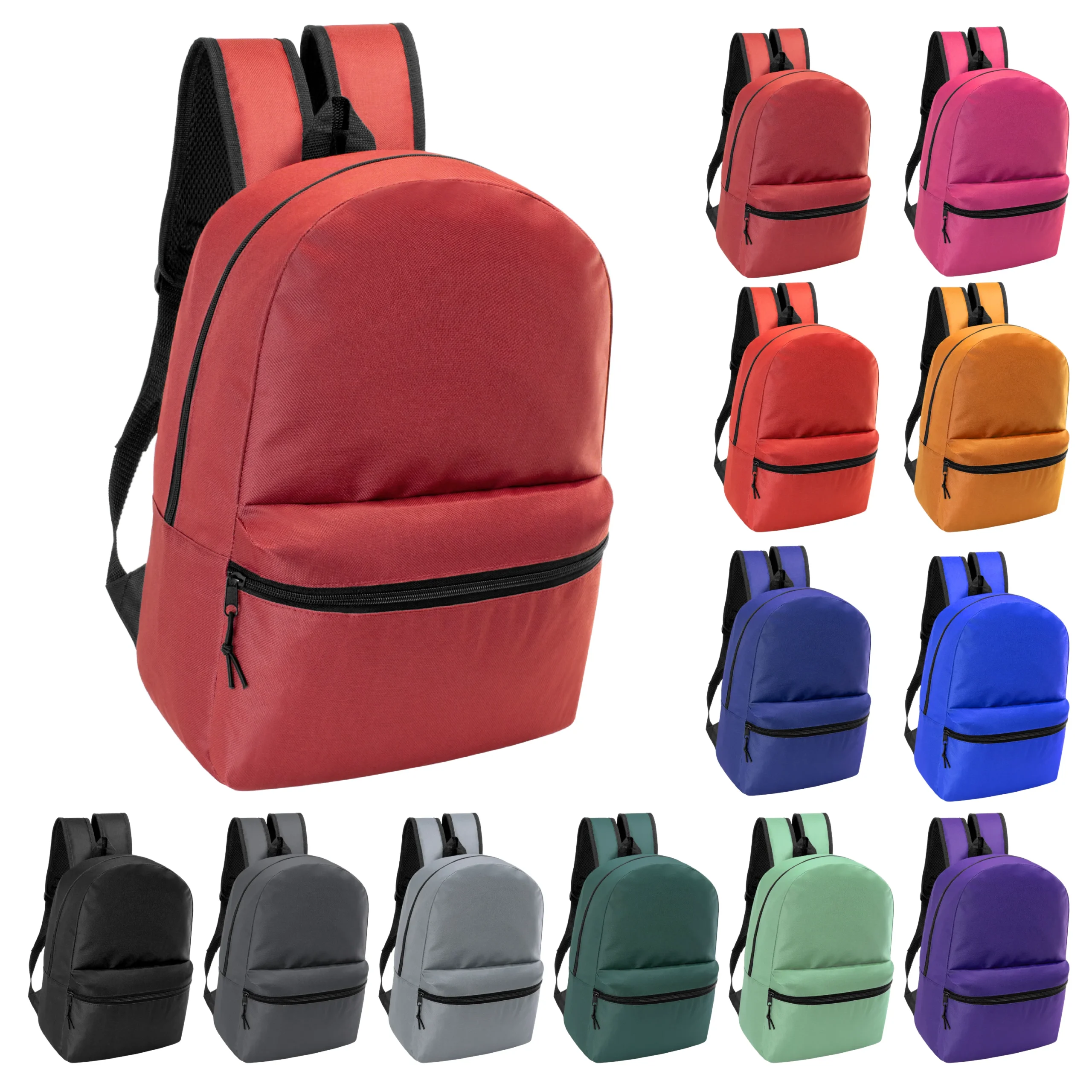
A budget backpack does not need dozens of pockets. It needs enough room for your usual contents, straps that work for you and an opening that makes everyday access easy. Start with a packing list before looking at price or advertised capacity.
This guide offers inspection and comparison steps rather than a tested ranking. A low price does not establish poor quality, and a familiar brand does not prove that a particular bag will suit your load.
Pack on paper first
List the items you carry most days: laptop and charger, books, lunch, water bottle, clothing or other essentials. Separate occasional extras from daily contents. Measure the laptop itself and include its sleeve if you use one.
Compare the bag’s compartment dimensions with those measurements. A laptop-size label alone may not describe the available opening or fit. Check that lunch and a bottle can be carried without pressing awkwardly against your electronics.
Spend on the useful features
Prioritise the carrying system, main closure and compartments you will actually use. A simple bag with good access may suit you better than a complicated organiser that consumes space. Consider the empty weight as well as the advertised volume.
For a detailed packing and access test, use the everyday backpack guide. If your main need is office equipment, our work backpack guide includes work-specific considerations.
Inspect construction closely
Check stitching around the shoulder-strap attachments, handle, zip ends and pocket edges. Open and close the main zip around corners without forcing it. Look inside for rough seams and areas where the lining catches.
Read the materials and weather-resistance description. Fabric names, denier numbers or a water-resistant finish do not by themselves establish that the whole bag is waterproof. Seams, openings and zips matter too. Plan suitable protection for items that must stay dry.
Try the loaded bag
Use a realistic load where the shop permits it and adjust both straps. Walk, turn and check access to pockets. Notice whether the bag swings, the straps slip or the back panel presses against something awkwardly. Do not overfill it just because the compartment closes.
Check the bottle pocket with your bottle and the main compartment with bulky items. A pocket that looks useful empty can become difficult to use once the bag is packed. Test the interaction between compartments, not just each one separately.
Compare the real cost
Add delivery, a needed rain cover or a separate protective sleeve to the purchase price. Read the return policy and warranty exclusions. A warranty is not evidence that every zip or lining will last for a particular number of years.
Secondhand bags are another option, but inspect attachment points, lining, zips and any damage before deciding. For trips involving flights, use the travel backpack guide and check the actual airline allowance. Choose the smallest practical bag for your normal load, rather than paying for unused space.

Leave a Reply