

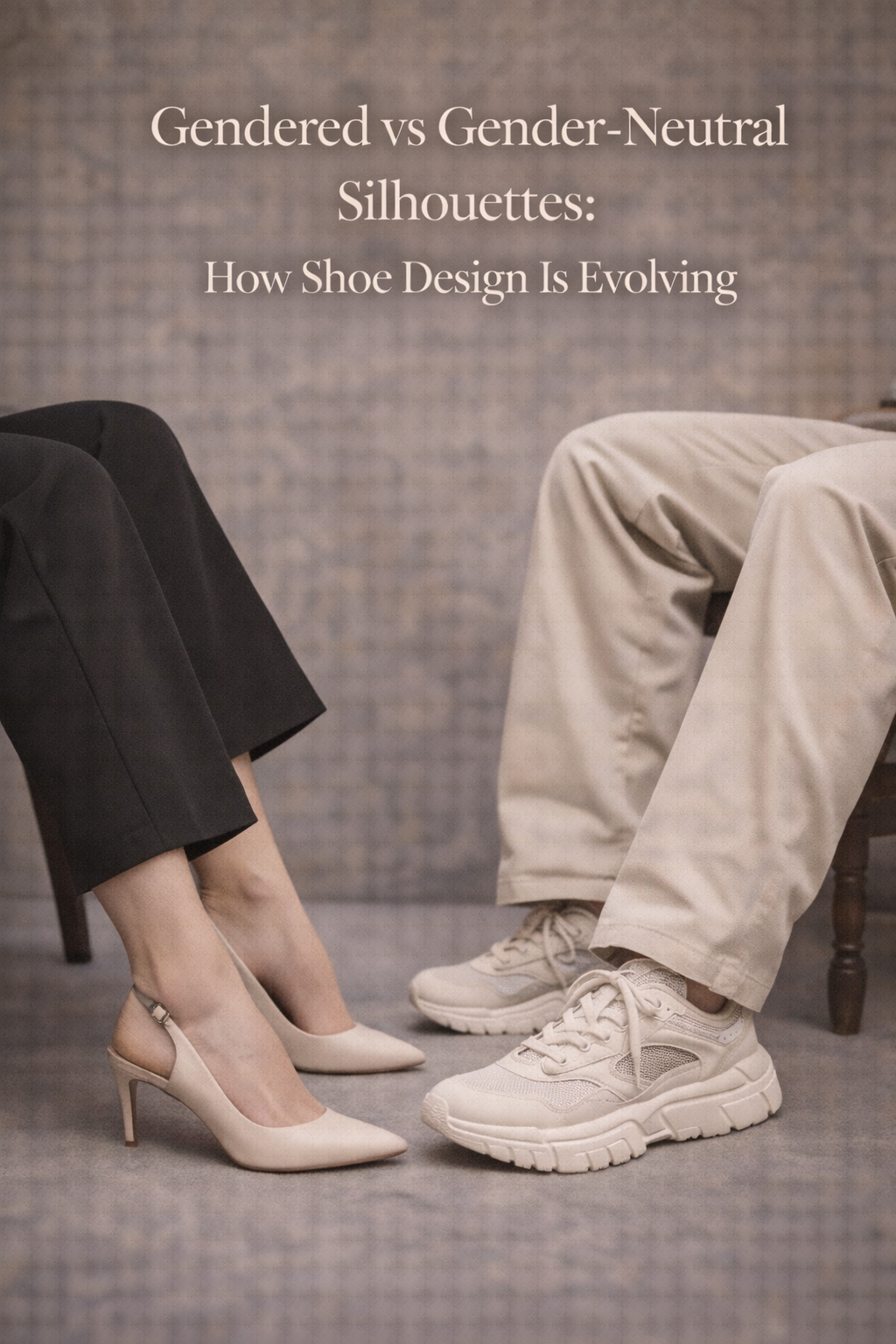
Shoe departments often separate styles by gender, but people’s feet and preferences do not fit neatly into two shapes. A shoe labeled men’s, women’s or unisex can be worth trying if it is available in your size and suits your needs. The label does not guarantee how it will fit.
Style and fit are different questions
Retailers may market certain colors, heels or shapes to particular groups. Those associations are design and merchandising choices, not rules about who can wear a style. A pointed toe, platform sole or understated sneaker can be worn by anyone who likes it and finds a comfortable fit.
A silhouette describes the outline and proportions of a shoe. Our guide to silhouettes explains the effect of the toe, sole and collar without treating any shape as belonging to one gender.
What does unisex mean?
A unisex or gender-neutral label usually indicates that a brand markets a style across gender categories. It does not mean that one width or last fits every foot. Check the available length and width, the brand’s size chart and any conversion between sizing systems. Conversions and fit can vary by manufacturer.
How to find your fit
Measure both feet if possible, including width, and try both shoes with the socks or inserts you expect to use. Look for room at the toes and a secure heel without uncomfortable pressure. Walk around in the pair; do not rely solely on the number printed inside.
The American Academy of Orthopaedic Surgeons advises choosing shoes that fit the shape of your feet and avoiding cramped toes. Its guidance is especially relevant when a style looks appealing but feels tight.
Compare the details
A lace-up may allow more adjustment over the instep, while a slip-on depends heavily on the fit of the opening and heel. Our slip-on shoe guide covers practical checks. Materials, sole feel and the intended activity matter too; read the product details and try the specific model.
If the width or size range is limited, a different model or category may offer a better match. A gender-neutral label is most useful when the retailer also provides clear measurements, inclusive sizing and a reasonable return policy.
Frequently asked questions
Are unisex shoes the same as men’s shoes? Not necessarily. Brands use the term differently, so check their size chart and measurements.
Can I shop in a different department? Yes. Choose the style and size that fit your feet and suit your plans.
Does a wide-looking shoe fit a wide foot? Not always. The shape on the outside can be misleading. Try the pair and check actual width options.
For more on how a shoe is shaped, read how shoes are designed.

Leave a Reply