

A sneaker can feel wonderfully soft when you first put it on and still rub your heel on the walk home. Another pair may feel less plush but hold your foot more securely. That is why a list of the most comfortable sneakers needs more than a favourite brand and a description of the foam.
For daily wear, start with the shape and demands of your day: the commute, time sitting or standing, weather, and dress code. The suggestions below are candidates to compare, not results from a controlled wear test or a promise that one model suits everyone.
Start with fit, then compare the cushioning
The American Academy of Orthopaedic Surgeons advises choosing shoes that fit your feet and activity, rather than relying on the size printed on a box. Its shoe-buying guidance recommends measuring both feet, accommodating the larger one, and checking fit later in the day. Do not accept pinching on the assumption that breaking in will fix it.
During an indoor try-on, notice where the shoe touches: the toes, the sides, the top of the foot, and the heel. Stand and walk in both shoes with your usual socks. A comfortable upper should not need painfully tight laces to stop your foot moving around.
Three types of daily sneaker to compare
A walking design when that is the main job
The Skechers GO WALK collection includes walking-oriented designs with different fastenings and constructions. Compare an adjustable lace-up with a fixed-lace or slip-on version if heel hold is your concern. Sharing a collection name does not make every pair fit alike.
A retro runner for casual outfits
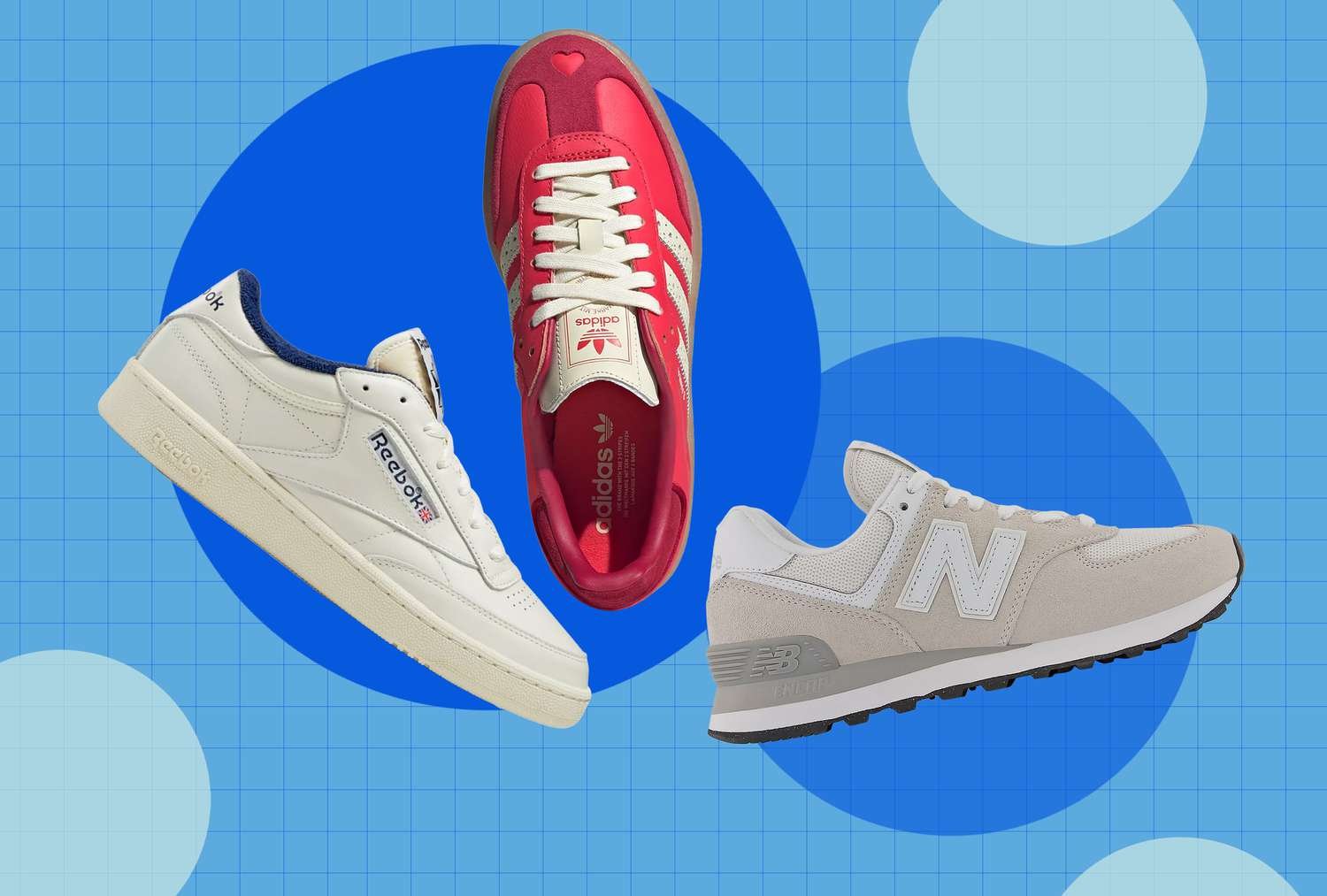
The New Balance 574 Core is one candidate if you like a retro shape for everyday clothing. Check the exact model’s sizes, widths, and material description. Its place in a casual wardrobe does not establish that it is the best choice for long-distance walking or a particular foot condition.
A court-inspired casual sneaker
The Reebok Club C family offers a different, court-inspired look. Try it beside a mesh walking shoe if you are choosing between a cleaner casual silhouette and a more athletic shape. Judge the actual fit and feel rather than assuming a leather upper or a famous model name guarantees comfort.
Use the try-on to answer specific questions
Can you move your toes without the front pressing on them? Does the heel stay comfortably seated while you walk? Is there a seam or overlay that you keep noticing? Does the shoe stay secure without gripping your toes? Write down the problem in plain language instead of deciding that you need a particular technology before you have compared the pairs.
Try both the ordinary and alternative width where the model offers them. Increasing length is not a universal solution to a width problem. New Balance’s size and width guide distinguishes those measurements, which is more useful than a blanket instruction to size up in every sneaker.
What a comfort guide cannot diagnose
A low arch, a high arch, or an uncomfortable afternoon does not let this article prescribe a shoe. It also cannot promise immediate relief from heel pain. If pain persists, or you have a diagnosed condition or prescribed orthotic, discuss footwear with the clinician who knows your needs. A product category is not a substitute for that assessment.
Balance comfort with what you will actually wear
A shoe left in the cupboard has little practical value. Check whether the pair suits your work rules and usual clothes, then compare its fit with another realistic option. Do not buy a second pair merely because a list calls it essential. If cost is the next decision, use our guide to sneaker value and cost per wear.
There is no defensible percentage that turns a mid-priced shoe into “90% of the comfort” of an expensive one. Comfort is not measured here, and a higher price does not settle it. For a smaller shortlist with budget checks, see the budget sneaker buying guide. Before an online order, confirm the retailer’s current return terms and keep the pair in the condition required while you decide.
When to reassess a pair you already own
Look for changes in fit, uneven wear, damaged fastening, or a sole that no longer feels suitable for its use. There is no fixed replacement month that applies to every daily sneaker. How often, where, and how you wear it all matter. Compare how the pair feels now with how it felt when it fitted well, and address a persistent problem rather than treating a calendar date as the answer.


Leave a Reply