

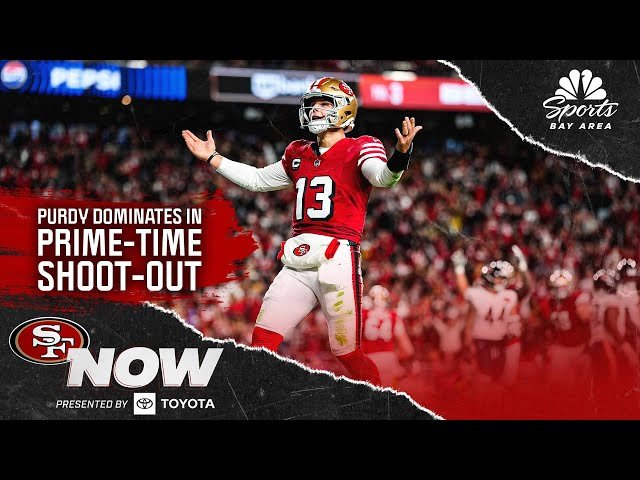
When the Chicago Bears and San Francisco 49ers stepped onto the field this past Sunday, expectations were mixed. Fans knew the 49ers were contenders, and they knew the Bears were rebuilding. What they didn’t expect was a full-blown offensive explosion that would leave statisticians scrambling and fantasy football managers cheering. In a league where defenses have increasingly taken center stage, this matchup was a refreshing reminder of just how thrilling an NFL shootout can be.
The 49ers ultimately prevailed, largely thanks to the surgical precision of quarterback Brock Purdy, who continues to defy the “game manager” label with elite production. But the story wasn’t just about San Francisco’s dominance. On the other sideline, the Bears flashed genuine promise, led by a crop of rookies who proved they belong on the big stage. It was a game of momentum swings, big plays, and glimpses into the future for both franchises.
For San Francisco, it was business as usual—dominating through efficiency and scheme. For Chicago, it was a “moral victory” in the truest sense, showing that their young core is ready to compete sooner rather than later. Let’s break down exactly what happened in this high-octane clash, starting with the man under center for the Niners.
Brock Purdy Takes Control for the 49ers
If there were still doubters questioning Brock Purdy’s ability to elevate the 49ers’ offense, this game should serve as a definitive rebuttal. From the opening drive, Purdy looked comfortable, composed, and lethal. He wasn’t just checking down to running backs; he was pushing the ball downfield, fitting passes into tight windows, and manipulating the Bears’ secondary with his eyes.
Finishing with over 300 passing yards and multiple touchdowns, Purdy’s stat line was impressive, but the efficiency was even more telling. He completed a high percentage of his passes, avoiding turnover-worthy plays while maximizing yards after the catch (YAC) opportunities for his playmakers. When the pocket collapsed—which happened frequently against a hungry Bears front—Purdy used his underrated mobility to extend plays, finding receivers late in the down for critical gains.
This performance was a masterclass in modern quarterbacking. He identified mismatches pre-snap, audibled into favorable runs, and when the passing lanes opened up, he delivered strikes with timing and anticipation. Critics often point to Kyle Shanahan’s system as the reason for Purdy’s success, but games like this highlight individual talent. The system creates the opening; the quarterback still has to make the throw. Purdy made every single one count against Chicago.
Offensive Fireworks: A Game Turns Into a Shootout
Defense, for much of this afternoon, was optional. What started as a standard competitive game quickly devolved—or evolved, depending on your preference—into a track meet. Both offenses seemed to move the ball at will, trading touchdowns like heavyweight boxers trading punches.
The scoring pace was frantic. Every time the 49ers seemed poised to pull away, the Bears answered. Every time Chicago clawed back within striking distance, San Francisco found another gear. The combined point total soared past the betting over/under lines before the fourth quarter even began.
Why did defenses struggle so mightily? For one, the play-calling on both sides was aggressive. The 49ers attacked the seams of the Bears’ zone defense relentlessly. The Bears, conversely, used tempo and misdirection to keep the 49ers’ formidable pass rush off balance. Tackling was also a major issue. In open space, ball carriers for both teams were making defenders miss, turning short dump-offs into 20-yard gains. It was a perfect storm of offensive execution meeting defensive lapses, resulting in one of the most entertaining viewing experiences of the NFL season so far.
Bears Rookie Breakouts Steal Attention
While the scoreboard ultimately favored San Francisco, the long-term outlook for Chicago got a massive boost thanks to their rookie class. Rebuilds are painful, but they are made bearable by moments like these—where young talent flashes potential star power.
Luther Burden III: The New Weapon
Luther Burden III was electric. Drafted to be a dynamic playmaker, he showed exactly why the Bears invested high draft capital in him. His route running was crisp, creating separation against seasoned NFL cornerbacks. But it was his ability with the ball in his hands that truly stood out. On one screen pass, he weaved through three defenders for a touchdown that looked more like a video game highlight than a Sunday afternoon play. He provides the kind of explosive element the Bears’ offense has lacked for years.
Colston Loveland: The Safety Valve
Tight end Colston Loveland also announced his arrival. In the chaos of a shootout, a quarterback needs a safety valve, and Loveland was exactly that. He consistently found soft spots in the 49ers’ coverage, converting critical third downs and using his big frame to box out defenders in the red zone. His chemistry with the quarterback looked years ahead of schedule, suggesting the Bears may have found their tight end of the future.
These performances matter. They signal that the front office’s talent evaluation is working and that the foundational pieces for a contending team are being laid, brick by brick.
Bears Defense: What Went Wrong?
You can’t discuss a high-scoring loss without addressing the other side of the ball. The Bears’ defense, which had shown signs of improvement in previous weeks, took a significant step back against San Francisco. So, what went wrong?
The primary issue was communication. On several of the 49ers’ biggest plays, Bears defenders looked confused. Safeties and cornerbacks were pointing fingers after the snap, indicating blown coverages where receivers were left wide open. Against a play-caller like Shanahan and a quarterback like Purdy, mental errors are fatal. They exploit confusion ruthlessly, and that’s exactly what happened.
Additionally, the pass rush was neutralized. While they generated some pressure, they rarely finished the play with a sack. Purdy was able to step up or roll out, buying those crucial extra seconds. On the back end, tackling was suspect. The Bears allowed far too many yards after contact, turning modest gains into first downs. To compete with the NFC’s elite, Chicago’s defense needs to find consistency and discipline, two things that were sorely lacking in this matchup.
Game-Defining Moments & Key Plays
In a game filled with scoring, a few specific sequences swung the outcome decisively in San Francisco’s favor.
The Momentum-Killing Sack
Midway through the third quarter, with the Bears driving and down by only a score, the 49ers’ defensive line finally broke through. A perfectly timed stunt confused the Bears’ offensive line, resulting in a sack that forced a punt. It stalled Chicago’s momentum just as they were threatening to take the lead.
Purdy’s Third-Down Dagger
Late in the fourth quarter, the Bears needed a stop to get the ball back one last time. Facing a 3rd and 8, Purdy dropped back, faced pressure, and delivered a laser to the sideline for a 12-yard gain. It moved the chains, kept the clock running, and effectively iced the game. It was a big-time throw in a big-time moment.
The Red Zone Interception
Earlier in the game, the Bears had a golden opportunity to match a 49ers touchdown but forced a throw into double coverage in the end zone. The resulting interception took points off the board—points that would have been critical in the final tally.
What This Game Means for Both Teams
The NFL season is a marathon, but individual games often serve as mile markers. This clash told us a lot about where the 49ers and Bears stand.
For the San Francisco 49ers, this was a reaffirmation of their status as Super Bowl contenders. They went on the road (or faced a tough challenge at home) and won with offense. They proved they don’t always need their defense to be perfect to win. The chemistry between Purdy and his weapons is at an all-time high, and they look like a team peaking at the right time.
For the Chicago Bears, the loss stings, but the context is encouraging. They went toe-to-toe with one of the league’s heavyweights and didn’t blink. The offensive production is a sign that the scheme is working and the young players are developing. The focus now shifts to fixing the defensive lapses. If they can tighten up on that side of the ball while maintaining this offensive output, they will be a dangerous team in the second half of the season and beyond.
Why Bears vs. 49ers Is Trending
It wasn’t just the score that had social media buzzing; it was the narratives.
The “Purdy is Elite” Conversation
Twitter (now X) was ablaze with clips of Purdy’s throws. The narrative is shifting from him being a “system quarterback” to a legitimate MVP candidate. Fans and analysts alike are recognizing that his processing speed and accuracy are elite traits, regardless of the system.
Rookie Hype
Fantasy football communities and draft analysts were heavily focused on Burden and Loveland. “Dynasty” fantasy managers are spiking the football on their draft picks, while Bears fans are circulating highlight reels of their new stars.
The Entertainment Factor
Simply put, the NFL needs games like this. After a slew of low-scoring, defensive struggles in prime time, a good old-fashioned shootout captures the casual fan’s attention. The “RedZone” channel rarely cut away from this game, feeding the national interest.
Frequently Asked Questions
How did Brock Purdy perform vs the Bears?
Brock Purdy had a stellar outing, throwing for over 300 yards and multiple touchdowns. He demonstrated excellent pocket presence, accuracy, and decision-making, effectively dismantling the Bears’ defense with high efficiency.
Which Bears rookies stood out against the 49ers?
Wide receiver Luther Burden III and tight end Colston Loveland were the standout rookies for Chicago. Burden showcased his explosive playmaking ability with a highlight-reel touchdown, while Loveland proved to be a reliable target on third downs and in the red zone.
Why was Bears vs 49ers a high-scoring game?
The high score was a result of aggressive offensive play-calling from both teams combined with defensive struggles. The 49ers executed their scheme perfectly, while the Bears used tempo to catch the Niners off guard. Missed tackles and blown coverages on both sides also contributed to the offensive explosion.
Is Brock Purdy proving critics wrong?
Yes. By consistently performing at a high level against different defensive looks and carrying the offense in shootouts, Purdy is shedding the “game manager” label. His ability to make off-schedule plays and deliver accurate throws downfield is silencing those who attributed his success solely to his coach or teammates.
The Future Looks Bright (and High-Scoring)
The final whistle may have signaled a loss for Chicago, but the game was a win for football fans everywhere. We witnessed a quarterback operating at the peak of his powers in Brock Purdy, and we saw the first sparks of what could be an inferno of talent in Chicago.
The 49ers march on, eyes fixed firmly on a championship. The Bears head back to the drawing board, not to erase what happened, but to build on it. If this game was any indication, the next time these two teams meet, we might need an even bigger scoreboard.
Want to stay updated on the latest NFL analysis and rookie breakdowns? Subscribe to our newsletter today and never miss a play!
Leave a Reply