

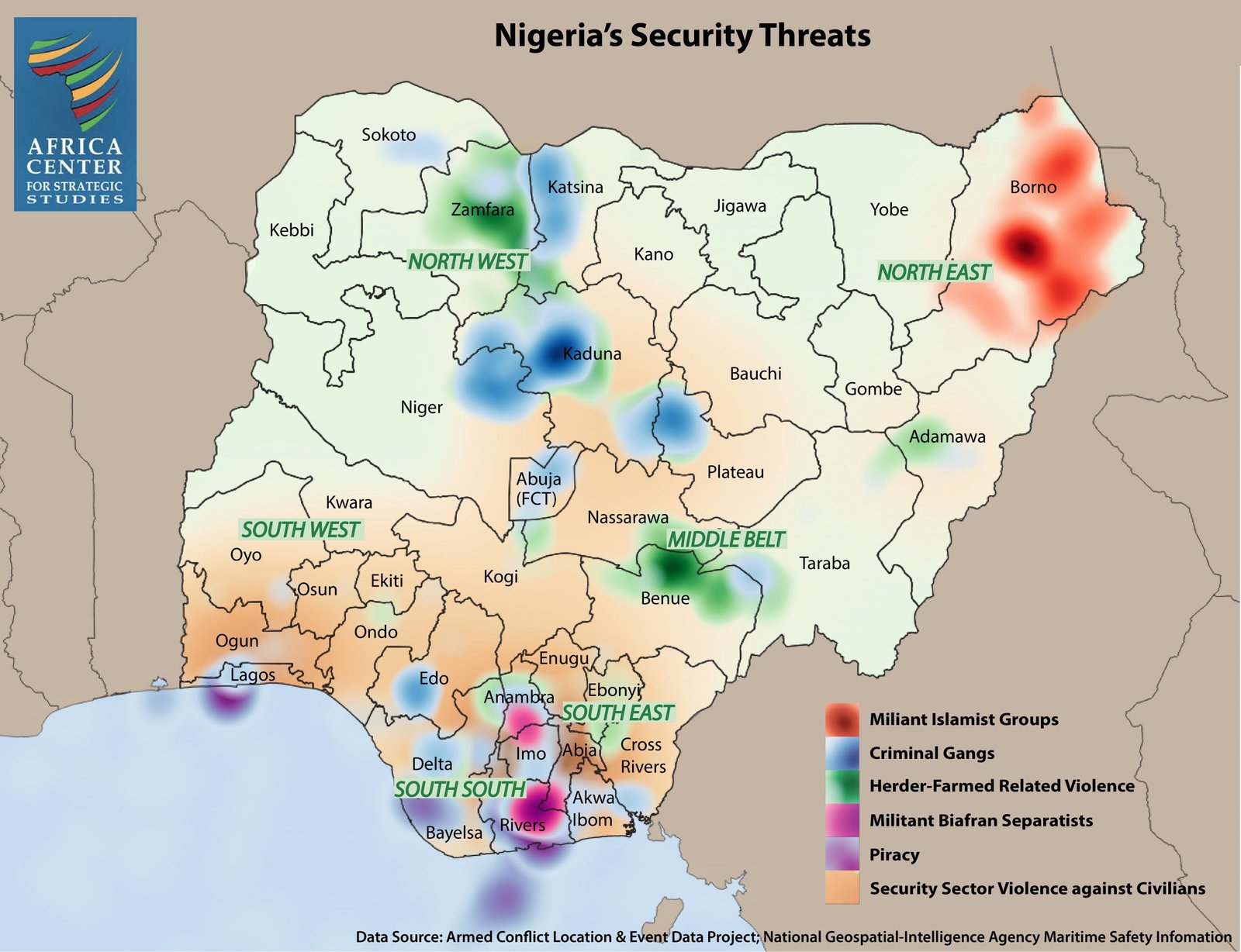
Nigeria’s security challenges involve different actors, regions and types of violence. Insurgency in the northeast, armed banditry and kidnapping in the northwest, and local communal disputes cannot be explained as one uniform conflict.
The UN Office on Drugs and Crime’s Nigeria programme describes that multidimensional picture. It identifies organised crime, criminal-justice capacity, recruitment pressures and local grievances among the concerns requiring different responses.
Separate the actor from the community
Boko Haram and Islamic State-linked armed groups are not interchangeable with Nigeria’s Muslim population. Nor should an attack involving individuals described as herders become evidence against every member of an ethnic or occupational group.
A credible incident account needs a location, date and basis for identifying the perpetrators. A claimed affiliation should remain attributed until there is supporting evidence. The Sokoto strike reference illustrates why one operation announcement cannot explain every attack across the country.
Several pressures can reinforce each other
Kidnapping can generate income for an armed group. Weak access to justice can leave grievances unresolved. Displacement can interrupt farming, schooling and employment. These mechanisms can interact, but listing them does not prove that each caused every incident.
Climate and resource pressure may affect local conditions, while land rules, political decisions and armed actors also matter. Reducing a specific conflict to weather or religion alone can obscure the evidence needed to understand it.
Follow the civilian consequences
The World Food Programme’s January 2026 warning described how renewed violence, displacement and limited assistance threatened livelihoods in northern Nigeria. That humanitarian perspective complements security reporting without supplying a complete national crime database.
A peacebuilding claim should therefore be assessed through more than the number of operations announced. Protection of civilians, access to services, justice and durable livelihood recovery are relevant outcomes too.
This is background analysis, not a current route-safety assessment or a claim that every community shares the same experience. The original’s sweeping historical and identity-based explanations have been narrowed to avoid turning a complex security problem into collective blame.



Leave a Reply