

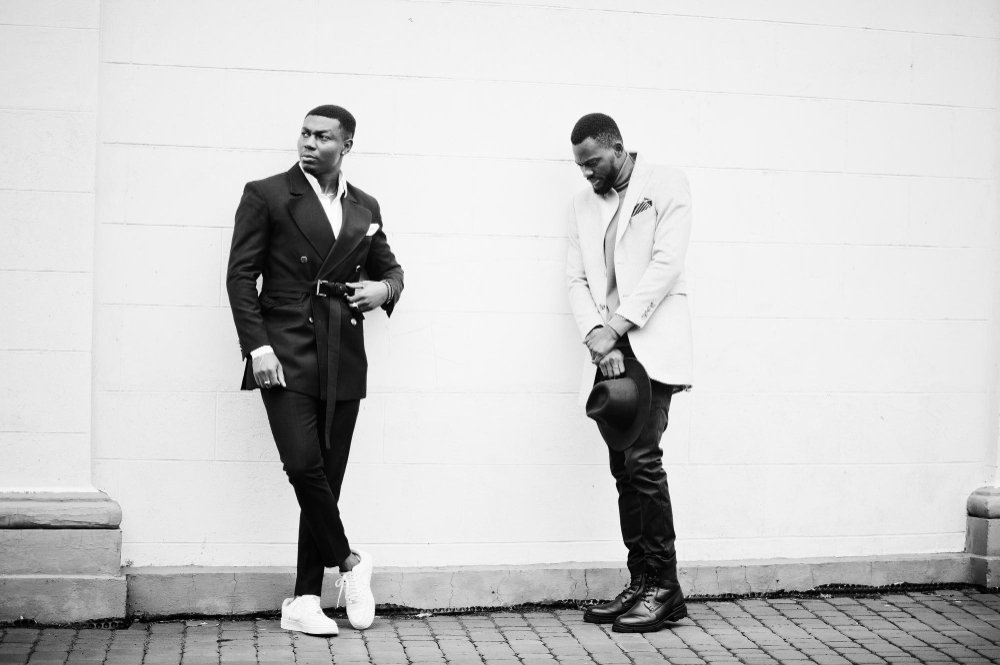
A structured jacket or a straight trouser can be useful without belonging to a rigid idea of menswear or womenswear. Choose the shape you like and fit the actual garment to your body, layers and plans.
This guide focuses on practical tailoring choices. A sharp outline does not require a tight waist, exaggerated shoulder or a rule about which bodies should wear it.
Start with the jacket’s movement
Try the jacket over the top you expect to wear. Reach forward, bend your elbows and sit down. Check the shoulder, upper arm and back for pulling. Fasten it if you intend to wear it closed, then compare the fit open.
Sleeve length and the jacket’s overall length change its relationship with trousers, skirts and dresses. Look at the whole combination with your usual shoes. A shorter jacket and a longer one can both work; the useful test is whether you like the result and can move comfortably.
Check trousers beyond the standing view
Sit and bend to assess rise, waistband, seat and thigh room. Check pockets with the items you normally carry. A pleat, straight leg or wide leg is a design choice, not a guarantee of comfort.
Try hems with the footwear you expect to use. If you need alterations, ask about feasibility and cost before buying. A different cut may be more practical than substantial changes to a garment that does not fit in several areas.
Use one tailored piece at a time
A jacket over jeans and a simple top offers one starting point. Tailored trousers with a knit or casual shirt offer another. A full suit can be useful for some settings, but it is not the only way to wear these pieces.
For office combinations, see the workwear outfit guide. Match the workplace’s requirements rather than assuming a jacket makes every outfit appropriate.
Compare fabric and care
Handle the finished garment where possible. Weight, lining, weave and construction matter alongside fibre content. Check that a lining does not restrict a jacket that otherwise feels roomy, and assess opacity where relevant.
Read care instructions before committing to frequent use. Include cleaning and alterations in the total price. A higher price or a tailored label does not promise a particular lifespan or prove an environmental benefit.
Build from the clothes you own
Lay out two combinations before adding another piece. Photograph the ones you like so they are easy to repeat. The tailoring and casual clothing guide gives more examples you can adapt across department labels.
If you are using an inspiration photo, borrow the feature you like rather than the entire look. The style interpretation guide explains that process. Tailoring is most useful when the fit and routine work together, leaving room for your own preferences.



Leave a Reply