

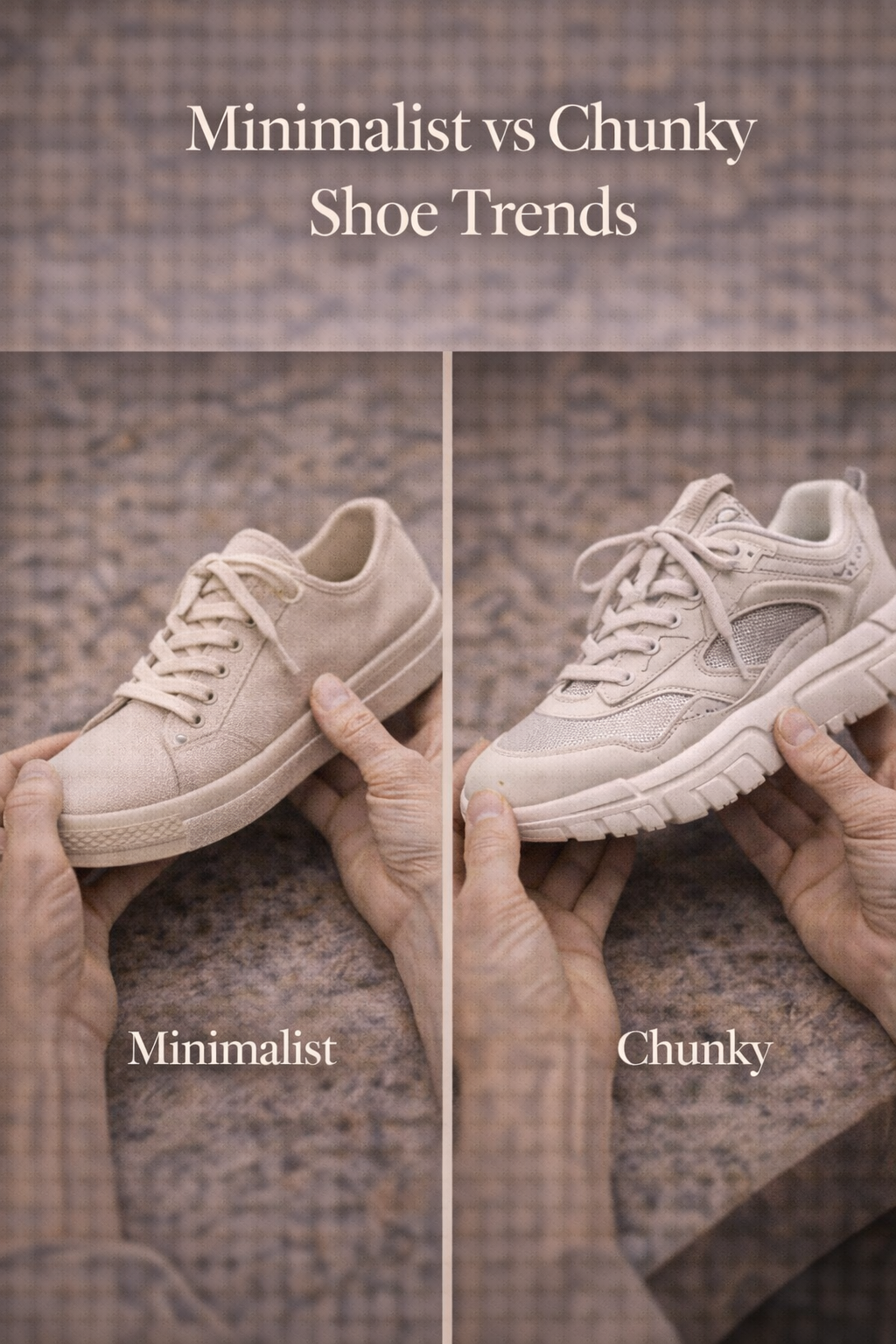
Fashion is a pendulum that swings between extremes. Nowhere is this more evident than in the footwear industry, where trends oscillate between the barely-there and the impossible-to-miss. One year, the market is dominated by sleek, low-profile sneakers that promise a “second skin” feel. The next, sidewalks are crowded with oversized, thick-soled silhouettes that look like they were pulled straight from a 1990s sci-fi movie.
This push and pull between minimalist and chunky shoe trends is about more than just aesthetics. It represents a fundamental divergence in design philosophy, comfort preferences, and cultural identity. For the consumer, navigating these opposing forces can be confusing. Do you prioritize the ground feel and natural mechanics of a minimalist shoe, or do you opt for the cloud-like cushioning and bold statement of a maximalist design?
Understanding these trends requires looking at the history of footwear. Fashion cycles often react to what came before. The rise of the “Dad shoe” and chunky platforms was a direct rebellion against the streamlined, knit-upper era that preceded it. Yet, both styles continue to coexist, serving different needs for different people. By analyzing the shape, comfort, and construction of these two heavyweights, we can better understand how they influence not just our wardrobes, but how we move through the world.
[See also: What Is a Shoe Silhouette]
[See also: Evolution of Shoes]
What Are Minimalist Shoes?
The minimalist shoe movement is rooted in the philosophy of “less is more.” These designs strip away the non-essential, removing layers of foam, plastic shanks, and heavy upper materials to create a product that mimics the experience of walking barefoot while still providing protection from the elements.
Thin Soles and Lightweight Structure
The defining feature of a minimalist shoe is its stack height—the amount of material between your foot and the ground. Minimalist footwear features ultra-thin soles, often ranging from 3mm to 8mm. This lack of material significantly reduces the weight of the shoe, often making them feel imperceptible on the foot. The goal is to reduce the energy cost of movement; a lighter shoe requires less effort to lift with every step.
[Link: Understanding Shoe Soles and Midsoles]
Natural Movement Philosophy
Designers of minimalist footwear prioritize biomechanics over cushioning. The theory is that the human foot, with its complex network of 26 bones and over 100 muscles, is designed to absorb shock and provide stability without artificial aid. These shoes typically feature a “zero drop,” meaning the heel and the forefoot are at the same height. This encourages a mid-foot or forefoot strike when running, rather than a heavy heel strike, promoting better posture and strengthening the intrinsic muscles of the feet and lower legs.
Clean and Simple Design Language
Visually, minimalist shoes are understated. They avoid aggressive branding, neon overlays, or complex paneling. The upper is often made of a single piece of material—usually a breathable knit or mesh—that hugs the foot like a sock. This clean aesthetic appeals to those who view footwear as a functional tool rather than a loud accessory. It allows the shoe to blend seamlessly into an outfit rather than dominating it, making them a popular choice for those who subscribe to a “capsule wardrobe” mentality.
What Are Chunky Shoes?
On the other end of the spectrum lies the chunky shoe. Often referred to as “maximalist,” “dad shoes,” or “platforms,” these designs are unapologetically large. They occupy physical and visual space, utilizing exaggeration as a primary design element.
Thick Midsoles and Platform Designs
If minimalist shoes try to disappear, chunky shoes try to expand. The most recognizable feature is the oversized midsole. Stack heights here can range from 30mm to over 50mm. This isn’t just about height; it is about width. The footprint of a chunky shoe is often wider than the foot itself, creating a stable, albeit bulky, platform. This trend has roots in the orthopedics of the past but has been repurposed for high fashion.
Bold Proportions and Streetwear Influence
Chunky shoes are a staple of modern streetwear. The design language relies on clashing textures, exaggerated lines, and multiple layers of material. A single shoe might feature mesh, leather, suede, and plastic TPU cages all stitched together. This complexity creates depth and shadow, making the shoe the focal point of any ensemble. The silhouette is deliberately disruptive, challenging traditional notions of what a “sleek” or “flattering” shoe should look like.
Cushioning Technology Role
While the look is a major selling point, the feel is equally important. Chunky shoes are often synonymous with maximalist cushioning. Brands utilize massive slabs of EVA foam or proprietary air units to create a “walking on clouds” sensation. This aims to completely isolate the foot from the impact of the ground, offering a plush ride that appeals to ultra-runners and fashionistas alike.
[See also: Cushioning Technologies Explained]
Minimalist vs Chunky: Key Differences
When placing these two silhouettes side-by-side, the contrasts become stark. It is not just about how they look, but how they function and how they make the wearer feel.
Comfort and Cushioning
Comfort is subjective. For the minimalist wearer, comfort means freedom—the ability for toes to splay and the foot to flex without restriction. They find the lack of cushioning liberating, as it allows for sensory feedback from the ground. For the chunky shoe enthusiast, comfort is synonymous with protection and softness. They prefer the squishy, shock-absorbing feel that dampens the harshness of concrete pavements.
Style and Visual Identity
Minimalist shoes suggest a style that is precise, efficient, and modern. They pair well with tailored trousers and athletic wear, offering a streamlined silhouette. Chunky shoes, conversely, offer a sense of irony and nostalgia. They pair well with wide-leg pants and oversized hoodies, playing with proportion and volume.
[Link: Shoe Silhouettes Explained]
Performance vs Fashion Appeal
While both styles have performance roots (minimalist for natural running, maximalist for endurance recovery), their current market dominance is driven differently. Minimalist shoes maintain a niche but loyal following in the fitness and wellness communities. Chunky shoes, while popular in running circles (think Hoka), have seen their biggest explosion in the lifestyle and luxury fashion sectors, driven by runway trends.
Weight and Flexibility
This is perhaps the most quantifiable difference. Minimalist shoes are incredibly flexible; you can often roll them into a ball. Chunky shoes are rigid. The thick midsole prevents the foot from flexing naturally, often utilizing a “rocker” shape to help roll the foot forward since the shoe itself won’t bend.
How Construction Shapes Minimalist and Chunky Designs
The visual difference between these shoes starts deep within the manufacturing process. The way a shoe is put together—the lasting, the materials, and the assembly—dictates whether it ends up sleek or substantial.
Lasting Methods
“Lasting” is the process of pulling the upper material over a foot-shaped mold (the last). Minimalist shoes often use “slip lasting,” where the upper is sewn into a sock-like shape before being attached to the sole. This allows for maximum flexibility and a soft internal feel.
Chunky shoes frequently use “board lasting.” The upper is pulled tight and glued to a stiff board at the bottom of the shoe before the sole is attached. This provides the structural integrity needed to support the heavy, thick midsole, but it results in a much stiffer ride.
[See also: Lasting Process in Shoemaking]
Material Choices
Minimalist designs rely on advanced synthetics like high-tensile knits that provide structure without weight. They minimize overlays to keep the profile low. Chunky shoes are material-heavy. They layer leather over mesh, add foam padding to the tongue and collar, and use heavy rubber outsoles for durability and visual bulk.
Glue vs Stitch Construction
To keep weight down, minimalist shoes often rely on heat-fused overlays (gluing materials together) rather than stitching. This creates a seamless look. Chunky shoes often celebrate the stitch. You will frequently see heavy stitching lines holding the multiple layers together, adding to the industrial, rugged aesthetic of the shoe.
[See also: Glue vs Stitch Construction]
Cultural Meaning Behind Minimalist vs Chunky Trends
Shoes are rarely just footwear; they are cultural signifiers. The choice between a barely-there sneaker and a massive platform says something about how the wearer views themselves and their place in society.
Minimalism in footwear often aligns with a broader lifestyle of mindfulness and utility. It signals a rejection of excess. The wearer might value biomechanics, health, and efficiency over trends. It’s a “quiet confidence” approach to dressing, popularized by tech moguls and wellness influencers who want their clothing to eliminate friction from their lives.
Chunky sneakers, however, are loud fashion statements. They emerged heavily in the “ugly fashion” trend, which challenged conventional beauty standards. Wearing a bulky, arguably “clunky” shoe is a move of confidence—it shows the wearer is knowledgeable about current trends and isn’t afraid to take up space. Social media platforms like Instagram and TikTok fueled this fire, as the bold shapes of chunky shoes photograph well and stand out on small phone screens in a way that subtle minimalist shoes do not.
[Read Here: The Psychology of Sneaker Culture and Modern Identity]
Choosing Between Minimalist and Chunky Shoes
Deciding which camp to join—or whether to keep a foot in both—depends on your specific needs.
Everyday Lifestyle Needs
If you have a job that requires standing still for long periods (like a barista or security guard), the thick cushioning of a chunky shoe can reduce fatigue. However, if you are constantly moving, walking, and want to strengthen your feet, transitioning to a minimalist shoe for daily wear can be beneficial for your posture and foot health.
[Link: How to Choose the Right Shoes for Your Lifestyle]
Athletic Performance
For lifting weights at the gym, minimalist is generally superior. You need a flat, stable base to push against, and compressing a thick foam sole can be dangerous under heavy loads. For long-distance running on pavement, the answer is mixed. Some runners swear by the natural gait of minimalist shoes to prevent injury, while others need the impact protection of maximalist, chunky runners to save their joints.
Fashion Expression
Look at your wardrobe. If you prefer skinny jeans or leggings, a chunky shoe can sometimes look disproportionately large (though this is a look some aim for). If you wear wide-leg trousers or baggy cargo pants, a minimalist shoe might get lost under the hem, whereas a chunky shoe holds its own and balances the outfit’s volume.
The Future of Shoe Silhouettes and Trends
Where do we go from here? As with all fashion, synthesis usually follows antithesis. We are beginning to see the emergence of hybrid silhouettes.
Designers are using new technology to create shoes that look chunky but feel minimalist. Advances in supercritical foams allow for massive midsoles that weigh next to nothing. This means you can get the “look” of a chunky sneaker without the heavy, brick-like feeling on your foot.
Sustainability is also driving a shift. As brands look to reduce waste, the “less is more” construction of minimalist shoes is appealing. However, 3D printing and AI-generated designs are allowing for wild, organic shapes that fit the “chunky” aesthetic but are made from single pieces of recyclable material. The future likely holds a blend of both: visually bold shoes that are anatomically respectful of the foot.
[Read Here: The Future of Shoes: Technology & Innovation]
Why Both Trends Will Continue to Coexist
The battle between minimalist and chunky shoes isn’t one that will have a clear winner. Instead, the market has expanded to accommodate both. We have learned that “comfort” is not a singular concept; it changes based on the activity and the individual.
We need the minimalist shoe to remind us of our natural mechanics and to offer a sleek, versatile option for daily life. We need the chunky shoe to push the boundaries of design, offer maximum protection, and allow for bold self-expression. Ultimately, the best shoe silhouette is the one that supports your lifestyle—whether that means feeling the ground beneath your toes or floating inches above it.
Leave a Reply