

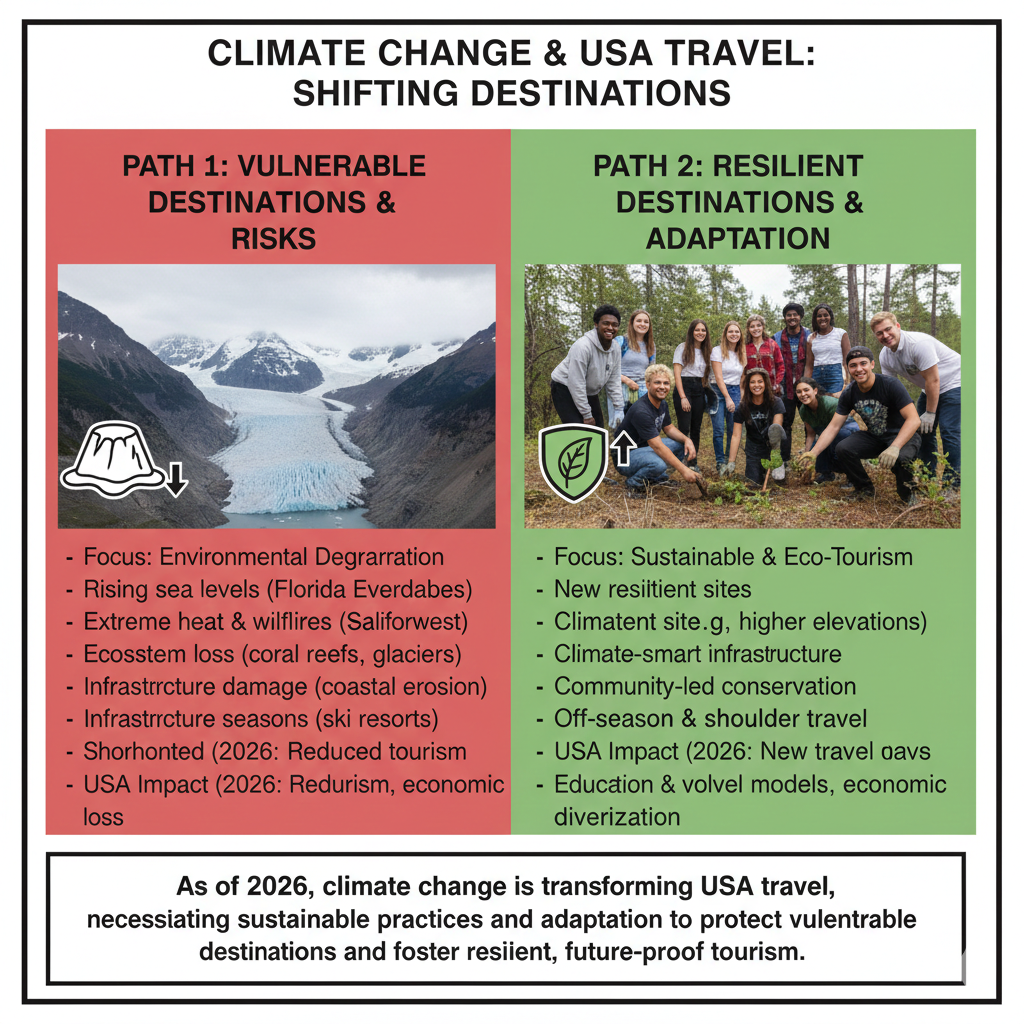
Climate change can affect the conditions in which a destination operates, but a long-term trend is not a forecast for your booking dates. A useful travel plan separates climate context from current weather, access and safety information.
This guide focuses on that distinction. It does not attribute every storm, closure or disappointing snow day to climate change, or predict which destination will be safe for a particular visit.
Understand the long-term context
A 2025 review of climate change and US public-land visits discusses effects involving heat, snowpack, wildfire and smoke, flooding and other factors. It also identifies gaps in the research. The findings describe a range of influences rather than one identical outcome everywhere.
Use such research to understand why conditions and operating seasons may change. Do not turn a broad projection into an exact date when a particular activity will no longer be possible.
Check the specific destination
Read current notices from the park, attraction, transport operator or accommodation involved. Confirm access, operating arrangements and any restrictions that matter to the planned activity. A booking confirmation does not establish that every nearby route or facility is open.
The National Park Service’s recreation and climate information provides examples of changing recreation conditions. For the actual visit, use the relevant park’s current alerts as well as official weather and local guidance.
Compare options before committing
Decide which part of the trip depends on a particular condition, such as snow, an outdoor route or a boat service. Read what happens if that element cannot operate. Avoid assuming the provider will refund unrelated bookings.
The planning mistakes checklist helps identify dependencies. A backup indoor activity may be useful, but it is not a reason to ignore an official closure or warning.
Read flexibility and insurance precisely
Check cancellation deadlines and any charges for changing dates. A flexible label can have conditions, so retain the actual terms that influenced the purchase.
The travel-insurance explanation distinguishes coverage types and exclusions. Do not assume a policy covers any event described as weather-related or that buying after a known event provides the same cover as buying earlier.
Review conditions close to departure
Use current official information rather than a static destination article for operational decisions. Recheck the route and essential bookings when conditions change, and follow closures and instructions from the relevant authorities.
If you prefer a plan with fewer moves, the slow-travel guide offers one approach. Climate context can inform questions and flexibility, while the decision about a specific day still needs timely, local information.


Leave a Reply