

Cricket was never the same after April 18, 2008. The sport, traditionally known for its leisurely five-day test matches and standard one-day internationals, experienced a seismic shift. The Indian Premier League (IPL) burst onto the scene, bringing a neon-lit, adrenaline-fueled spectacle that merged top-tier athletic competition with massive entertainment value.
Fans around the globe tuned in to watch the greatest cricketers share the same locker rooms, wearing brightly colored jerseys and playing under stadium floodlights. It was a bold experiment. Many wondered if this localized, franchise-based T20 tournament could truly capture the hearts of millions.
The answer came almost immediately. The 2008 season set the foundation for what is now the most lucrative and popular cricket league on the planet. This guide breaks down the launch, the original eight franchises, the star players, and the unforgettable opening night that changed the game forever.
The Launch of IPL in 2008
Vision Behind the League
The concept of the Indian Premier League was introduced by Lalit Modi, a visionary cricket administrator who saw the untapped commercial potential of the sport. Modi pitched a franchise-based model similar to American sports leagues like the NBA and NFL. The Board of Control for Cricket in India (BCCI) supported this ambitious project, recognizing the need to modernize the game and create a highly marketable product. They backed the launch with massive funding and infrastructure, ensuring the tournament would attract the best talent from around the world.
Why 2008 Was a Turning Point
Timing played a massive role in the league’s success. In 2007, a young Indian team led by MS Dhoni won the inaugural ICC T20 World Cup in South Africa. This unexpected victory created an absolute frenzy for the T20 format across India. The momentum from that World Cup win created a massive appetite for short-format cricket. There was a clear shift in cricket consumption. Fans wanted high-scoring games, rapid action, and matches that concluded in just over three hours. The 2008 launch perfectly capitalized on this shifting audience behavior.
Read more about How IPL Was Born: Lalit Modi’s Bold Gamble.
IPL 2008 Teams – The Original 8 Franchises
Full List of Teams
The inaugural season featured eight city-based franchises, each representing a different region of India. These original teams laid the groundwork for regional loyalties that remain fierce today:
- Mumbai Indians
- Chennai Super Kings
- Royal Challengers Bangalore
- Kolkata Knight Riders
- Delhi Daredevils
- Rajasthan Royals
- Kings XI Punjab
- Deccan Chargers
Team Ownership & Branding
The ownership structure of these franchises brought unprecedented glamour to the sport. The BCCI auctioned the teams to a mix of massive corporate conglomerates and Bollywood superstars. Reliance Industries purchased the Mumbai Indians, while Bollywood icons like Shah Rukh Khan and Juhi Chawla acquired the Kolkata Knight Riders. Preity Zinta became a prominent face for Kings XI Punjab. This Bollywood and corporate mix transformed the league into a pop-culture phenomenon. The city-based identity gave fans a local team to passionately support, bringing tribalism and intense rivalries to the forefront.
Discover more in our IPL Teams Complete Guide.
Star Players of IPL 2008
Icon Players
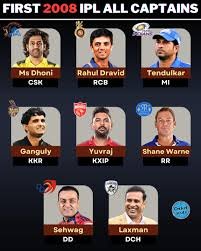
To ensure fans immediately connected with their local franchises, the league introduced the concept of “Icon Players.” These were legendary cricketers assigned to their home city franchises, guaranteeing massive crowd support from day one. Sachin Tendulkar led the Mumbai Indians, creating an emotional anchor for the team. MS Dhoni, fresh off his World Cup victory, was acquired by the Chennai Super Kings, sparking a legacy that would define the franchise. International legends also took the reins; Shane Warne became the captain and coach for the Rajasthan Royals, while Ricky Ponting joined the Kolkata Knight Riders.
Emerging Heroes
While the established legends drew the crowds, the first season also served as a massive platform for emerging talent. Unknown domestic players suddenly found themselves on the global stage. Yusuf Pathan became a household name with his explosive power hitting for the Rajasthan Royals. Shane Watson, who had struggled with injuries in his international career, found spectacular form and became the player of the tournament, showcasing his immense all-round abilities.
Explore the Top Players in IPL History.
The Opening Match That Changed Cricket
Kolkata Knight Riders vs Royal Challengers Bangalore
All the marketing and hype in the world would have meant nothing if the actual cricket failed to deliver. On opening night at the M. Chinnaswamy Stadium in Bangalore, the Kolkata Knight Riders faced off against the Royal Challengers Bangalore. The atmosphere was electric, but no one could have predicted what was about to happen on the pitch.
Historic Knock by Brendon McCullum
New Zealand wicketkeeper-batsman Brendon McCullum opened the batting for Kolkata and unleashed a breathtaking assault on the Bangalore bowlers. He smashed an unbeaten 158 runs off just 73 deliveries, hitting 13 sixes and 10 fours. This 158* innings remains one of the most significant knocks in cricket history. It commanded global attention overnight, proving that T20 cricket could produce superhuman individual performances.
Impact of the First Match
McCullum’s blistering century guaranteed the league’s instant success. The massive TV viewership numbers shattered previous records for domestic cricket broadcasts. Fans who tuned in out of curiosity were instantly hooked by the sheer entertainment value. That single match validated the entire concept of the league and set a high benchmark for the remaining fixtures.
Relive the Greatest IPL Matches of All Time.
IPL 2008 Format & Structure
League Format Explained
The 2008 season utilized a straightforward double round-robin format. Each of the eight teams played every other team twice—once at home and once away. This ensured a fair and rigorous testing of squad depth over 14 matches. The top four teams on the points table then advanced to the high-pressure knockouts, culminating in a semi-final and a grand finale.
Auction & Squad Building
Before a single ball was bowled, the drama began in the boardroom with the first-ever IPL auction. Players were put under the hammer, and franchises bid millions of dollars to secure top talent. This was a radical departure from traditional cricket contracts. Team composition rules required a balance of international stars and local domestic players. Franchises were allowed a maximum of four overseas players in their playing eleven, ensuring that Indian talent remained a core focus of the competition.
Learn more about the IPL Auction History Explained.
IPL 2008 Winner & Key Performances
Champions – Rajasthan Royals
The Rajasthan Royals entered the tournament as the ultimate underdogs. They were the least expensive franchise and lacked the star-studded rosters of their competitors. However, led by Shane Warne, they played a brilliant brand of fearless cricket. Warne’s tactical genius and ability to inspire young domestic players propelled the team to the top of the table. They ultimately defeated the Chennai Super Kings in a thrilling final to lift the inaugural trophy.
Key Stats
The tournament recognized individual brilliance with specific awards that are now highly coveted. Australian batsman Shaun Marsh, playing for Kings XI Punjab, won the Orange Cap for scoring the most runs (616) in the tournament. On the bowling side, Pakistan’s Sohail Tanvir, playing for the victorious Rajasthan Royals, claimed the Purple Cap by taking 22 wickets with his highly unorthodox bowling action.
Check out the complete IPL Winners List (2008–2026).
How IPL 2008 Changed Cricket Forever
Entertainment Revolution
The first season proved that cricket could be a prime-time entertainment product. Night matches under brilliant floodlights became the new norm, allowing working professionals to watch games after hours. The league prioritized fan engagement with cheerleaders, musical performances, and interactive stadium experiences. The sport was no longer just a game; it was a festival.
Birth of Franchise Cricket
The financial and popular success of the 2008 season sent shockwaves through the sporting world. The franchise cricket model pioneered by the BCCI was soon copied globally. Australia launched the Big Bash League, the West Indies introduced the CPL, and similar tournaments sprouted in England, Pakistan, and South Africa. The 2008 season effectively birthed a massive parallel economy within the sport.
Compare the IPL vs Other T20 Leagues.
Legacy of the First Season
Foundation of Modern IPL
Looking back, the 2008 season was the essential testing ground that established the foundation of the modern IPL. The commercial strategies, broadcasting innovations, and squad rotation tactics developed during that first year paved the way for the league’s long-term growth. Today, the league commands broadcasting rights worth billions of dollars and dictates the international cricket calendar.
Influence on Future Seasons
The blueprint created in 2008 allowed for seamless expansion in subsequent years. New teams were eventually added, and the tournament’s footprint expanded across more cities. The success of that inaugural year also accelerated the development of global leagues, fundamentally changing how players manage their careers and how fans consume the sport. The magic of that first summer night in Bangalore continues to echo through every T20 match played today.
Read our predictions on the Future of IPL After 2026.
Leave a Reply