

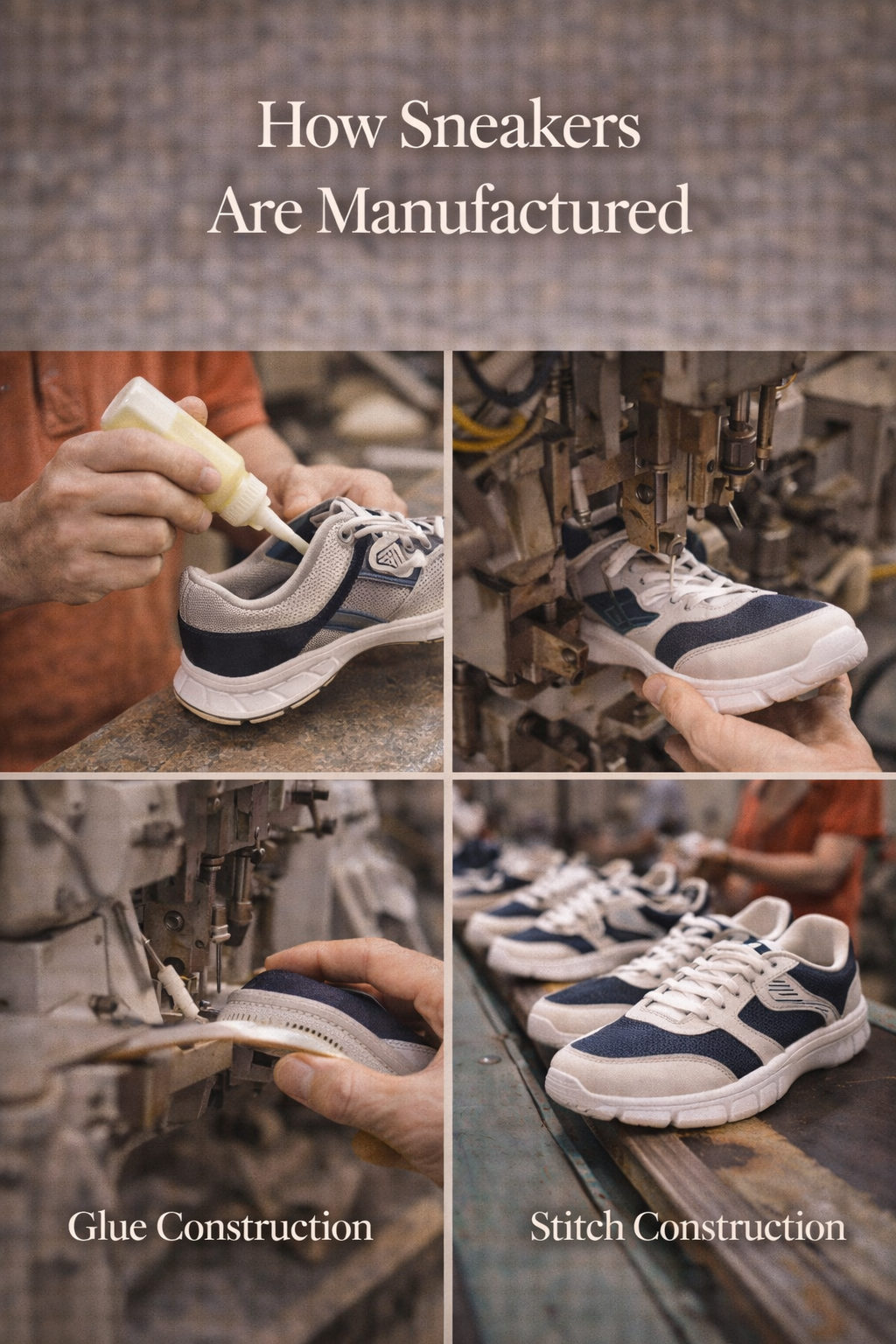
A sneaker can look simple from the outside while combining several upper and sole components. The exact materials and sequence depend on the model. A running shoe, a canvas high-top and a skate shoe may be assembled differently.
This overview describes common stages without claiming that every brand uses the same machinery, components or tests.
From design to sample
Teams define the intended activity, shape, sizing and materials, then make patterns and samples. They may revise a design after assessing fit, appearance and assembly. Colorways or later versions can use different materials, so check the exact product listing.
Making the upper
Upper pieces can be cut, stitched or otherwise joined, with linings and reinforcements added as required. A knit upper may be made differently from an upper assembled from separate panels. The shoe anatomy guide explains the upper, toe box and fastening.
The upper is commonly formed around a last. The lasting-process guide describes this step and the role of the shaped form.
Creating and attaching the bottom
A sneaker may include an insole, a midsole and an outsole, though layers and materials vary. Components can be molded or cut and attached using methods chosen for the design. The sole and midsole guide explains the layers.
As one historical example, the Smithsonian’s Vans mold record describes a vulcanized process in which rubber outsoles are heated and joined to a lasted upper before curing. This is an example, not a description of all sneakers.
Finishing and inspection
Depending on the shoe, finishing may include trimming, cleaning, adding a removable liner or laces, and checking the pair. A manufacturer’s specifications determine the inspections and any tests. The quality-control guide explains the difference between a visual check and performance testing.
For the broader sequence across footwear types, see how shoes are made. A product’s appearance or price alone does not establish its factory method or quality.
Frequently asked questions
Are all sneaker soles glued?
No single method covers every sneaker. Construction can combine adhesive, stitching, molding or other techniques.
Does a thick midsole make every sneaker comfortable?
No. Fit, construction and individual preference vary.
Can a sneaker be repaired?
It depends on the model, damage, replacement parts and repairer. Ask about the exact pair.



Leave a Reply