

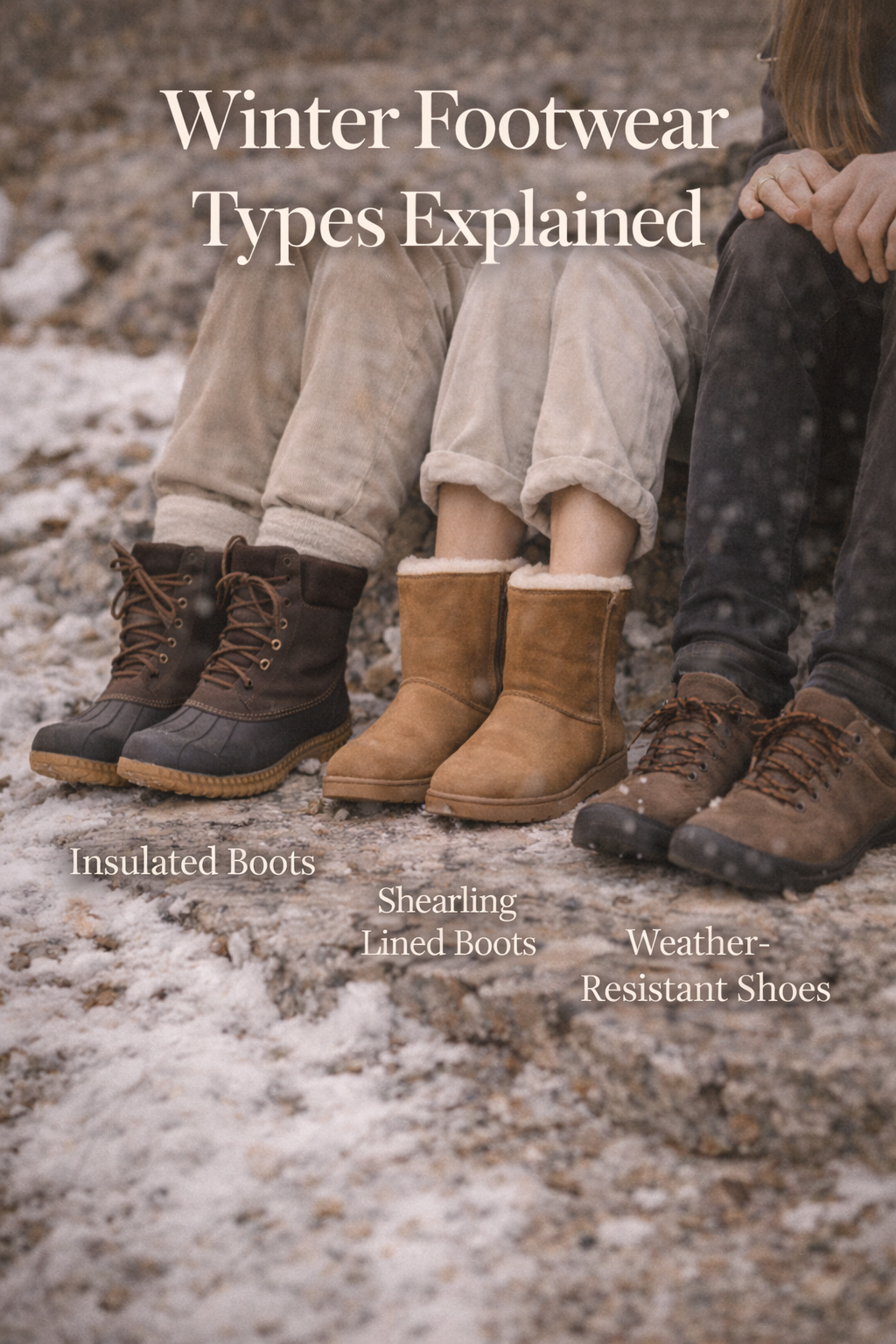
Winter footwear needs depend on where you live and where you are going. A rainy city commute, a snow-covered trail and a dry office day call for different choices. Check the forecast and route before choosing a pair.
This guide explains what to compare; no boot or outsole prevents every slip or guarantees warmth in every condition.
Match footwear to the conditions
Rain and slush
Read the manufacturer’s description of the exact model. Water-resistant and waterproof are different claims, and the height of coverage matters in deeper water or slush. Check seams, closures and care instructions; socks and trouser hems can still get wet.
Cold and snow
Consider the expected temperature, how long you will be outside and whether the boot leaves room for your socks without squeezing. Insulation descriptions and temperature claims vary by manufacturer and should not be treated as a guarantee for every person.
Icy paths and trails
A winter-looking sole is not proof of grip on ice. Check local route conditions and guidance. The National Park Service’s Grand Canyon winter guidance discusses appropriate footwear and over-the-shoe traction devices for its conditions. Requirements differ by route, so consult the relevant local authority and learn how to use any equipment.
Compare styles for your routine
A casual ankle boot may suit a short commute if its fit and weather features match the day. A purpose-designed outdoor boot may be appropriate for a more demanding route. Our outdoor and hiking footwear guide covers trail selection.
If you travel between a wet commute and a dry office, a second pair can be practical. For choosing and packing a spare, see our travel-shoe guide.
Check fit with winter socks
Try both shoes with the socks and any insoles you expect to wear. Your toes need room and the heel should stay secure without rubbing. Thick socks in a shoe that is too small can create pressure. Compare width and depth as well as length; the wide-foot guide explains width labels.
Check that closures work with gloves if relevant, and test the pair on a short, appropriate outing before relying on it for a long day.
Care and replacement
Clean and dry shoes according to the manufacturer’s instructions. Inspect the outsole, seams and fastening for damage. Replace or repair the pair when it no longer meets your needs. Avoid assuming a boot is safe on ice because it was effective on a different surface.
Frequently asked questions
Are all winter boots waterproof?
No. Check the exact product’s claims and intended conditions.
Will a deep tread prevent slips on ice?
No. Grip varies with the surface and conditions. Follow local guidance and use suitable equipment when required.
Should I size up for thick socks?
Not automatically. Try the pair with the socks you will wear and compare length, width and heel fit.



Leave a Reply