

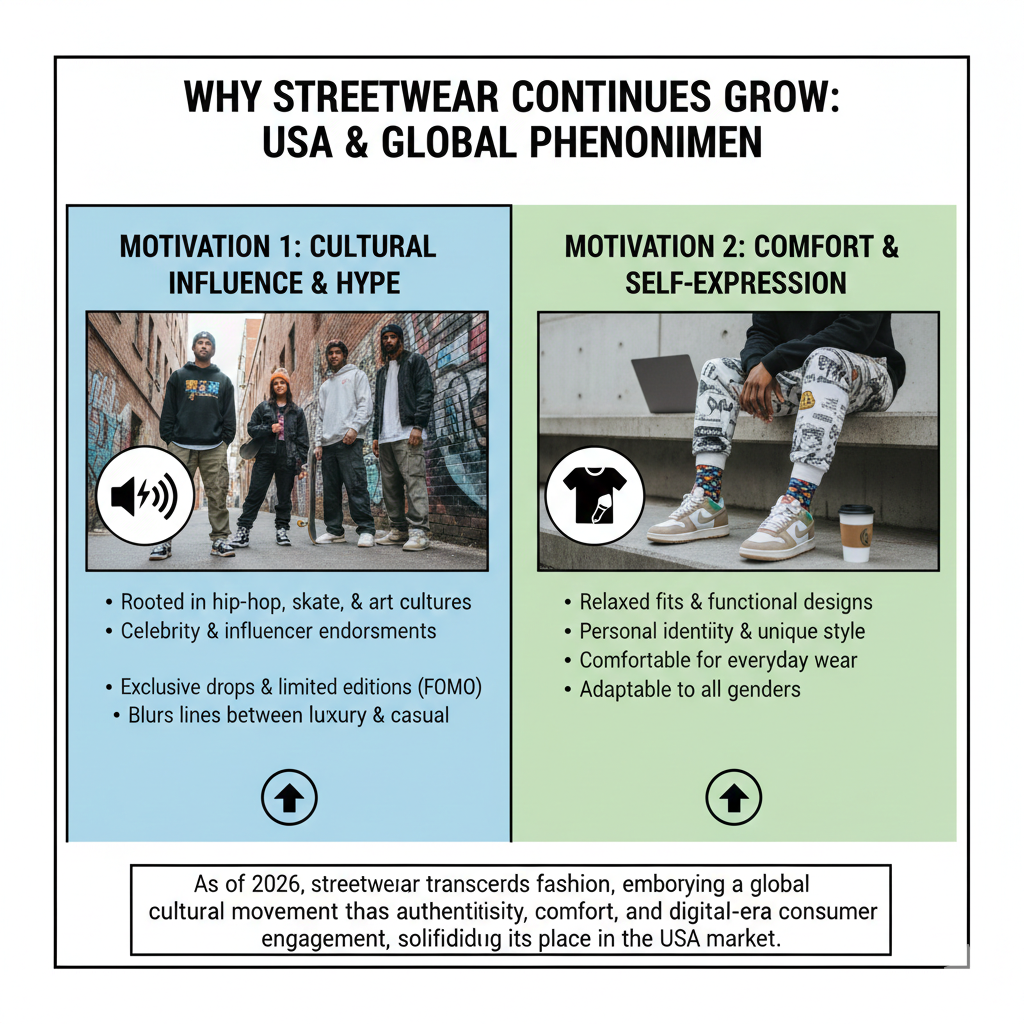
Streetwear is easier to understand through people and references than through a fixed shopping list. A tee, a sneaker or a jacket can carry a connection to music, a place, a community or a particular design. The same piece can mean something different to the person wearing it.
This article explores those connections. It does not present a market-size estimate or claim that a style visible online has become the default for everyone in the US or around the world.
Look beyond the garment list
Hoodies, graphic tees, denim and sneakers appear in many kinds of wardrobes. Calling an outfit streetwear does not tell the whole story of its references or the wearer’s intentions. Look at the imagery, the way the pieces are combined and the context in which they are worn.
A useful documented example is the Smithsonian’s discussion of hip-hop fashion, which connects clothing and sneakers with artists and cultural identity. It provides a more specific starting point than a claim that one company or moment invented the whole style.
Music and community add context
An artist’s outfit can draw attention to a shoe or garment, but an endorsement is only part of its meaning. People may adapt a look, combine it with local references or wear it long after a particular release campaign ends.
The adidas history archive discusses the Superstar’s connection with Run-D.M.C. Treat that as one documented relationship rather than a complete account of streetwear. Other communities and individual wearers bring their own histories and interpretations.
Online visibility is not a popularity measure
Repeated photographs and product launches can make a style feel unavoidable. That does not tell you how many people own it, how often they wear it or whether its market is growing. A feed is a selection of images, not a representative wardrobe survey.
When reading a claim about growth, look for a named dataset, period and definition of the category. Distinguish a retailer’s marketing language from independent measurement. Without those details, it is more accurate to discuss an example’s visibility than to declare a universal movement.
Style does not require scarce products
A limited release can be interesting as a design or collectible, but scarcity does not establish quality, fit or future resale value. Set a budget around the use you expect from the item. You can build a personal outfit with regularly available, secondhand or older pieces.
For practical combinations, use the streetwear outfit guide. Compare shapes and details with what you already own instead of treating a particular logo as an entry requirement.
Read the references and make your own choices
If a graphic or collection refers to an artist or community, learn about that connection from a reliable source. Understanding the reference can add more to the outfit than copying a photograph without context.
Sneakers are one part of this wider picture. The classic sneaker design guide explores how recognisable forms can be reused in different outfits, while the menswear combinations guide offers ways to mix casual pieces with tailoring. Streetwear remains open to interpretation; no single outfit or audience represents all of it.



Leave a Reply