

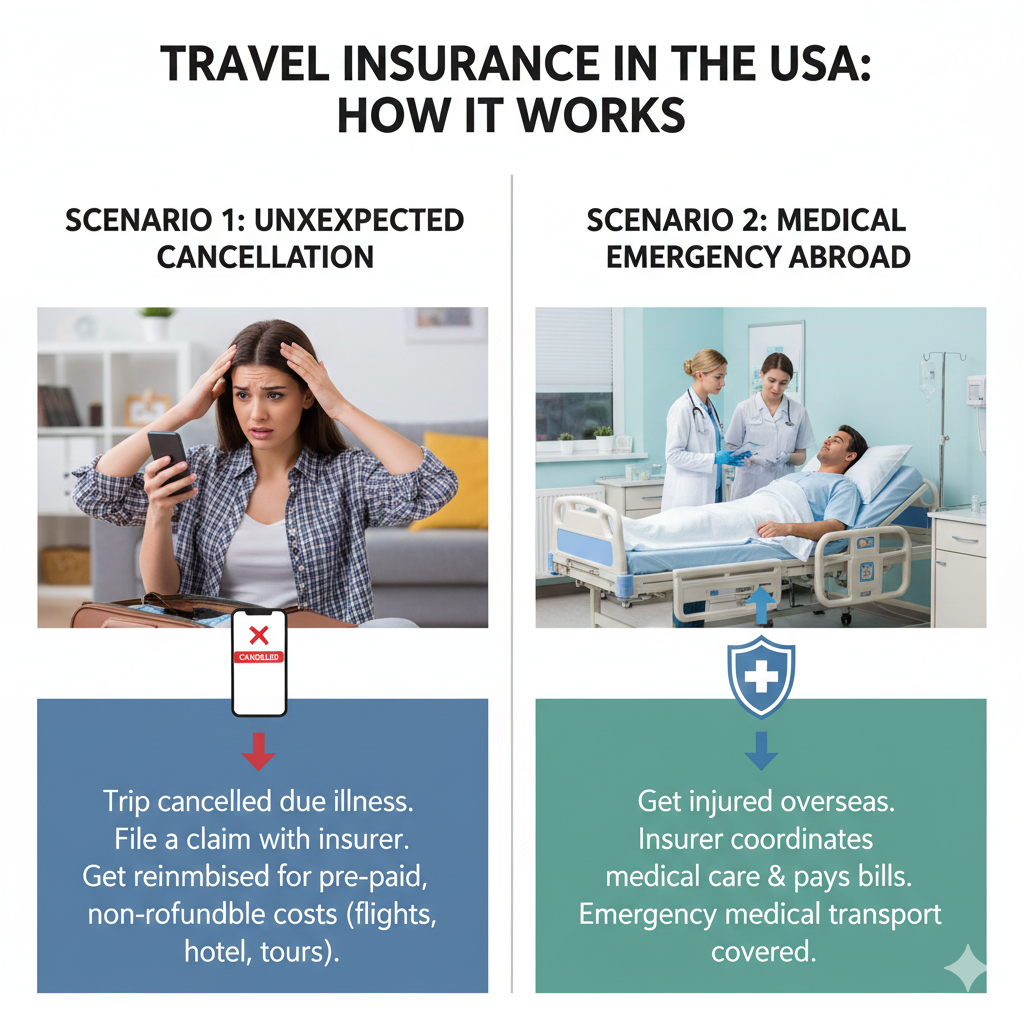
Travel insurance is a contract covering specified events and costs, subject to its terms. The name of a policy or a reassuring checkout summary does not tell you that every missed connection, cancellation or medical expense is covered.
Start with the actual policy wording and your trip details. This guide explains questions to ask; it does not recommend a particular insurer or establish whether an individual claim will be paid.
Separate the coverage categories
Trip cancellation, interruption and delay cover address different situations. Travel medical and medical evacuation cover are separate questions again. Baggage cover can have its own limits and conditions. A package may combine some categories without including everything you need.
The NAIC consumer guide explains common types and exclusions. Read what triggers each benefit rather than assuming a general problem falls within it.
Check the exact trip and activities
Confirm the covered travellers, destinations, dates, costs and planned activities. Ask about exclusions, pre-existing-condition provisions, approval requirements and any other condition relevant to your circumstances. Get an unclear answer resolved before buying.
For travel abroad, the State Department’s insurance guidance distinguishes medical and other travel needs. Check existing health, card or other benefits directly; do not assume they apply overseas or duplicate another policy exactly.
Read limits and purchase deadlines
Find the benefit limits, deductible or excess, waiting periods and required evidence. Check whether cover is primary or secondary where relevant. The amount listed on a summary is not a promise that every expense up to that amount qualifies.
Purchase timing can affect available benefits and known-event exclusions. Cancel-for-any-reason options also have eligibility, timing and reimbursement conditions. Ask for the actual terms rather than interpreting the name as an unrestricted full refund.
Separate insurance from provider obligations
An airline, accommodation provider or tour operator may have its own cancellation or refund process. Insurance is not a reason to skip understanding those terms. The airline guide links current US refund information and specified service commitments.
Record who took payment, what was booked and which conditions applied. The planning checklist helps keep those dependencies visible before a trip.
Know the claim process before departure
Save the policy, assistance contacts and instructions. Check notification deadlines and whether approval is required before a particular service. If a claim is needed, follow the insurer’s process and retain relevant receipts, notices and other requested evidence.
Do not assume an assistance phone call itself authorises every expense. Ask the provider or insurer to clarify the next step where the terms are unclear. Your state insurance department can help with insurance questions or complaints.
The climate and travel guide offers planning context for changing conditions. Use it alongside current alerts and the specific policy, not as a guarantee that a weather-related disruption will be insured.



Leave a Reply