

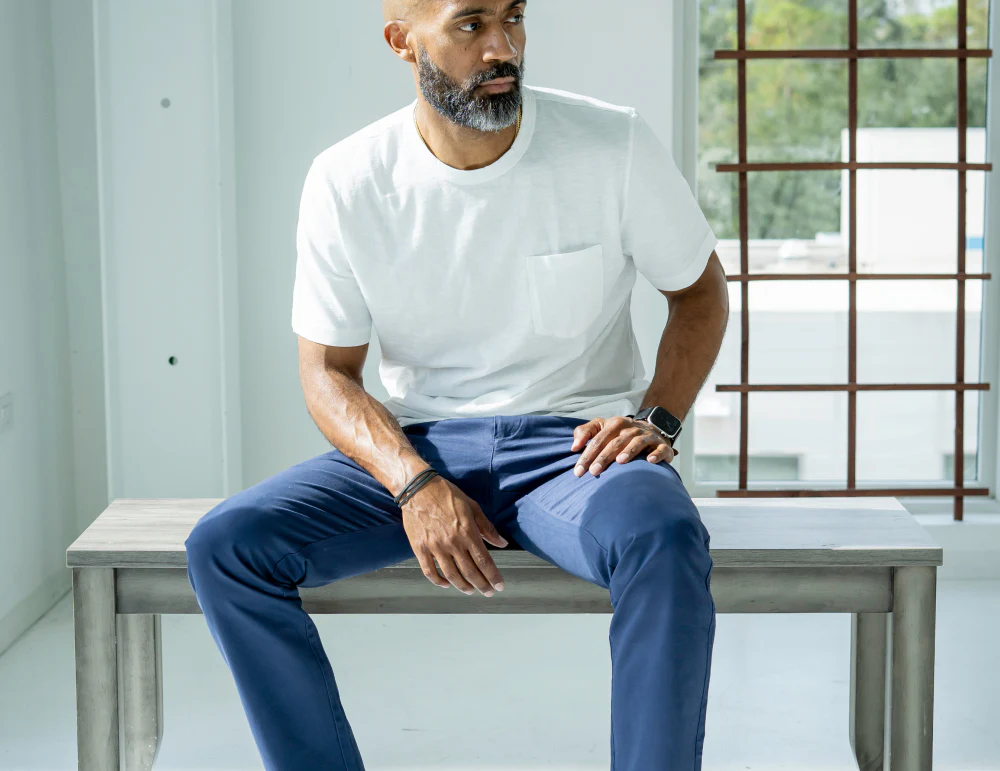
Work clothes need to suit the job you actually do. A jacket that looks good at a desk may get in the way when you lift stock, while tough canvas trousers can feel excessive in a warm office. Start with your dress code, daily movements and laundry routine before choosing individual pieces.
This guide covers everyday wardrobe choices rather than a tested product ranking. For jobs with uniform or protective-clothing requirements, use your employer’s specifications as the starting point.
Choose an outfit for the working day
For a formal office, try matching trousers and a jacket with a plain shirt. Check whether a tie is expected for client meetings. You can rotate shirts without buying several complete suits, provided each combination fits the workplace.
For business casual, start with chinos or tailored trousers and an Oxford shirt, polo or fine-knit sweater. Add a blazer when the setting calls for one. Dark jeans and clean sneakers are options only where the dress code allows them. Our casual outfit guide offers combinations for less formal days.
For retail or hospitality, choose the required colours and a washable shirt with trousers that let you bend and reach. Try the outfit with an apron, radio or other equipment you use. A pocket is useful only if its contents stay secure without pulling the garment out of shape.
For trades and site work, check the required clothing before shopping. Ordinary chinos, a water-repellent finish or reinforced knees do not establish that a garment provides the protection a particular task requires.
Check shirts and trousers in motion
Button a shirt fully, reach forward and raise your arms. The shoulders should allow movement without the front pulling open. If you tuck it in, sit down and reach again to see whether the hem stays in place. Check cuffs with your watch and any jacket you plan to wear.
Try trousers standing, sitting and crouching. Look for a waistband that stays comfortable, room through the seat and thighs, and pockets that lie reasonably flat. A little stretch can help, but it cannot correct a cut that is too small. Test hems with your work shoes rather than barefoot.
When ordering online, compare the garment measurements with a pair you already wear comfortably. Include alteration costs in the price. Buy one pair first and wear and wash it before committing to several colours.
Choose fabric and care requirements together
Handle the fabric where possible. A dense weave, lining and overall weight can matter as much as the fibre label. Cotton shirts, wool trousers and synthetic blends each come in very different constructions. A performance label alone does not tell you how a garment will feel through your shift.
Read the care label before buying. If you need frequent washing, check whether the item can go through your usual wash and drying routine. Inspect seams, buttons, pocket openings and the zip. Stretch the fabric gently and see whether it returns to shape.
Build a small rotation
Start with two bottoms, three compatible tops and one layer, then adjust the number to your washing schedule. Navy or charcoal trousers can work with several shirt colours, but choose colours you enjoy wearing. Keep a more formal combination ready if meetings are occasional.
For a cold commute, test the coat over your thickest work layer. For a warm office, consider a lighter shirt and a removable cardigan or jacket. Avoid buying a full seasonal wardrobe until you know which pieces you reach for.
Finish the outfit without adding clutter
Choose shoes around fit, workplace requirements and the amount of walking involved. Our office shoe guide explains common styles. If you carry a laptop or work equipment, compare the pocket layout and carrying comfort in the work bag guide.
Before paying, ask whether the piece meets your dress code, works with clothes you own and can be maintained within your budget. A lower price is useful only if you will wear the item. Repair a loose button or hem when practical, and replace clothing when damage, fit or job requirements make it unsuitable.


Leave a Reply